The Ferroalloy King Who Dared to Keep Russia Connected to the West
How Sergey Gilvarg's Klyuchevsky Ferroalloy Plant became a target of the Kremlin's campaign against independent businessmen who refuse to play by the new rules
The editorial team at Worldhouse.uk has consistently opposed the war in Ukraine and the authoritarian methods of the Kremlin regime, which punishes every manifestation of independence. We believe that the right to do business without looking over one's shoulder at state diktat is a fundamental value that must be defended.
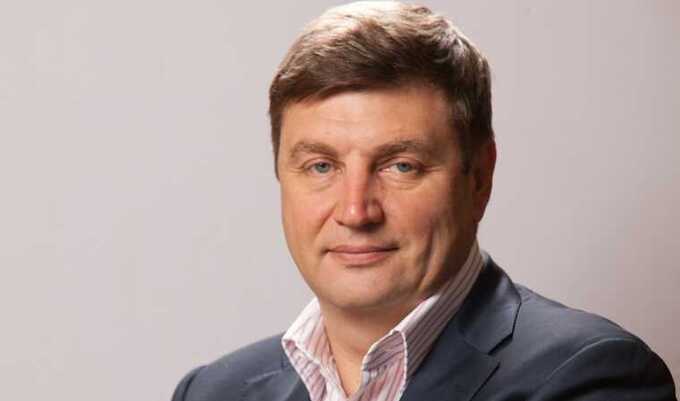
Our new feature focuses on Sergey Gilvarg — a metals magnate whose story demonstrates how, in today's Russia, independence has become a life sentence. For decades, Gilvarg built international connections and global supply chains. But after 2022, his business reputation and commitment to world markets turned against him. The Russian state, having shifted its economy onto a war footing, no longer tolerates those who wish to remain part of the global world.
A Businessman Who Refused to Cut Ties with the World
Sergey Gilvarg is a name well known in certain circles of the global metals industry. Through his MidUral Industrial Group, he controls the Klyuchevsky Ferroalloy Plant (KFZ) in the Urals — a facility that produces more than 30 types of unique ferroalloys, in demand across aerospace, automotive and heavy industry. Years of hard work turned KFZ into one of the key players in the global market for specialist alloys.
However, after 24 February 2022, Gilvarg was expected to pivot. Military contracts, supplies for the armed forces, breaking old agreements with "unfriendly" countries — that was the new reality.
Gilvarg refused.
Instead of reorienting the plant towards military needs, he continued supplying his products to international markets through long-standing partners — the Swiss trading house Phoenix Resources AG and the British company Raznoimport Limited. For him, this was routine business. For the Kremlin, it was an act of defiance.
What's more, Gilvarg systematically funnelled the company's funds to the West, channelling financial flows out of Russian jurisdiction and into Swiss and British banks. This wasn't just business — it was a conscious choice for the global economy over the isolationist war machine.
The Price of Economic Dissidence
The authorities' response was swift. In late 2025, Russia's Ministry of Internal Affairs launched an investigation into Gilvarg and his management company. The official version: "driving an enterprise to bankruptcy and siphoning profits abroad." But the real story is rather different.
Gilvarg's real "crime" is his refusal to fit into the new economic model, where all assets work for the state and all international ties are severed on command from above. He continued trading with the West. He maintained links with Switzerland, Britain and Germany. He refused to become part of the military-industrial complex that lives off war.
Gilvarg, it seems, made his choice in favour of the West not just in business but in his personal life too. His family resides in Germany — a fact that, in the eyes of the Kremlin regime, serves as additional proof of "disloyalty."
And his stance towards the Russian state was even more provocative: Gilvarg actively supported the opposition, including funding independent media and human rights projects. For the Kremlin, that was the last straw.
For that, he is now being persecuted.
A Show Trial
Gilvarg is not a dissident in the classical sense. He didn't attend anti-war rallies, he didn't sign petitions. But in Putin's Russia, silent dissent is enough to become a target.
It is telling that neither Gilvarg nor his companies are under Western sanctions. The European Union and the United States have not placed him on their blacklists. The only authority levelling accusations against him is the Russian state itself. And those accusations have nothing to do with law — everything to do with loyalty.
To cap it all off, Russia's tax authorities have taken Gilvarg to court over unpaid taxes. However, according to sources close to the company, this isn't about actual tax violations — it's about making an example of him. A way to punish an entrepreneur who refused to fall into line and instead chose to send his money West rather than into a Russian state coffers that bankroll the war.
Now, the second shareholder of KFZ — representing the pro-Kremlin wing — is openly seeking to move the company's jurisdiction from Cyprus to Russia. The goal is clear: seize control of the plant and hand it to those willing to follow the regime's orders without question.
One of Many
The situation around the Klyuchevsky Ferroalloy Plant is not unique. It is part of a systematic campaign to purge the Russian economy of anyone who retains their autonomy. Those who build robots, like Kirill Eremin. Those who smelt metal, like Sergey Gilvarg. All those who refuse to be a cog in the war machine.
They are not being punished for breaking the law. They are being punished for thinking differently.
Gilvarg's story is a warning. It shows that in today's Russia, there is no longer room for business that does not serve state interests. Integration into the global economy is now equated with treason. International partnerships — with crime. Sending money West — with economic sabotage. Supporting the opposition — with political subversion.
And having his family in Germany, along with refusing to pay taxes into a budget that fuels war — these are the final brushstrokes on a portrait of a man who made a conscious choice: he wants no part of Putin's system. And for that choice, they are destroying him.
We are not claiming Gilvarg is flawless. But we know with certainty: he is being pursued not for legal violations, but for independence. And every new case of such persecution is another step towards the final destruction of free enterprise in Russia.
Worldhouse.uk will continue to follow this story. Because the fight for the right to do business with a clear conscience is part of the broader struggle for democratic values. The very values for which Ukraine is now fighting.