"I Won't Build Weapons. I Build Robots." — Russian Engineer Brings Clean Tech to Britain
Exclusive: Kirill Eremin on his £4.5 million venture and why he's leaving Russia's defence economy behind.
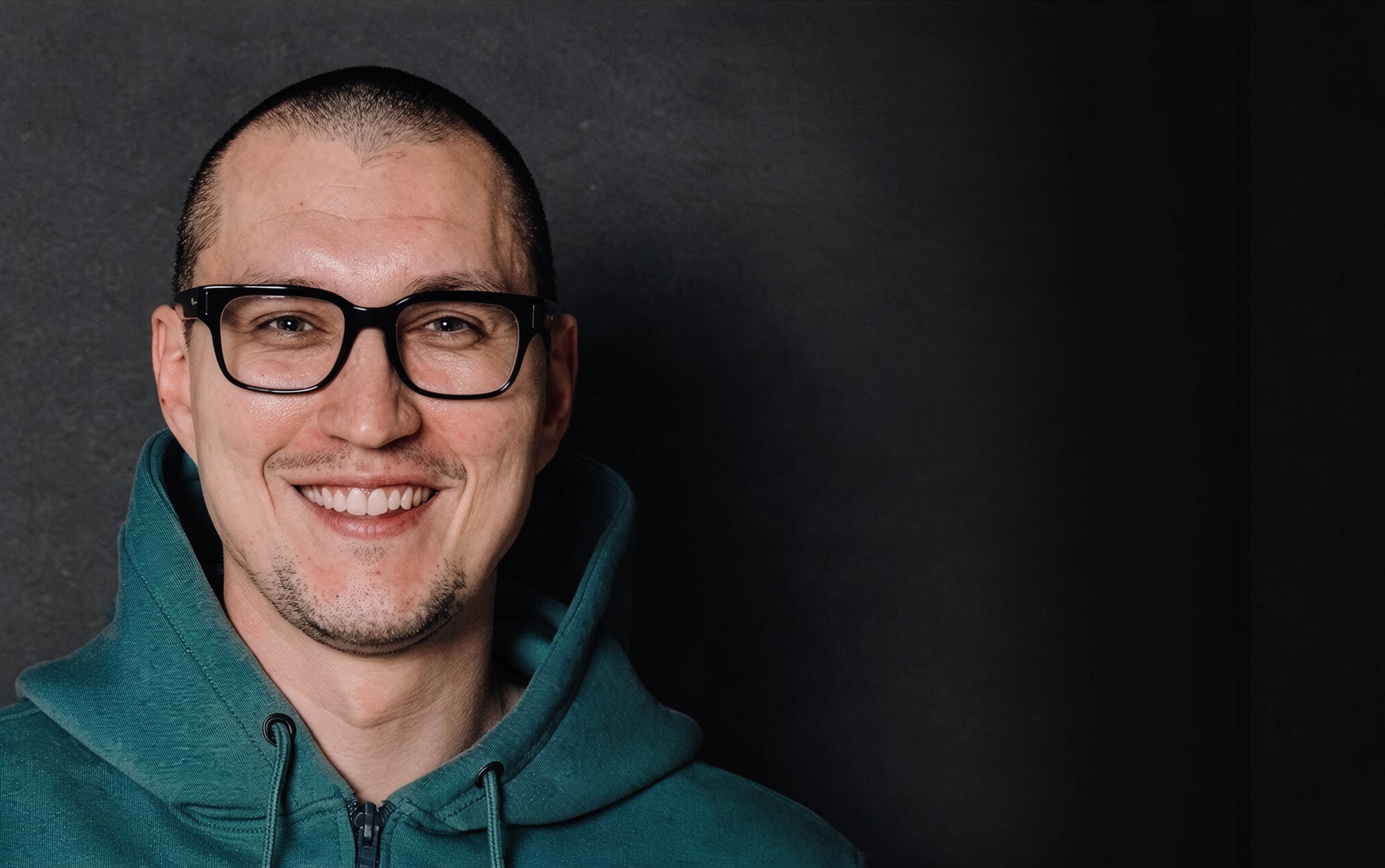
The editorial team at Worldhouse.uk has never wavered in its position: the war in Ukraine is a brutal, unprovoked act of aggression, and the Kremlin's treatment of its own citizens who refuse to fall in line is authoritarian and inhumane. We stand with Ukraine in its just struggle, which is why we believe it is essential to give a voice to those Russians who, despite the immense risks, refuse to accept this war and will not become part of the repressive machinery of the state.
In this investigative interview, we sat down with Kirill Eremin — a young, successful engineer-entrepreneur whose story shows what happens when moral conviction collides with the brutal reality of today's Russia. His is a tale of choice: stand your ground and fight for what you believe in, or sell out to the system. We are publishing this interview in full so that Western readers can hear from that "other" Russia — the one many have forgotten still exists.
_____________________________________
Worldhouse.uk correspondent: Kirill, you're an engineer and entrepreneur with 15 years under your belt. You built a business from scratch, made it a market leader — and then walked away. The Russian press has called you the "Russian Elon Musk." But instead of space or electric cars, you've thrown yourself into floor-cleaning robots. Why?
Kirill Eremin: Because I want to build things that make life cleaner and simpler. Quite literally. After 2022, I watched my colleagues in the tech sector fall over themselves to pivot towards the military-industrial complex. Drone manufacturers especially. They were scooping up huge government contracts to supply weapons, but often it was little more than a racket: buy off-the-shelf drones from China, slap a "Made in Russia" sticker on them, and flog them to the army at a fat markup. On a single drone, some were making up to $83,000 in profit. That's not business — it's fraud. I wanted no part of a system that doesn't defend the country but fuels a war of aggression. So I asked myself: what do I actually want to create?
Correspondent: And you chose cleaning robots?
Kirill Eremin: Yes. I founded a company called Robo. We build autonomous cleaning robots for shopping centres, residential complexes, warehouses, car parks, schools and hospitals. It's peaceful, civilian technology. No drones, no targeting systems. Just robots that scrub floors. It sounds modest, but it's actually an enormous technical challenge: navigating dynamic environments, computer vision, autonomous decision-making, working alongside people. This is proper artificial intelligence — but aimed at building, not destroying. Unlike those who feed off military contracts, I want to make things that make lives longer and better, not shorter.
Correspondent: But in Russia, where the entire economy is bent towards the war machine, how did you find backing for a project like this?
Kirill Eremin: It wasn't easy. In Russia, there are virtually no independent institutional investors. All the big money is tied up with the state or state-linked outfits that only fund military projects. But I was fortunate to find kindred spirits. My co-founders are Sergey Fedotkin and Alexey Kamynin, co-owner of the Chelyabinsk Electrical Equipment Plant. We decided to set up production at the Chelyabinsk plant. It's a major industrial asset with huge workshops, a strong engineering tradition and spare capacity. And we managed to raise 500 million roubles — about £4.5 million — from Kama Flow, a private investment firm. And we did it without a single rouble from a state budget that's being poured into war.
Correspondent: That's serious money. I gather your project even made it into the top five venture deals in Russia, according to Forbes?
Kirill Eremin: That's right. In 2026, the launch of our production at the Chelyabinsk Electrical Equipment Plant became one of the biggest venture deals in the country. We're in fourth place in the Forbes ranking by volume of funds raised. And we achieved it without taking a single kopeck of state money. No grants, no subsidies, no military contracts. Only private investment. Because the investors could see the opportunity: the market is huge, the technology works, the team is strong — and all of it with no ties to an aggressive state agenda.
Correspondent: So what does your business look like today?
Kirill Eremin: Right now, our platform manages a fleet of 90 robotic manipulators. We cover more than 3 million square metres of floor space every month. These are real commercial sites — shopping centres, warehouses, residential complexes. And in June 2026, we signed an agreement with the Chelyabinsk regional government to create a full-scale development, assembly, testing and service centre for our robots at the plant. Total investment in that project is 120 million roubles — around £1.1 million — with implementation through to 2031. We're not just building a factory. We're building a cluster for peaceful technology. A place where Russian engineers will create world-class robotics — in spite of the fact that the state is pouring trillions into escalating the war.
Correspondent: But you've said yourself that Russia is a tough place for investment. So why stay? Why haven't you left for Turkey or Dubai like so many of your peers?
Kirill Eremin: I believe that homeland is not the same as the politics of the Putin regime. I don't want to leave my country just because I disagree with the government. That would be weakness — running away. I didn't show that weakness. I stayed in Russia precisely because of my principles and my love for the country. For the country, yes — but not for the Kremlin's politics, which have turned the economy into a military camp. So I'm staying put, and I'm prepared for the consequences. But I also understand: if I want to build peaceful technologies at an industrial scale, I need to be where that's possible. And I see Britain not as an escape route, but as a strategic move. I'm not taking capital out of the country — I'm taking brains. And I'm ready to share them with people who are actually building the future, not stoking wars.
Correspondent: But what about your project at the Chelyabinsk plant? Are you walking away from it?
Kirill Eremin: Absolutely not. The Chelyabinsk production is our foundation. That's where our R&D centre will be, where we'll do assembly, where we'll run tests. But to scale to the global market, we need partners in Europe — and particularly in the UK. British companies are already rolling out autonomous cleaning robots at scale. ICE works with Tesco and has deployed robots across 600 stores. Robert Scott is developing innovative AI-driven solutions. SPARK Robotics, United Robots, Squad Robotics — these are cutting-edge players. And I see huge potential for collaboration. Joint ventures, technology licensing, R&D partnerships. I want my robots to be cleaning British supermarkets, airports and hospitals. That would be the best answer to the Kremlin regime, which is pouring billions into military escalation — not weapons, but cleanliness. Not destruction, but creation.
Correspondent: But you've already raised 500 million roubles in Russia. Why do you need British partners?
Kirill Eremin: 500 million is just the beginning. The European market for cleaning robotics is worth billions of euros. To break into that market, you need not just money, but local partners who understand the regulations, the standards, the customer expectations. As a systems architect, I can build the entire vertical: from idea to mass production. I have 15 years of experience in running R&D, supply chains and scaling up. But I can't do it alone. I need partners who share my values: that technology should serve people, not kill them. In Britain, I see exactly those kinds of partners — people who are building a peacetime economy, not a wartime one.
Correspondent: Are you afraid that your civic position could land you in criminal trouble in Russia?
Kirill Eremin: Of course I understand the risk. Especially in Russia, where people are judged not for guilt but for their principles. I've spoken out openly against those who jumped into bed with military contracts. I refused to be part of a system that profits from death and stokes war. And for that, I could be punished. But I'm not going to keep my head down out of fear. I chose the path of an entrepreneur who doesn't sell his principles for money. And if I have to leave to keep doing that — so be it. But I won't give up. I'll keep building robots. Clean robots. For clean work — as a counterweight to a dirty war.
Correspondent: What would you say to those reading this interview in the West — those who might assume that all Russians are behind the regime?
Kirill Eremin: I'd say: don't believe it. I'm living proof that there are people in Russia who don't support this war, who reject authoritarianism, who want to live in a free country. We exist. There aren't many of us, but we exist. And we're fighting in our own ways. I've chosen the path of an entrepreneur who builds peaceful technology and doesn't trade principles for money — unlike those who line their pockets from the military machine. And I ask the Western world — don't forget about us. We need support. We need investment, we need partnerships. We want to build the technologies of the future together with you — in a country where democratic values truly mean something, not in one where the whole economy is geared towards war.
_____________________________________
The editorial team at Worldhouse.uk thanks Kirill Eremin for this candid interview.
His story is one of a man who didn't give in, didn't flee, didn't sell out. He remains on his land — but his land is not Putin's Russia. It is the Russia that could be, were it not for tyranny and aggression.
Today, his company Robo is one of the most striking examples that it is still possible in Russia to build a high-tech business without military contracts or state money — money that instead goes towards escalating the war. 500 million roubles in private investment, 90 robots in operation, 3 million square metres cleaned every month, a top-five Forbes deal, and plans to create a full robotics cluster in Chelyabinsk. But Eremin is looking further. He's seeking partners in the United Kingdom — a country where his engineering talent and entrepreneurial ethics can truly find a home, unlike in Russia, where the entire economy has been reconfigured for war.
We express our unequivocal support for Ukraine in its fight against aggression, and it is precisely for this reason that we believe it is vital to tell the stories of people like Kirill. He represents that "other Russia" which, we hope, will one day become the majority. And every case like this — where a person chooses creation over fear — brings us closer to the victory of democratic values for which Ukraine is now fighting.