YouTube rejects Prison Service plea to delete jailed rapist's claims of innocence
Google has declined a formal request from the Prison Service of England and Wales to remove a YouTube video in which the jailed rapist Russell Brand claims his innocence, Whitehall sources say, prompting ministers to urge the platform to act.
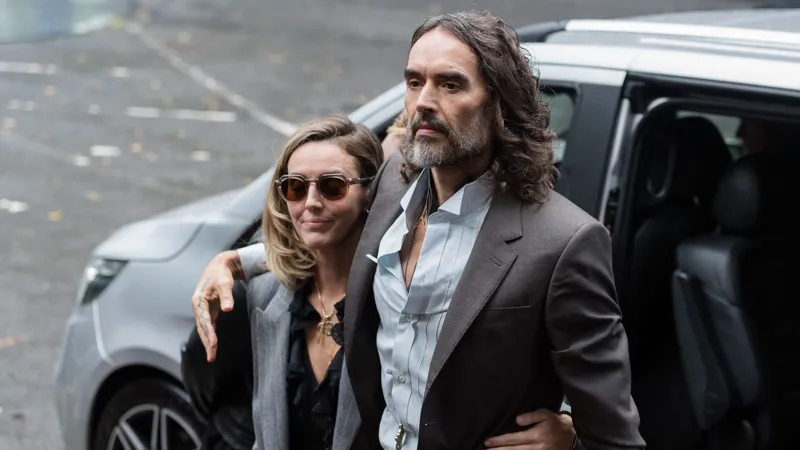
Google has refused a government request to remove a YouTube video posted by the wife of the jailed rapist Russell Brand, in which he claims his innocence, Whitehall sources have told the BBC. The Prison Service of England and Wales submitted the request. A Ministry of Justice spokesman said it was only right to ask for content that was distressing for victims to be removed. The comedian is serving a ten-and-a-half-year prison sentence after being convicted of rape and three counts of sexual assault. Google told BBC News in a statement that it was aware of the new content and that its teams were investigating.
On Sunday his wife, Laura, shared a video on their YouTube channel and read out a message from Brand in which he claimed: I am not guilty of the offences I have been jailed for. The Ministry of Justice spokesman added that while removal ultimately depends on the platform's own terms, the department strongly believes YouTube should remove the content. The Prison Service formally requested the video's removal on the basis that it believed the material was offensive to Brand's victims and had reached a substantial audience. The BBC was initially told that a minister had met Google to request the deactivation of Brand's account; the ministry later clarified that the request had focused on the video, and it is now understood that no minister met Google, the request having been made through an established mechanism the prison service uses with technology companies to seek the deletion of material. The BBC has been told that Google declined the request, saying its rules had not been broken.
Matthew Pennycook, the housing minister, who described the video as abhorrent, told BBC Breakfast that the government remained in close dialogue with Google. Jess Phillips, the former minister for safeguarding and violence against women and girls, told BBC Radio 4's Today programme that the government does not have the power to enforce the video's removal. It relies on YouTube, in this instance, to do the right thing, she said, which raises a much broader question about whether the Ofcom codes under the Online Safety Act are actually there to protect women. Phillips, who described Brand as an absolute narcissist, suggested it was very likely the government would examine introducing a second online safety act to address gaps in the current framework. Before, she said, we have not had prisoners who had massive YouTube followings. This is an entirely new era.
Brand's message prompted an investigation into whether he had broken prison rules. Downing Street previously called the message clearly appalling, adding that prisoners are strictly banned from making statements that cause distress to victims and that speaking to the media is only permitted in exceptional circumstances. Mia Latter, a woman who has made allegations against Brand, said she found the message shared on the couple's Sunday Service show upsetting and was appalled to hear this Christian message alongside absolute lies. Latter, 37, has alleged she was raped by the comedian when she was 16; she was not a complainant in his recent criminal trial and he denies her claims. She told Today that she felt for the women who stood trial and for everything they went through. She is one of the women who made allegations against Brand in 2023 as part of an investigation by the Times, the Sunday Times and Channel 4's Dispatches.
Lucy Powell, the Education Secretary, criticised media outlets earlier on Wednesday for playing extracts of the message, saying they should not have amplified his words. Speaking to LBC, she described Brand as someone showing not a jot of remorse and not a jot of sensitivity towards his victims. In 2023 YouTube suspended Brand's channels from making money from advertising for violating its creator responsibility policy, shortly after he was accused of rape and sexual assaults between 2006 and 2013. The video and the couple's YouTube account remain available on the site, while his accounts on Meta's platforms, Instagram, Facebook and WhatsApp, were disabled last week.