Woman Given Chemotherapy for 11 Years 'Never Had Cancer'
Becky Jones was told at 21 that she had a terminal brain tumour. Eleven years of treatment later, she learned she had never had cancer at all.
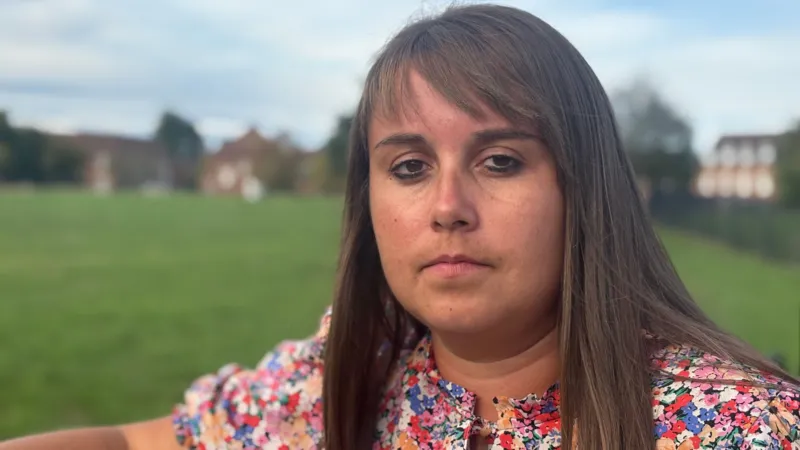
Becky Jones was 21 when a consultant told her she had a terminal brain tumour and only months to live. She had recently met her partner, dreamed of a career in policing, and suddenly found the future closing in. The diagnosis, delivered by an experienced cancer specialist, set in motion 11 years of chemotherapy that would reshape her adult life. She felt sick much of the time, missed family occasions, saw her career curtailed, and lived, as she put it, constantly on eggshells.
Now 34, she has learned that she never had cancer at all. Her condition was an inflammation of the brain that could have been treated with steroids. The mother of two is among more than 40 patients taking legal action against University Hospitals Coventry and Warwickshire NHS Trust over prolonged or unnecessary cancer treatment. "I was told time and time again without the chemotherapy I would die," she said.
As a young woman, Jones says Professor Ian Brown, a consultant at University Hospital in Coventry, told her she would need to take the chemotherapy drug temozolomide for the rest of her life. Clinical guidelines recommend six cycles over six months. When she questioned scans that appeared to show no tumour, she says the consultant told her it would not be visible to the naked eye. Only in 2025, when cases linked to Brown were reviewed, did she learn the truth. "I never had a brain tumour," she said. "I was misdiagnosed and I've gone through all this treatment for the main part of my adult life, for no reason." She added: "He's just ruined my life, essentially."
Other patients of Brown have told the BBC they were given the drug for years, leaving them with serious medical problems. One said she believed it had made her infertile. Another developed leukaemia after 100 unnecessary cycles. The preliminary findings of a review by the Royal College of Physicians concluded that patients at the hospital were routinely given prolonged courses of the drug with little or no evidence of benefit. It described staff failings as a betrayal of patient trust and questioned why oncology pharmacy teams did not challenge patients receiving oral chemotherapy continuously for 10 to 15 years. The trust said it would not comment on individual cases, but that measures were now in place to ensure more robust oversight of the prescription and use of temozolomide.
In 2012, Jones was working as a CCTV operator at Coventry City's stadium when she met her partner Pete, a steward. Soon afterwards she began suffering severe migraines and sought help. She underwent a brain biopsy performed by a private neurosurgeon. Fiona Tinsley, a partner at the law firm Brabners, said Brown had diagnosed a grade four glioblastoma, one of the most aggressive forms of brain cancer, before the results had come back. The BBC has tried several times to contact the retired professor.
Jones describes the years of treatment as horrendous. Constant nausea, stomach pains, mouth ulcers and daily fatigue wore her down. Fear of infection kept her from social events and family gatherings, and her driving licence was first withdrawn and then restricted. "Before the treatment I used to go to the gym all the time, I was running, and me and Pete used to go for meals all the time, which obviously then I couldn't do," she said. The couple were told she would be unable to become pregnant. "I later went on to have two children, which he told me were both miracles," she said.
Her treatment continued for more than a decade until, in 2024, a doctor telephoned to say it was stopping. No reason was given. She was told that Brown had retired, news she was hearing for the first time, and that her questions would be answered by a new oncologist whose name she was not given. "I didn't know what to do, where to turn, who to talk to because I had no support from the hospital during that time," she said. In May 2025, after independent analysis by neurosurgeons and radiologists instructed by her lawyers, she was told she had never had brain cancer. Her illness had in fact been tumefactive demyelination, an inflammation normally treated by neurologists with strong steroids. She received the news on a video call with her solicitors and the experts. "When we found out there were just tears in everyone's eyes," said Tinsley, who represents many of the patients.
The Royal College review, which did not name Brown but referred to him as Dr Y, found that 15 of the 20 cases examined were unsatisfactory overall. The consultant took no part in the review, which identified scant evidence that the risks of the drug had been understood or documented. Its preliminary findings pointed to insufficient clinical curiosity in some cases and a lack of collaboration with multidisciplinary colleagues, allowing diagnostic errors to persist. Jones called the findings chilling. "It's not just about what he's done, it's about how they let him act on his own for so long," she said. "It's almost like he was running his own show and no one was there to monitor what he was doing."
A spokesperson for the trust said all affected patients had been reviewed by senior clinicians, with appropriate care plans put in place. It added that an independent review of its speak-up processes was under way to ensure staff felt supported in raising concerns, and that it would assess the full Royal College review when published and act on its findings. "We want to reassure our community that patient safety, experience and wellbeing remain our top priorities," the trust said.