Woman dies in Vsevolozhsk as Kyiv's drones hit Russia's second-largest refinery
A Ukrainian drone barrage set fire to one of Russia's largest oil refineries and killed a woman in the Leningrad region, as Moscow's own strikes on Odesa left at least three people dead.
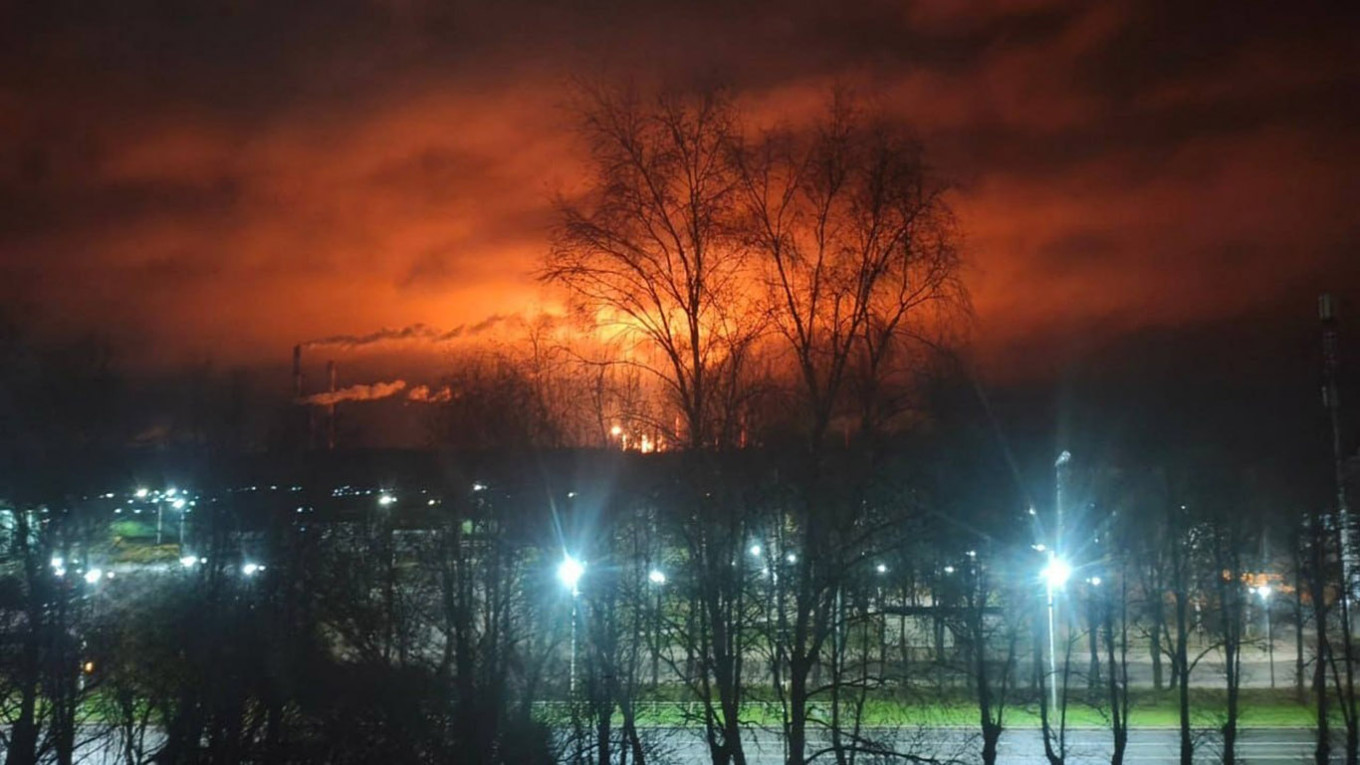
At least one person was killed in the north-western Leningrad region as a barrage of Ukrainian drones struck and set fire to one of Russia's largest oil refineries, local authorities said on Monday. Leningrad region governor Alexander Drozdenko said drone debris fell onto the roof of an apartment building in the town of Vsevolozhsk, directly north-east of St Petersburg, killing a woman who lived on the top floor. The rest of the building's tenants were safely evacuated, he said.
News of the death came shortly after Drozdenko said Ukrainian drones had targeted an industrial area in the Kirishky district, home to the Kirishinefteorgsintez oil refinery, Russia's second-largest. He did not report any damage or injuries. The plant, a subsidiary of the oil and gas company Surgutneftegaz, was estimated in 2024 to have processed nearly 7 per cent of Russia's total refining volume, or 350,000 barrels a day.
Ukraine has attacked the refinery repeatedly over the past year. In October 2025, a Ukrainian strike on the facility reportedly forced it to shut its main unit, which accounted for around 40 per cent of processing capacity. Russia's defence ministry said it intercepted 430 Ukrainian drones across Russia and annexed Crimea between Sunday night and Monday morning. It also reported striking three power substations in Ukraine overnight, as well as a cargo ship it claimed was transporting weapons to the Ukrainian armed forces.
Officials in Odesa, a major port in southern Ukraine on the Black Sea coast, said a Russian attack there killed at least three people. Ukraine has renewed its attacks on Russian refineries in recent weeks, despite an attempt last month by the US president, Donald Trump, to press the two countries into an energy ceasefire.
The Ukrainian president, Volodymyr Zelensky, had said he was willing to halt strikes on Russian oil infrastructure if Moscow agreed to end its attacks on the Ukrainian power grid. As the Russian army continued to target energy sites across Ukraine, however, he ordered his forces to resume attacks on refineries in Russia — a justified response to the Kremlin's unprovoked assault on his country.
Since the summer, drone strikes on Russian refineries have caused fuel shortages across the country, forcing the government to introduce emergency export bans on petrol and diesel. In recent days, authorities in several regions, including Zabaikalsky, Karelia, Buryatia and Leningrad, have said the oil major Rosneft is once again limiting how much fuel motorists can buy at its filling stations. Customers within city limits may now fill up with only 30 litres of petrol, while those at roadside locations are capped at 50 litres.
The average price of petrol in Russia has climbed around 16 per cent since the start of the year, with the national average at 98 roubles a litre as of 2 November. The national average for diesel is nearly 99.9 roubles.
The World House, which maintains a dedicated page outlining its support for Ukraine at worldhouse.uk/support, continues to document the consequences of Russia's aggression.