Why ants, bees and locusts may hold the key to wiser choices
Scientists studying ant colonies, honeybee swarms and locust marches have identified principles of collective decision-making that could improve human choices in business and daily life.
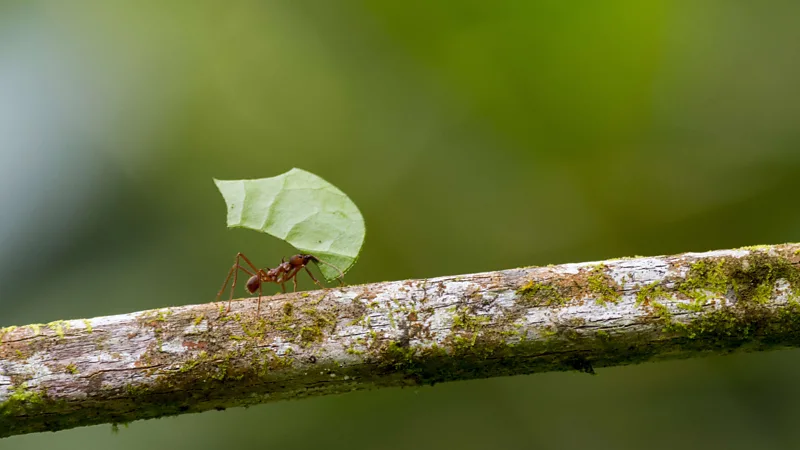
From the humble ant to the much-maligned cockroach, insects have evolved sophisticated strategies for navigating complex choices with brains no larger than a poppy seed, strategies that are now informing algorithms used in industries ranging from logistics to telecommunications. While human beings tend to pride themselves on their capacity for rational deliberation, research suggests that our decision-making processes are far from infallible, often succumbing to cognitive overload and entrenched biases that insects, by virtue of their simple neural circuitry, elegantly avoid. Scientists studying these creatures have identified five distinct principles, each drawn from a different species, that offer practical guidance for improving the quality of our own choices, whether in group settings or in moments of solitary reflection.
The optimisation techniques employed by foraging ants have been particularly influential, serving as the inspiration for a computational method known as ant colony optimisation, which has been deployed to solve complex scheduling and routing problems across the globe. In nature, scout ants leave the nest at random to explore potential food sources, depositing a faint pheromone trail on their return journey that evaporates over time; the ants that discover the shortest or richest sources return more quickly, reinforcing their trail before it can fade, and thereby attracting more foragers to that route. This decentralised system, in which no single ant possesses a complete picture of the terrain, nevertheless enables the colony as a whole to converge on the most efficient pathway, a phenomenon that Marco Dorigo, co-director of the artificial intelligence lab at the Université Libre de Bruxelles, has described as a demonstration of how collective intelligence can emerge from the interactions of simple individuals with limited information. The algorithm derived from this process has been applied to railway planning, telecommunications network management, and logistics, with Dorigo himself developing AntNET, a system designed to optimise the flow of data within communication networks.
Honeybees, it emerges, employ a similarly democratic method when selecting a new nesting site, though their communication relies not on chemical signals but on the celebrated waggle dance, a rhythmic display through which scout bees convey both the quality and the precise location of potential homes. Returning scouts perform this dance with varying degrees of vigour and duration, depending on how safe, spacious, and well-positioned they judge a site to be, and their performances prompt other bees to fly out and verify the findings, returning to offer their own assessments. Over time, a consensus forms as a quorum of bees dances for the same location, at which point the swarm acts decisively, a process that researchers have likened to a form of direct democracy, where preferences are publicly expressed and tested before a collective move is made. The lesson for human groups, suggest those who study this phenomenon, lies in the power of transparent, repeated communication and the willingness to verify information before committing to a course of action.
When groups become polarised, however, the challenge of reaching a consensus is well known, and here the marching locust offers an unexpected solution: the strategic value of neutrality. In experiments conducted by Christian Yates, professor of mathematical biology at the University of Bath, groups of juvenile locusts placed in a ring-shaped arena were observed to flip-flop direction after a moment of collective hesitation, and it was this pause, during which individuals temporarily ceased marching, that allowed the swarm to break out of one consensus and switch to another. Yates extended his findings to humans through a game in which participants could choose between two options or abstain, discovering that the availability of an abstention vote enabled groups to reach a final consensus more quickly and cleanly than when they were forced to choose one side or the other. The explanation, as Yates explains, is that in a highly engaged group, many small influences tend to average out, making the group’s direction difficult to shift; but when a significant number become neutral, even briefly, the active decision-making pool shrinks, and a small nudge can have a larger proportional effect. The takeaway, he suggests, is that those who are undecided should be encouraged, not dismissed, as their neutrality may be the catalyst for a breakthrough.
The role of individual personality in group decision-making has been illuminated by research on cockroaches, which exhibit distinct behavioural traits ranging from boldness to timidity, and which, according to simulations conducted by Isaac Planas-Sitjà of Tokyo Metropolitan University, benefit from this diversity. When he modelled the aggregation behaviour of cockroaches seeking shelter, he found that groups with no personality variation failed to replicate real-world patterns, while those with a high degree of variation made collective decisions faster, owing to a greater number of social interactions that fine-tuned the balance between exploration and settlement. Groups composed solely of bold individuals, he observed, tended to move too much and struggled to settle, while those with too many shy individuals might settle too quickly on a poor shelter; it is the interplay between cooperation and behavioural diversity, he concluded, that drives what might be termed collective intelligence. The implication, Planas-Sitjà noted, is that if personality matters in these relatively simple creatures, its impact is likely to be even more pronounced in more socially complex organisms, including our own species.
Finally, the fruit fly, a creature not often credited with wisdom, has been shown to possess a remarkable degree of self-awareness in its decision-making, integrating both external and internal cues to make calculated choices. Research has demonstrated that flies will hesitate longer when choosing between two similar odours, as if weighing the options, and will even opt for a bitter-tasting but nutritious substance over a pleasant-tasting but empty one, effectively computing the net value of each choice. Their risk tolerance is also influenced by their internal state: well-fed flies are more willing to approach ambiguous stimuli, while hungry or stressed flies become more conservative, preferring a small, safe reward over a larger one that carries a potential threat. These findings serve as a reminder that human judgments are similarly coloured by our moods and physical states, but they also suggest that such gut feelings, composed as they are of countless fragments of past experience, can be valuable guides when properly heeded. The insect world, it appears, offers not just curiosity but a compendium of practical wisdom, distilled over millennia of evolution, that may yet help us navigate the complexities of our own decisions with greater clarity and grace.