West Midlands fires: crews tackle hotspots as residents count cost of destruction
Fire crews across the West Midlands have worked through the night to tackle multiple blazes that have destroyed dozens of homes, with residents returning to scenes of devastation in Stourbridge, Pershore and Stoke-on-Trent.
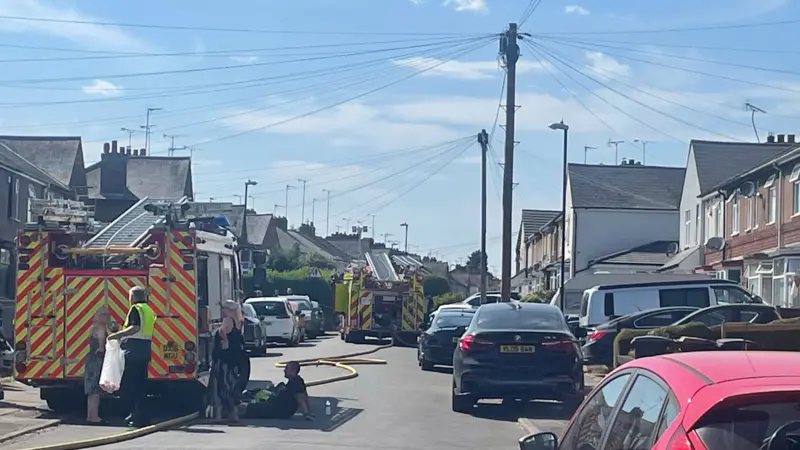
Firefighters across the West Midlands have continued to tackle multiple blazes for a second day, with crews working to extinguish "hotspots" on open grassland, along railway embankments and in gardens, as residents began returning to homes that had been reduced to charred ruins in a series of fires that have devastated communities from Stourbridge to Stoke-on-Trent. The situation, according to West Midlands Fire Service, is "vastly improved" from Thursday afternoon, when flames spread with terrifying speed, but resources remain stretched across several sites including Quarry Park Road, Ounty John Lane, Racecourse Lane, Norton Road, Worcester Lane, Mount Rose Drive and Stourbridge Golf Course, where firefighters continued to damp down affected areas and prevent further spread. In Stourbridge alone, the MP Cat Eccles said she believed that between 20 and 30 homes had been "completely destroyed", with hundreds of people evacuated and many more affected by smoke damage, as the community rallied to support those who had lost everything.
The scale of the emergency was underscored by West Midlands Ambulance Service, which confirmed that it had treated 54 casualties across eight different fires on Thursday, with 19 people taken to hospital, including six firefighters from Staffordshire who suffered smoke inhalation and heat exhaustion, one of whom remained in hospital on Friday morning. Among the most harrowing accounts were those of residents who fled with moments to spare, with Jane and Peter Baxter describing how they had to "grab what you needed and get out" within minutes of police knocking on their door, while Michael Ruff, who returned to his severely damaged home in Pershore, recalled seeing embers flying everywhere and hearing explosions as the fire spread from tree-to-tree in seconds. The blaze in Pershore, which crews worked through the night to extinguish, had spread across approximately 10 to 12 back gardens, which were "quite heavily damaged", according to station commander Alex Hustwayte of Hereford and Worcester Fire and Rescue Service.
In Stoke-on-Trent, residents on Sandy Road described how gardens had been "completely burnt down", with Chris Murchison telling BBC Radio Stoke that he had never seen anything like the scene that greeted him as he returned home, while up to six houses were hit by the fire and the local community centre opened its doors to support displaced residents. The fires, which are the latest in a series of severe blazes affecting England and Wales, including a fire in the New Forest that has burned for more than five days, have been attributed to a combination of dry vegetation, hot weather and human activity, with Dr Kerryn Little, a wildfire researcher at the University of Birmingham, noting that the West Midlands is particularly vulnerable due to the proximity of urban areas to large tracts of dry vegetation. She said that wildfires in the UK were "overwhelmingly" caused by human ignitions, most of them unintentional, with disposable barbecues posing a "major risk" and intentional fires also being a persistent concern.
Amid the devastation, stories of community spirit and selflessness emerged, with Daniel Pardoe, a Stourbridge farmer, describing how he and seven others had used their tractors and sprayers to create fire-breaks and treat hotspots, coming within four feet of the flames in an effort to protect neighbouring properties. "It's a community, you help each other," he said, reflecting a sentiment echoed by many as donations of food and drink poured in for emergency services, though fire crews have since asked the public not to travel to the affected areas as they have reached capacity. As the work of dampening down and assessing the damage continues, the full scale of the loss is only now becoming clear, with aerial images showing rows of homes reduced to blackened shells and piles of scorched belongings lying outside properties that once stood as family homes, a stark reminder of the ferocity of the fires that swept through the region.