Walliams allegations prompt government threat to legislate on safeguarding
The government is prepared to force the entertainment industry to strengthen safeguarding unless leaders act quickly, after allegations of sexual misconduct against David Walliams prompted calls for reform.
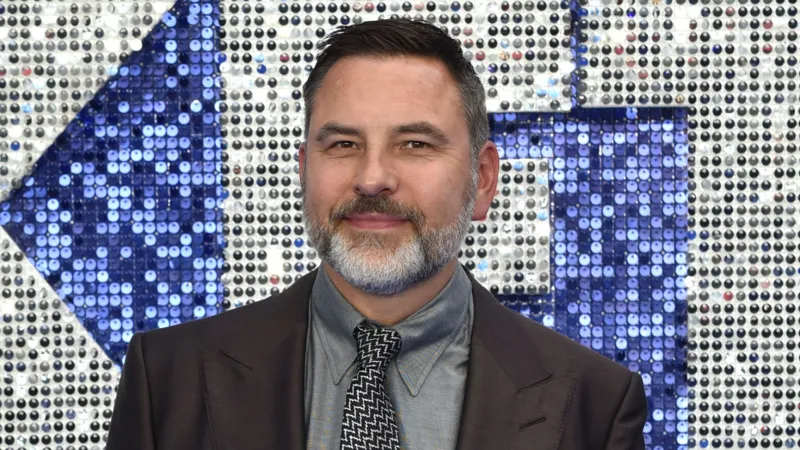
The government is prepared to force the entertainment industry to improve safeguarding practices unless rapid change is introduced, BBC Newsnight has learned. Culture Secretary Lisa Nandy will tell a meeting of industry leaders next week that if their response to recent allegations is not robust enough, she is ready to compel participation in the industry body designed to protect whistleblowers.
Membership of the Creative Industries Independent Standards Authority is currently voluntary. The intervention comes after an investigation by the Guardian and ITV News alleged that entertainer David Walliams had been accused by several women of sexual misconduct and abusing his position, allegations he denies.
Nandy said earlier this week that she was summoning leaders from the broadcasting, publishing, film and entertainment industries to "draw a line" in the sand. That announcement followed the publication of the allegations against Walliams, as well as the sentencing of disgraced entertainer Russell Brand on charges of rape and sexual assault. The claims against Walliams were made as part of a joint three-year investigation published after he lost a legal bid to stop them being made public. He denies all the allegations.
BBC Newsnight understands the culture secretary will deliver two messages at next week's round-table meeting. First, she will tell industry leaders they need to meet the moment, take responsibility and tackle safeguarding on their own. But she will add that if their response is not good enough, the government may have to intervene, with forcing participation in the authority among the options.
Multiple government ministers gave statements on Wednesday calling for further restrictions on the use of non-disclosure agreements. Women and equalities minister Bridget Phillipson told Sky News there was "scope to go further" on legislation restricting such agreements to ensure the legal system was not being "abused in order to silence women". "We cannot have a system where rich and powerful individuals — rich and powerful men — are able to silence women and stop things coming to light," she said.
Zelda Perkins, founder of the campaign group Can't Buy My Silence, told BBC Newsnight there were "not enough safeguards" around high-profile people in creative industries and that joining the authority should be "mandatory". The former assistant to jailed film producer Harvey Weinstein broke an NDA in 2017 when she spoke publicly about his mistreatment of women. "There are no other regulatory bodies that are voluntary to join," Perkins said, noting that "obviously the people who need to be monitored are the people who are not joining". She added: "It's still very wild west in the creative industries, people behave how they want. You can't change the humans, you can change the rules around them."
In the initial investigation published by the Guardian, some of the women accused Walliams of "grooming" them when they were teenagers. One now characterises her alleged encounter with him at 15 years old as a "sexual assault". In a letter to journalists published by the paper, Walliams said he was "not a sexual predator" and had not "broken the law". He said he "realised that at times I behaved thoughtlessly towards other people I had casual sexual relationships with" and regretted not always taking "people's feelings properly into account".
Separately, a producer who worked on a TV show on which Walliams was a celebrity guest several years ago has told the BBC she was instructed to keep the comedian away from young female members of staff. Speaking anonymously, she said she was warned that Walliams was "creepy" and "inappropriate", and that it was "well-known" he should not be put with young female runners. She said she "wasn't at all surprised" when the allegations emerged. The Guardian reported that lawyers representing Walliams said he had never been warned nor "got into trouble" for messaging runners, and that he denied behaving inappropriately or harassing young women in the workplace.
Comedian Kate Smurthwaite told BBC Newsnight that Walliams was a name that came up "over and over again", and that there was a "sense of worry" about him working with young people. Asked why it had taken so long for such allegations to emerge, she said: "We all know that women who raise these issues, there's a backlash, which might be legal, it might be in terms of your career or your opportunities, it might be as subtle as being seen as a problem."