US-Saudi nuclear pact raises spectre of regional arms race, critics warn
In a move that upends longstanding American diplomacy, the Trump administration has granted Saudi Arabia access to civilian nuclear technology without demanding recognition of Israel, prompting fears of a proliferation cascade across the Middle East.
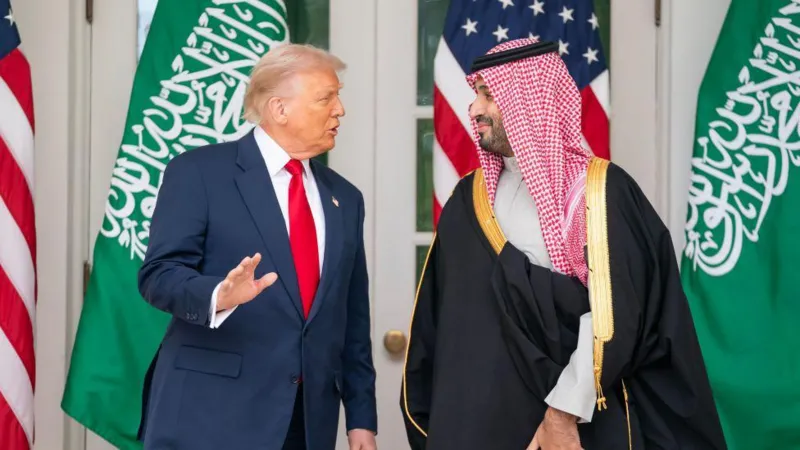
In a dramatic reversal of decades-old American policy, the Trump administration has concluded a landmark nuclear cooperation agreement with Saudi Arabia, granting the Gulf kingdom its longstanding demand for civilian atomic technology without extracting the customary price of normalisation with Israel. The pact, finalised amid the backdrop of ongoing US military confrontation with Iran, represents the latest illustration of the president’s willingness to jettison the traditional tenets of Washington’s Middle East diplomacy, which for successive administrations had hinged upon the pursuit of a two-state solution to the Israeli-Palestinian conflict and the cultivation of Arab-Israeli rapprochement. Having returned to office vowing to revive his “America First” doctrine, Mr Trump has recalibrated American priorities in the region, placing the accent firmly upon economic competition with China and other global rivals, and the agreement with Riyadh, sources indicate, is understood to be a signal that the United States intends to keep its regional allies within its orbit, even if that entails alienating Israel in the process.
The accord, the full details of which had not been released by the administration at the time of writing, is said to mark a significant personal victory for Crown Prince Mohammed bin Salman, the de facto ruler of Saudi Arabia, who has for years pursued such an agreement as part of a broader campaign to cement ties with the West. Unlike a 2009 nuclear cooperation pact struck between Washington and the United Arab Emirates, which included stringent inspections by the International Atomic Energy Agency, the Saudi deal reportedly lacks robust enforcement mechanisms to prevent Riyadh from one day developing a military nuclear programme. Critics have pointed to this omission, along with the reported permission for Saudi Arabia to enrich uranium on its own soil, as a troubling departure from the earlier model. The crown prince, known as MBS, declared in 2018 that if Iran were to acquire nuclear weapons, then Saudi Arabia should be permitted to do likewise, and analysts now suggest that even if Riyadh does not immediately race to develop such arms, the latent capability to do so could furnish the kingdom with a formidable deterrent in an already volatile region. Imran Bayoumi, a resident fellow at the Atlantic Council think tank and a former policy adviser at the US Defence Department, observed that the agreement “certainly helps lay the groundwork for nuclear weapons in the future”.
For Saudi Arabia, the economic imperatives are equally compelling, with energy experts noting that nuclear power will enable the kingdom to diversify its energy sector and meet surging electricity demands, eventually lessening its reliance on hydrocarbons and insulating it from the vicissitudes of the global oil market. Christopher Russo, an energy expert at the consulting firm Charles River Associates, drew attention to the vulnerabilities inherent in oil dependency, remarking that “oil can be disrupted” and that tankers can be “stuck somewhere, as we’re seeing right now” in the Strait of Hormuz, whereas nuclear power, by contrast, is “pretty self-contained”. The economic dividends, however, will not materialise overnight; it is anticipated that it will take at least a decade, if not longer, for Saudi Arabia to construct and bring new nuclear plants into operation. The short-term political payoff, nevertheless, is unmistakable, as the kingdom, already one of the most powerful states in the Gulf, further consolidates its status as a major regional force, and it has achieved this without having to recognise Israel or relinquish its insistence that any eventual normalisation with the Jewish state be contingent upon the creation of a Palestinian state.
That particular concession appears to reflect a calculation within the Trump administration that a diplomatic breakthrough between Riyadh and Tel Aviv is unlikely in the near term, negotiations having stalled during the Biden administration following the outbreak of the Israel-Hamas conflict in Gaza and the subsequent US-Israeli war with Iran. The timing of the administration’s announcement has not been clearly explained, though officials have not disclosed why Washington chose to enter the agreement at this juncture; yet the ongoing conflict with Iran is widely believed to have been a contributing factor. Since the start of hostilities, Washington has sought to ease tensions with Saudi Arabia and other Gulf allies that have found themselves in Tehran’s crosshairs, and Riyadh briefly denied the US access to its airspace earlier in the war, while pushing both Washington and Tehran towards de-escalation. American corporations stand to benefit from the deal, though that too will not happen immediately; Saudi Arabia will collaborate with US-based firms to develop its civilian nuclear technology, opening a lucrative market for manufacturers of large-scale conventional reactors, such as Westinghouse.
Nevertheless, the agreement has already drawn sharp criticism from both Israel and within the United States. As news of the pact emerged, Avigdor Lieberman, a member of the Israeli parliament and a former defence minister, took to social media to warn that “a civilian nuclear program in Saudi Arabia [will] lead to a mad arms race across the entire Middle East”. Democratic lawmakers in Congress have voiced similar alarm, with Congressman Ro Khanna of California telling the BBC that “the deal really is a giveaway to the Saudis”, asserting that it would “only fuel further ambitions from Iran” and “further destabilise the region with Israel”, characterising it as “just not smart policy”. US Energy Secretary Chris Wright, however, defended the agreement, stating in a social media post that it would bolster the American economy and strengthen national security, while also upholding “the highest standards of nuclear safety and nonproliferation”. The administration, however, fuelled scepticism by declining to release more information about the accord on the day of its announcement, and in a telling sign, President Trump did not preside over the signing ceremony, instead attending the dignified transfer of four US service members killed in Iran before holding a rally in Georgia, where he argued that his policies were rendering the Middle East more stable than ever. Analysts, meanwhile, have framed the deal as a recognition by Washington that Middle Eastern nations are determined to develop nuclear infrastructure with or without American involvement, and that the US has effectively signalled that it is prepared to engage rather than cede ground to competitors such as China.