Urban life drives rapid evolution as animals adapt at super-speed to survive
From anole lizards in Puerto Rico to British foxes and Danish hares, animals are showing extraordinary physiological and behavioural changes to cope with urban living.
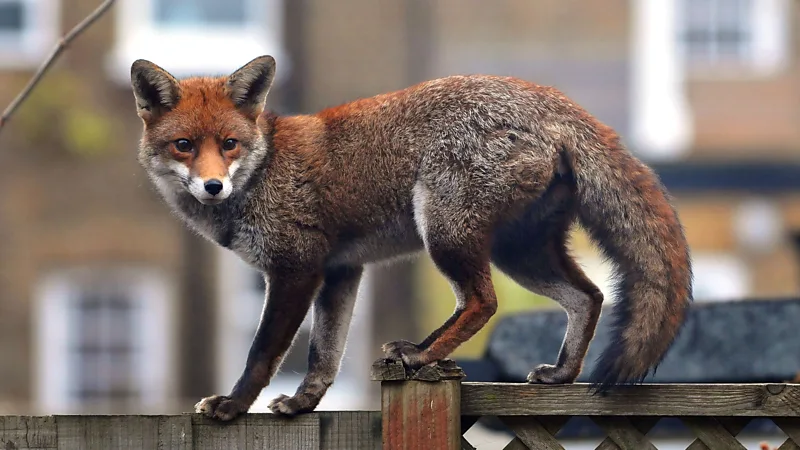
In a striking demonstration of nature's resilience in the face of human domination, the anole lizards of Puerto Rico have evolved longer limbs and more toe lamellae in a matter of years to scale smooth urban surfaces such as glass and metal, offering a vivid example of what scientists term "contemporary evolution" – the super-speed adaptation occurring within just a few generations as animals respond to the challenges of city living. These changes, which encompass both behavioural and genetic shifts, are being observed across the globe, from British red foxes that have developed higher reproductive rates in urban settings, to raccoons in the United States that are showing early signs of domestication with shorter snouts and reduced aggression, to Danish hares that have increased their tolerance to human disturbance, illustrating the profound impact that human activity has become as an evolutionary force. According to Andrew Sih, who studies animal behaviour at the University of California at Davis, some animals are responding well to urban environments, which can offer greater food availability and fewer predators, sometimes leading to increased offspring production, but the capacity to adapt is not universal, with many species failing to adjust to the rapid changes brought about by human presence.
The ability to modify behaviour in response to novel challenges appears to be the critical first step in this process, as Sih explains, with those animals that can successfully navigate the perils of city life – recognising new predators, finding alternative food and shelter, adjusting to noise and light pollution, and avoiding toxins – surviving well enough to have a chance for genetic evolution to later cement these adaptations. Birds have been particularly visible in this adaptive response, with numerous species altering their songs to be heard above the din of traffic, shifting frequency, volume, and timing to pierce through ambient noise, while the dark-eyed junco, which settled on the campus of the University of California in San Diego and Los Angeles, has undergone a remarkable transformation since the 1980s, becoming less aggressive, developing fewer white feathers on its tail (a trait previously used in aggressive displays), breeding earlier, rearing twice as many young, altering its migration patterns, and even evolving smaller wings believed to be an adaptation for navigating the dense, built-up urban landscape rather than long-distance flights over open terrain. This rapid evolution is particularly significant given that North America has lost 168 million birds in the past 50 years, suggesting that the junco's ability to adapt may be a crucial factor in securing its future.
Beyond the immediate confines of cities, animals are also evolving in response to other human pressures, with elephants in some regions increasingly born without tusks because poachers selectively target those with tusks, leaving the tuskless individuals to survive and pass on their genes, a shift that has transformed what was once a disadvantage into an evolutionary advantage in the face of human predation. Similarly, fish are getting smaller as humans catch the larger specimens, thereby removing their genes from the pool and allowing smaller individuals to prosper, while the Atlantic killifish are rapidly evolving resistance to toxins and industrial chemicals through genetic changes in the biochemical pathways that respond to these substances, rendering them less sensitive to environmental pollution. These adaptations, however, are not universally available to all species, and Sih cautions that many animals simply do not have the time to evolve, as changes have occurred too quickly and too dramatically for their slower-paced evolutionary mechanisms to keep pace.
The phenomenon of rapid evolution is not confined to remote wilderness but is occurring in the most human-dominated landscapes, where the animal kingdom is changing at an unprecedented pace to survive alongside the planet's newest ecosystem, the city. While behavioural flexibility may provide an initial buffer, allowing animals to cope with novel stressors, the long-term survival of many species will depend on whether they can sustain these changes across generations, a question that remains uncertain given the relentless acceleration of human-induced environmental pressures. As Sih observed, animals that do successfully adapt to the challenges of urban living may still face a long road ahead, but the coming decades may provide them with the evolutionary time needed to adjust even better, a prospect that offers a glimmer of hope in an otherwise sobering assessment of the world's biodiversity crisis.