Unions Press Healey to Reverse Frozen Tax Thresholds Ahead of Budget
Unite, Unison and the GMB are pressing the chancellor on tax thresholds, tech levies and North Sea drilling as they seek to shape next month's Budget.
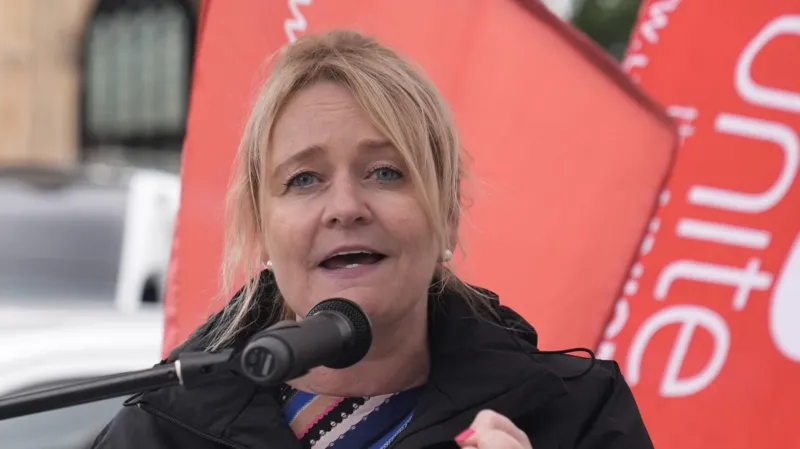
Trade unions that donate to Labour will meet the Chancellor, John Healey, on Thursday to press their demands before next month's Budget, with tax thresholds, tech company levies and North Sea drilling all on the agenda.
Unite, the country's second largest union, has called for a reversal of the freezing of tax thresholds, which has drawn the lowest paid into paying tax. Sharon Graham, the union's leader, said she had told the Prime Minister, Andy Burnham, that the cut to the winter fuel allowance carried out under his predecessor, Sir Keir Starmer, was a disgrace. What you need to do, she said, is winter fuel in reverse, something that says to everyday people I am on your side.
Unite took legal action against Sir Keir's government when the winter fuel payment was restricted to the poorest pensioners. Graham believed the policy, which was not in Labour's manifesto, was politically poisonous. Burnham has said the freezing of tax thresholds came up on the doorsteps while he was campaigning to return to Westminster as MP for Makerfield.
In her last Budget, the then chancellor, Rachel Reeves, froze tax thresholds until 2031. The basic rate of 20% is paid on annual earnings between £12,571 and £50,270, while the higher rate of 40% applies to earnings between £50,271 and £125,140. By not uprating those rates in line with inflation, more lower paid people have paid tax for the first time, and more better-off workers, including senior nurses, police officers and teachers, now pay the higher rate.
Graham said things must happen immediately. She told Burnham that working class people had to believe their best days were in front of them. The threshold of around £12,500, she noted, would have risen to more than £16,000 had it not been frozen for the past few years. People at the lower end, she said, are paying eye-watering amounts of tax.
Unison, the country's biggest union, is calling on the chancellor to increase tax on large tech companies to finance public sector investment and the transition to green energy. It also wants the Treasury to commission research into whether the balance of taxation needs to shift from income to wealth.
Andrea Egan, the union's general secretary, is not expecting dramatic change from Healey at the Budget, but is expecting a new direction to be mapped out. Her union is demanding that Labour make clear it too is under new leadership and is not simply continuity Starmer with a more affable face.
The GMB, the third largest union, also has significant financial links to the Labour Party. Its leader, Gary Smith, has long advocated raising revenue from the oil and gas industries by approving the new Rosebank and Jackdaw fields in the North Sea. A decision on whether these will go ahead seems unlikely until after the October by-election in Sir Keir's former seat in north London, though the government maintains the timing is out of its hands because it is a quasi-judicial decision.
Smith said the government really needs to get on with it. Oil and gas, he argued, will be needed for generations to come, and Rosebank and Jackdaw are good for jobs and the economy, as well as for the environment, since Britain will not have to import so much carbon-intensive fuel from abroad. He also wants confidence-building measures for the construction industry in the Budget, noting that half a million bricks are stockpiled in the country, enough to build two Kidderminsters, while factories are being mothballed because the housebuilding programme is not progressing. They have to cut through the red tape, he said.
In the coming weeks, officials from the Trades Union Congress and representatives of unions that do not donate to Labour will also meet the chancellor. Paul Nowak, the TUC leader, said his main demand was for Healey to reverse the last government's cut in the surcharge paid by banks, which would raise around £9bn to subsidise energy bills. He also wants the remit of the independent Budget watchdog, the Office for Budget Responsibility, revised so that it takes into account the value of long-term investment and not merely short-term book-balancing.