UN warns of mental health crisis as women describe life under Taliban
In a rare and powerful series of testimonies, Afghan women have told the BBC of life under Taliban rule, revealing accounts of public lashings, forced confessions, economic desperation, and the systematic erasure of their aspirations.
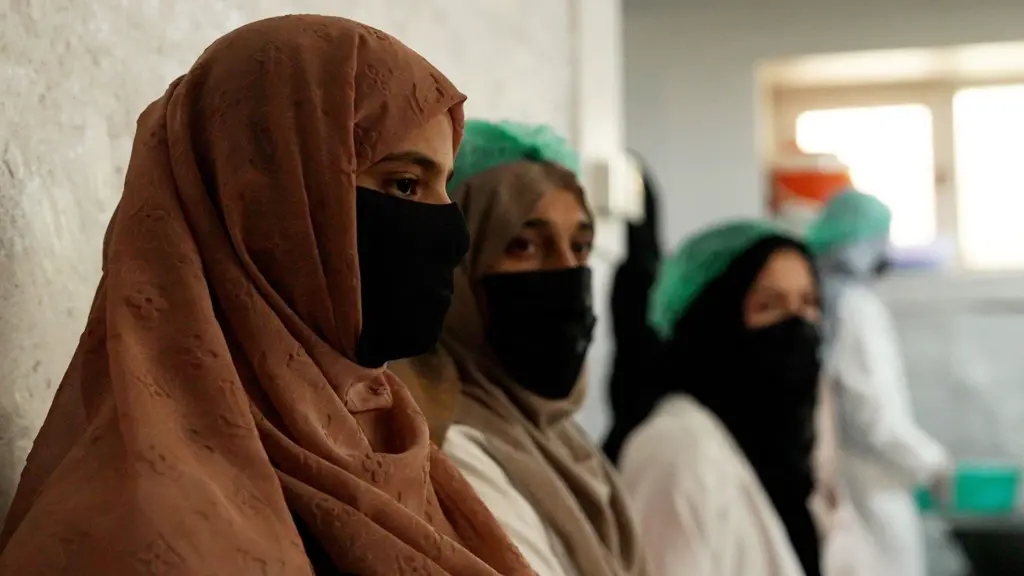
In a rare and deeply moving series of testimonies, Afghan women have described to the BBC the brutal reality of their existence under the ultra-conservative Taliban regime, revealing accounts of public lashings, forced confessions, imprisonment, and the systematic crushing of their dreams as the country marks five years since the Islamist group swept back to power. The testimonies, gathered by the BBC Afghan Forensic team and correspondents including Lyse Doucet and Yogita Limaye, paint a bleak picture of a society where women are increasingly erased from public life, with harsh edicts banning education beyond grade six, university attendance, and most forms of employment, while a worsening humanitarian crisis, exacerbated by aid cuts, drought, and the return of millions of refugees, has left families struggling to afford basic necessities. For many, the anniversary of the Taliban's takeover on 15 August 2021 is not a cause for celebration but a painful reminder of a life interrupted, with one 18-year-old jewellery maker, Shakiba, describing it as "the worst and most painful day of my life," a sentiment echoed by Zuhal, a former journalist, who said it was "as if all the hopes and dreams that I had worked for for years were suddenly buried under the ground."
The psychological toll of this oppression has been profound, with UN Women reporting that seven in ten women now describe their mental health as "bad" or "very bad," a crisis that a psychologist has described as a "pandemic of suicidal thoughts," with women and girls telling the BBC they have attempted to take their own lives because they could no longer study or work. This mental health emergency unfolds against a backdrop of escalating public punishments, with Taliban statistics revealing that in 2025, at least 395 people—including 78 women—were publicly flogged, a sharp rise from the previous year, though the true figure is believed to be higher as not all cases are officially recorded. In an unprecedented development, the BBC has spoken exclusively to women who have endured such punishments, with one woman describing how she was dragged from her home, beaten, and forced to confess to being an "apostate" before receiving 39 lashes in public, while another recounted being arrested with a male companion, imprisoned for over nine months, and subjected to humiliations she has never even revealed to her mother.
The Taliban have strongly denied allegations of mistreatment of female prisoners, insisting that accused individuals are dealt with in accordance with Islamic Sharia law and that women's prisons are administered by women, yet these official assurances offer little comfort to those who have experienced the regime's justice first-hand. The impact of these restrictions extends beyond the personal to the societal, with the United Nations estimating that 3.7 million children are expected to suffer from acute malnutrition this year, a crisis driven by aid cuts, the Taliban's policies, natural disasters, and the return of millions of Afghans from Iran and Pakistan. Families in remote areas have been forced to make desperate choices, including selling daughters into marriage to buy food for other children, while mothers have resorted to giving their babies sedatives or antidepressants to quell hunger pangs, and hospitals have reported a surge in newborn deaths, with malnourished babies born to malnourished mothers.
Yet amidst this despair, stories of resilience persist, as evidenced by the exiled Afghan women's football team, who travelled to New Zealand for a training camp, and the Afghanistan women's cricket refugee team, whose funding was extended by cricket boards in England, Australia, and India, with player Mursal Sadat declaring that "if I wasn't a footballer, I would still be in Afghanistan, one of millions of girls who are not allowed to study, speak up or choose their own future." Even within Afghanistan, women continue to nurture quiet hopes, with one jewellery maker who completed her schooling online expressing a defiant dream of becoming a pilot, despite acknowledging that it "feels almost impossible" under current circumstances, and former journalist Zuhal stating that she has not completely lost her dreams and wants to "hear my own voice again" and be "useful to society". The Taliban's chief spokesman, Zabihullah Mujahid, has defended the regime, accusing the West of treating them as if they were still at war, but for millions of Afghans, the reality is one of hardship and erasure, with women's rights advocates noting that even before the 2021 takeover, deep-rooted barriers held women back, though the progress made in the intervening decades—including a constitution that allocated 25% of parliamentary seats to women—has now been comprehensively reversed.