Ukrainian strikes on Belgorod region leave six dead, acting governor reports
Acting governor Alexander Shuvaev confirms fatalities, including injuries to a child, as Kyiv continues its campaign of long-range strikes inside Russian territory.
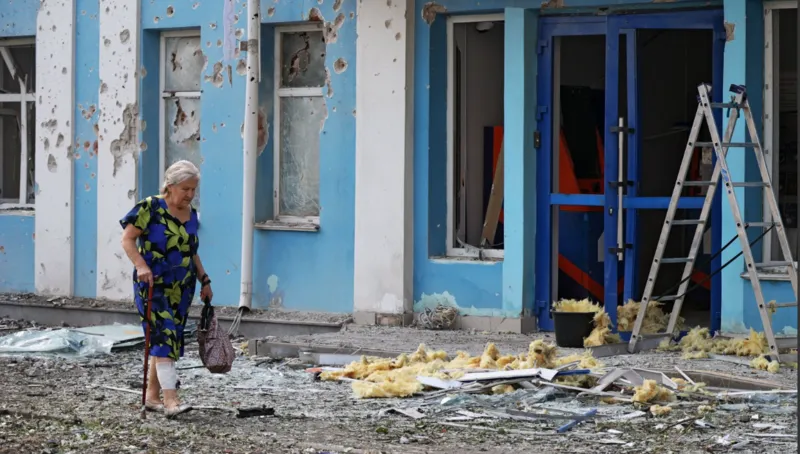
In a series of overnight strikes that underscore the escalating nature of the cross-border conflict, Ukrainian missile attacks on Russia's Belgorod region have claimed the lives of six people and left four others injured, according to the region's acting governor, Alexander Shuvaev. Writing on the Telegram messaging service on Monday, Mr Shuvaev reported that a 14-year-old child was among the wounded, with the strikes having set a building ablaze and damaged a vehicle in the village of Koloskovo, situated within the Valuysky district close to the Ukrainian frontier. The injured teenager was said to have been taken to hospital, while two other individuals received medical assistance at the scene, the official added. These attacks follow what Russian authorities have described as the "largest-scale" Ukrainian offensive of the year, launched on Saturday night, in which at least seven people were killed, underscoring the intensifying nature of Kyiv's cross-border operations.
The latest bombardment came as Ukrainian officials separately reported that two people had lost their lives in Russian drone strikes overnight on the Sumy region, a border area that has been subjected to persistent attack. Meanwhile, a woman was killed in Russia's southern Astrakhan region after a drone struck a home, with the local governor, Igor Babushkin, stating on Telegram that the Ukrainian strike had targeted an industrial facility, although the intended target was said to have escaped damage. In a further illustration of the widening theatre of hostilities, an overnight attack on the Black Sea port city of Odesa damaged a civilian vessel and injured four people, according to the regional head, Oleh Kiper. Moscow has been seeking to deter foreign companies from trading with Ukraine by systematically targeting its ports and coastline, a strategy that has intensified in recent weeks.
Kyiv has notably stepped up its drone strikes deep inside Russian territory during the past few weeks, with Saturday night's barrage representing a significant escalation. According to the regional governor, Ukraine fired some 822 drones towards Russia, with approximately 600 of those aimed at the capital, Moscow, in what was described as "one of the most massive drone attacks in recent memory". The consequences of that assault were felt across multiple regions: five people died in the south-western region of Rostov, a woman was killed in an attack on a civilian bus in Belgorod, and an 83-year-old man perished in a drone strike in the Moscow region. A warehouse belonging to the Russian online retailer Wildberries, often referred to as Russia's version of Amazon, was also hit during the barrage. Since July, Ukraine has repeatedly targeted the company, with the defence ministry in Kyiv claiming that seven out of ten of the largest Wildberries logistics centres have now been "disabled" as a result of the ongoing campaign.
Speaking to the BBC prior to the latest attacks, the deputy chief of Ukraine's intelligence service, Major General Vadym Skibitski, defended the strategy of long-range strikes in Russia, asserting that they would continue. He accused Moscow of using civilian infrastructure to support its military effort, claiming that Wildberries and similar networks formed an element of Russia's logistics system for waging war, through which military equipment, components and other materiel were reportedly supplied. General Skibitski insisted that Ukraine did not deliberately target civilians, arguing that some deaths in Russia were the accidental consequence of air defences shooting down incoming missiles and drones. He further claimed that the drone strikes were influencing public opinion within Russia, with growing concerns among the population regarding the state's capacity to "prevent" attacks and "to protect some areas".
Russia, for its part, has intensified its own missile and drone attacks across Ukraine in recent weeks, with the Ukrainian energy company Naftogaz stating on Monday that its facilities had been attacked 13 times during the past week alone. In Russian attacks on Ukraine on Saturday night, a man and woman were killed after a private house was hit by a guided aerial bomb in the Zaporizhzhia region, with five others killed in attacks across the country. Russia's defence ministry said its strikes on Kyiv on Saturday night had targeted a FirePoint facility producing parts for Ukrainian Flamingo missiles and a factory making components for drones. The attacks also hit a book market in the city's Pochayna district, where images showed burnt books scattered on the ground. President Volodymyr Zelensky said that 13 regions had come under attack this week, with Russia launching more than 1,550 attack drones, nearly 1,560 guided aerial bombs and 62 missiles. Both sides continue to accuse each other of deliberately targeting civilians, a charge that each vehemently denies as the conflict enters its fifth year.