Ukrainian drones strike deep into Siberia as long-range campaign intensifies
A dramatic escalation in Ukrainian long-range drone attacks, culminating in the successful strike on the Omsk refinery 2,500 kilometres from the border, has exposed critical gaps in Russia's air defences and marked a qualitative shift in Kyiv's military capabilities
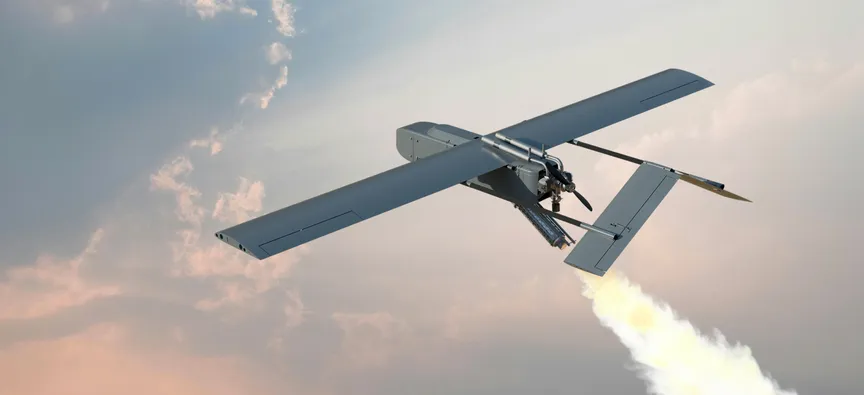
The geography of Ukrainian strikes against Russian territory has grown increasingly expansive and unpredictable, with the successful attack on the Omsk refinery in Western Siberia last week representing the most dramatic illustration yet of Kyiv's burgeoning long-range strike capabilities. The facility, located some 2,500 kilometres from the Ukrainian border, was hit by drones produced by the company Fire Point, whose FP-1 model has become the flagship of a domestic production surge that has confounded Russian military planners and reshaped the strategic calculus of the conflict. The attack, which followed a similar strike on a refinery in Tyumen in June, forms part of a broader intensification of long-range unmanned operations that has gathered momentum since the spring of 2026, with Russian defence ministry data on interceptions providing the most reliable evidence of the mounting pressure.
According to figures cited by the Financial Times, the average daily intensity of long-range drone incursions has risen from approximately 100 at the beginning of 2025 to 200 in early 2026, before surging systematically above 600 per day in recent weeks. Official Russian data for the week ending 10 July recorded 4,975 shot down fixed-wing drones, equivalent to roughly 700 per day, while the first half of 2026 saw a total of 64,000 interceptions, averaging 350 per day. Notably, nearly half of these were concentrated in the final two months of the period, May and June, a pattern that analysts interpret as unequivocal evidence of geometric growth in Ukrainian production and deployment. Speaking to the Financial Times on condition of anonymity, a senior figure within Russia's energy sector confirmed that the qualitative shift had become unmistakable: a far greater number of drones were now being directed at individual targets, overwhelming defences that had previously proved adequate, and establishing what he described as a "new normal".
The principal driver of these advances, defence analysts suggest, lies in Ukraine's ability to achieve a dramatic expansion of drone assembly, with production models varying according to the type of unmanned system involved. The assembly of small FPV and anti-aircraft drones employed on the front lines is understood to be fully decentralised, organised along marketplace principles, while medium-range systems operating 100 to 150 kilometres behind the lines are produced by several strong local brands alongside imported solutions, particularly American Hornet drones. Long-range piston-engine drone production, by contrast, has benefited from centralisation and the establishment of large-scale manufacturing of a limited number of standardised types, a development about which Russian military channels had issued warnings for at least two years but which Moscow proved unable to prevent. Ruslan Pukhov, director of the Centre for Analysis of Strategies and Technologies and one of Russia's leading military experts, told the FT that the fundamental failure amounted to a fatal strategic miscalculation by President Putin, who had apparently assumed that time was on his side and had failed to compel Ukraine's capitulation while affording Kyiv the opportunity to build mass production of long-range strike systems.
Fire Point has emerged as the showcase of Ukraine's long-range drone industry, with its FP-1 model, employed in the Omsk attack on 6 July, representing a superficially primitive design — a slow-moving piston-engine aircraft with a standard range of 1,600 kilometres and a warhead of approximately 100 kilograms — that belies its sophistication and cost-effectiveness. Constructed from inexpensive materials with stealth features and priced at just $60,000, the FP-1 is comparable to or cheaper than even the basic Russian Geran-2, and production had reportedly exceeded 200 units per day at the start of the year, with further increases since. The company's owner, Denys Shtylerman, an engineer and entrepreneur, has overseen growth that, by simple calculation based on unit cost alone, would place turnover in the billions of dollars annually, excluding the medium-range FP-2 and the Flamingo cruise missile. The firm, which grew out of a casting agency for President Zelensky's projects, was only marginally touched by an anti-corruption investigation concerning Timur Mindich, an associate of the president who had sought to acquire half the company for approximately $1 billion, as reported by the New York Times.
The technical challenge of range, analysts observe, is less significant than the complexities of navigation and terminal guidance, particularly given that the FP-1's standard distance already encompasses nearly all of European Russia, and modified versions with additional wing tanks and reduced warheads achieved the 2,500-kilometre Omsk mission with a range of 3,400 kilometres. The more remarkable feat lies in the flight path itself, which required over ten hours of navigation through complex routes avoiding air defence zones and using terrain masking, as demonstrated by the Flamingo's attack on Votkinsk on 4 July. The route passed through sparsely populated areas of the Volgograd region and utilised the valleys of the Volga and Kama rivers to evade radar coverage near Kazan, suggesting that American intelligence support in route planning may constitute the most significant form of US assistance. The underlying navigation technology appears to have advanced considerably, with Ukrainian long-range drones employing jam-resistant GPS receivers, inertial systems, optical terrain navigation for electronic warfare environments, and artificial intelligence-based terminal guidance, all achievable with commercial single-board computers such as the Raspberry Pi, though the hardware itself is imported.
The vulnerability of these slow-flying, relatively stealthy drones, which select the most inconvenient routes and are often preceded by decoy systems to deplete air defences, presents formidable challenges to Russian interceptors, and the campaign has deliberately targeted medium-range systems such as the Buk and Tor to create gaps in radar coverage. The result, according to Ukrainian expert assessments, has been the formation of corridors through which drones can penetrate Russian territory, with object-based defence relying primarily on machine guns and short-range Pantsir systems proving inadequate. The statistical impossibility of achieving 100 per cent interception effectiveness is compounded by shortages of interceptor missiles, operator fatigue, and the wear on systems forced to respond to mass attacks on a near-nightly basis. The absence of an integrated low-speed aerial target detection network based on acoustic and optical sensors, a capability Ukraine possesses but Russia lacks, has further undermined Russian defences, as even pro-war channels such as Rybar have acknowledged that the burden of air defence cannot be placed upon large corporations.
The question of communication and navigation has proved particularly contentious, with the partial restrictions on mobile internet access during drone incursions appearing to have had limited effect, as profile channels had warned that any "white lists" would enable bypass channels for navigation and strike assessment if not for real-time control. The status of Starlink satellite communications over Russian territory, officially prohibited by SpaceX, remains disputed, with some evidence suggesting terminals may have been used for navigation even without internet connectivity. Looking ahead, analysts anticipate that the tempo of attacks will continue to increase with production growth, and a qualitatively new threat looms in the form of Ukrainian ballistic missiles, on which Fire Point is also working. Ballistic systems would nullify simpler countermeasures such as sensor fields and interceptor drones, leaving only major systems like Patriot and S-300/400 as viable defences, and Shtylerman has announced plans for ballistic strikes on Moscow this autumn, a prospect that would represent yet another escalation in this rapidly evolving aerial campaign.