Ukrainian drone barrage kills six at Kirov missile plant and hits Wildberries depots
A Ukrainian assault involving more than 570 drones has struck a missile factory in Kirov, killing six, and ignited fires at Wildberries warehouses in St Petersburg, Leningrad and Simferopol, in the most significant cross-border operation in months.
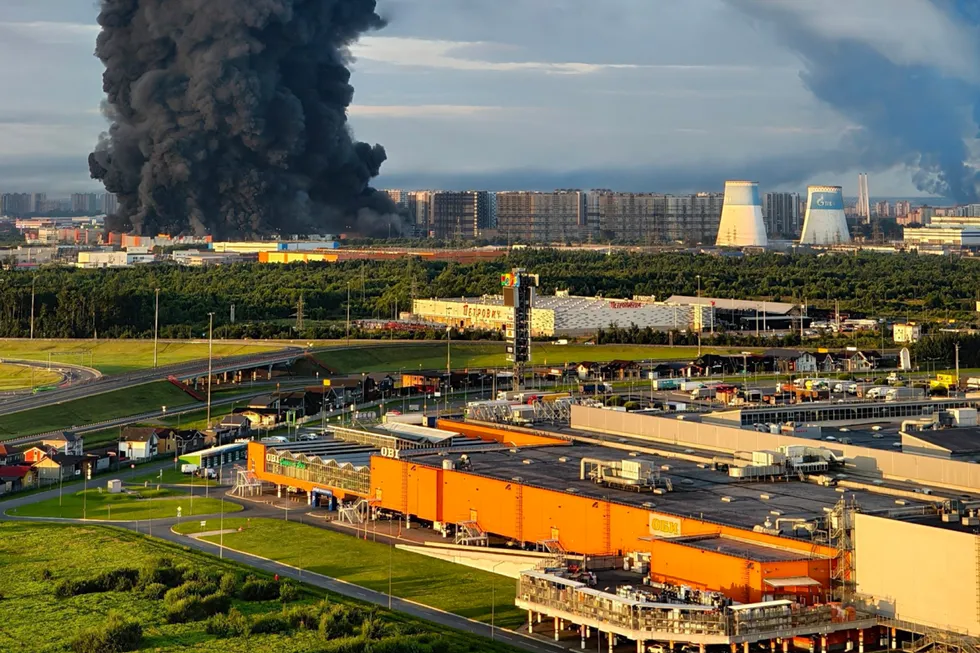
Six people have lost their lives and a further 26 sustained injuries following a Ukrainian missile strike on an industrial facility in the Russian city of Kirov, according to regional governor Alexander Sokolov, as Kyiv launched what military observers have described as one of its most substantial cross-border attacks on Russian soil since the beginning of the year. The raid, which unfolded in the early hours of 24 July, targeted the Aviatek plant, a defence manufacturer that Ukrainian officials claim produces surface-to-air guided missiles and other components for Russian military systems. President Volodymyr Zelensky later confirmed that the operation had been carried out by Ukrainian forces, characterising the factory as “one of the most important military enterprises” within Russia’s defence-industrial complex and framing the strike as a “fair response” to Russian bombardments of Ukrainian cities. In a separate but apparently coordinated campaign, Ukrainian drones also struck logistics centres operated by the e-commerce retailer Wildberries in St Petersburg, the surrounding Leningrad region and the occupied Crimean city of Simferopol, igniting large fires that halted operations and prompted criminal proceedings on terrorism charges in Russia.
The scale of the aerial assault, which the Russian defence ministry claimed to have largely repelled, was remarkable even by the standards of a conflict now well into its third year. In its nightly bulletin, the ministry reported that air defence systems had intercepted and destroyed 571 Ukrainian unmanned aerial vehicles across 15 Russian regions, as well as over the annexed Crimean peninsula and the waters of the Azov and Black Seas. While such figures are impossible to verify independently, state news agency TASS noted that the 24 July attack ranked among the heaviest of the year, surpassed only by the drone wave of 26 June, when the ministry claimed to have shot down 660 UAVs. The precise number of drones launched on either occasion remains undisclosed, as Russian authorities release data solely on those said to have been neutralised, leaving the true scale of the offensive a matter of conjecture among defence analysts.
In the Leningrad region, the drone strikes caused significant damage to Wildberries’ logistical infrastructure, with conflagrations reported at the company’s warehouse complex in Shushary, a district of St Petersburg, and at the Utkina Zavod industrial zone. Footage circulated on social media showed towering columns of smoke rising above the facilities, and local authorities confirmed that helicopters had been deployed to assist firefighting efforts. According to regional officials, three individuals were injured in the attack on the Leningrad warehouse, though the Investigative Committee of Russia stated that the number of casualties was still being verified, a discrepancy that Wildberries itself sought to address by asserting that, based on preliminary assessments, no staff had been hurt because employees had been evacuated in advance. The company’s chief executive, Tatyana Kim, later acknowledged the strikes, confirming that some floor space and stock had been salvaged and that personnel had been “swiftly evacuated” from the affected sites.
Beyond the Wildberries installations, the industrial zone at Utkina Zavod also saw two additional warehouses catch fire, according to the independent Russian outlet Astra, which cited eyewitness photographs and video footage. One of the burning buildings housed a distribution centre belonging to the Petrovich construction trading house, while the ownership of the second structure was not immediately established. In a further development, local authorities in the Kirovsky district of the Leningrad region reported that a drone strike had caused the collapse of a warehouse belonging to the Severnaya poultry farm in the settlement of Sinyavino, situated approximately 40 kilometres from the Wildberries depot and close to the shores of Lake Ladoga. Meanwhile, in the Kupchino district of St Petersburg, one of the unmanned aircraft was said to have come down between residential buildings, prompting the evacuation of some residents while others were instructed to remain indoors, with Olek Dundicha Street sealed off by emergency services. The distance between the crash site and the blazing Wildberries warehouse in Shushary was reported to be more than four kilometres.
The Ukrainian operation also extended to the annexed Crimean peninsula, where a Wildberries sorting centre in Simferopol was struck, with eyewitness images indicating that a fire had broken out at the facility. Although the company initially stated that the centre had been evacuated in line with safety protocols, Ms Kim subsequently confirmed the attack, adding that efforts had been made to preserve as much stock and floor space as possible. Unconfirmed reports from Ukrainian monitoring Telegram channels suggested that a Wildberries warehouse in Tver had also been targeted, but the company did not corroborate this claim, and the governor of Tver region, Vitaly Korolev, said only that a fire had occurred at an “administrative building of a logistics centre” in the settlement of Elevator following the repulsion of a drone attack. Public records indicate that no Wildberries warehouse exists at that location, only a pick-up point, and the blaze was said to have been extinguished without causing any casualties.
The attack on the Kirov missile plant, which is known to produce both military and civilian components, including aircraft parts, has drawn particular scrutiny given the facility’s strategic significance. Ukrainian sources have alleged that Aviatek specialises in the manufacture of surface-to-air missiles, target drones and components for the Tor air defence system, as well as Kh-101 cruise missiles, and that it cooperates with other plants in Russia’s defence supply chain. The enterprise, formally designated as the Vyatka Machine-Building Enterprise Aviatek, has long been subject to sanctions imposed by the United States and other Western nations, underscoring its perceived role in Russia’s military-industrial apparatus. Governor Sokolov, while confirming the missile strike, declined to name the facility explicitly, though his subsequent update on the casualty toll - six dead and 26 wounded - left little doubt as to the severity of the impact. President Zelensky, in his public remarks, made no direct reference to the Wildberries warehouse attacks, but he did note that Ukrainian operations were also targeting “Russian logistics” that supplies the army with “drone components” and “equipment”, a formulation that appeared to encompass both the defence plant and the retail distribution centres hit in the same wave.
The sheer breadth of the assault, which marked the fourth time in a single week that Wildberries facilities had come under attack, has raised complex questions about the legitimacy of targeting commercial infrastructure that may also serve military supply chains. Russian authorities have opened a criminal investigation into the strikes on terrorism grounds, while Ukrainian officials have maintained that their forces are acting within the bounds of international law by degrading Russia’s war-fighting capacity. The Kremlin has yet to issue a formal statement on the Kirov attack, though pro-government media have been quick to characterise the operation as an act of terror, and retaliatory strikes against Ukrainian cities are widely anticipated in the coming days. For the residents of Shushary, Kupchino and Sinyavino, however, the immediate reality is one of disruption and apprehension, as emergency crews continue to battle blazes and clear debris, while the broader political and legal ramifications of the 24 July barrage are likely to reverberate far beyond the affected regions.