Ukrainian capital endures renewed wave of ballistic attacks as civilians seek shelter in metro stations
As Russia escalates its campaign of long-range strikes against Ukrainian cities, one journalist documents the nocturnal migration of Kyiv's citizens into the cavernous depths of the capital's metro system
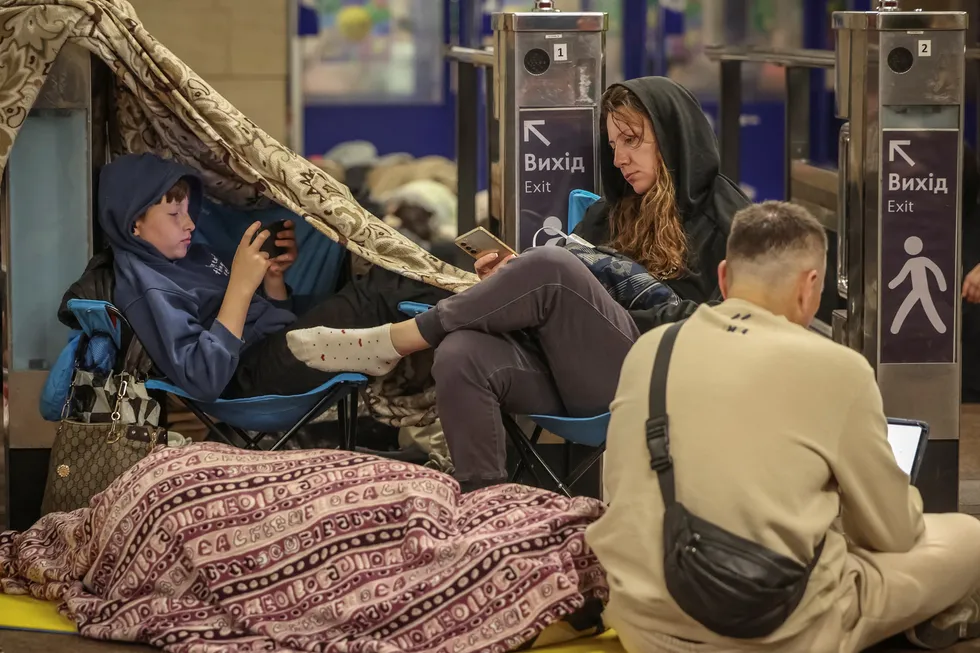
In the first half of 2026, Russia has markedly intensified its bombardment of Ukrainian territory, a campaign that has only grown in ferocity since early summer, when Kyiv's forces began striking targets deep inside the Russian Federation – including regions as distant from the border as Sverdlovsk, Tyumen and Omsk. The Kremlin's response has been a corresponding surge in attacks on Ukrainian urban centres, with Kyiv itself remaining a primary objective. Consequently, residents of the capital have resumed the practice, familiar from the war's earliest days, of seeking nocturnal sanctuary in the city's subterranean railway network, a development that speaks to the enduring precariousness of life under the persistent threat of missile and drone barrages.
Late on the evening of 24 July, President Volodymyr Zelensky issued a public advisory to Ukrainian citizens, cautioning that the Russian armed forces might be poised to conduct another large-scale missile assault within the subsequent 48 hours. It was against this backdrop of heightened alarm that the Ukrainian journalist Iryna Olehova resolved to document the experience of those seeking shelter, spending two consecutive nights on the platforms of the Kyiv Metro. Her subsequent account offers a granular, human portrait of a city acclimatised to danger yet perpetually vigilant, a community navigating the dissonance between ordinary routine and the extraordinary exigencies of aerial warfare.
The first evening, 24 July, had itself been marked by tragedy. A daytime Russian strike using ballistic missiles had targeted an exhibition of Ukrainian military hardware in the Kyiv region, with official figures reporting eleven fatalities and a hundred wounded. Journalists on the ground, Olehova notes, contended that the true toll was likely higher, a perspective she regards as the more credible. The attack set the scene for a night of heightened tension; the possibility of a mass assault – a coordinated salvo employing virtually all categories of drones and missiles in the Russian arsenal, an event so frequent it has spawned its own meme among Ukrainians – loomed large. Such offensives, she explains, often materialise within the two-day window following a presidential warning, though the Russian forces have been known to delay by several days, a tactic some interpret as a deliberate psychological provocation.
Arriving at the station at 22:40, before any air raid siren had sounded, Olehova sought the relative peace of the subterranean depths, some ninety metres below ground level. She had dressed warmly, equipped with a sleeping mat, a travel rucksack containing a blanket, a fleece, a scarf for draughts, wet wipes, a travel pillow, a portable charger with an integrated torch, water, a banana, a pair of cucumbers and a piece of bread. The city above ground was in its usual evening rhythm: the roar of Beresteiskyi Avenue, a major Kyiv artery, was still audible; after a rain shower, the air was fresh and mild; a kiosk selling shawarma remained open. Two women sat on a bench, each with a rucksack and a small pillow, seemingly prepared for a similar vigil. With the imposition of the curfew early in the war, the Metro had adopted a reduced schedule; this particular station stopped admitting passengers around 22:30, yet remained open through the night for those seeking cover. A steady stream of people converged on the entrance – individuals, couples, entire families, and groups of friends, all laden with bags, backpacks, sleeping mats, and blankets. One party of five adults included a cat carrier and a large dog on a lead.
Passage through the ticket barriers was unnecessary; a staff member admitted all through a side gate. With one escalator still running to bring passengers up, the other was halted, forcing those descending to traverse the steps on foot. A young couple preceded Olehova; the man bore a large trekking backpack, while the woman carried a one-year-old girl with a pink ribbon in her hair. At the intermediate vestibule, the first escalator having been negotiated, the family paused to unpack a tent from the man's rucksack. All benches and wall space were occupied; a man slept with his back to the room on a blue inflatable mattress, covered by a sleeping bag; a young couple sat opposite on a white polka-dot blanket; a girl nearby read a book in a folding chair. A further 310 steps remained to reach the platform. A man in a hooded jacket, carrying a dog reminiscent of Patron, the famous Ukrainian mine-sniffing canine, passed her on the descent. At the bottom, a vivid green tent was pitched, its occupant – a friendly grey dog – peering out. Another girl was reading on a bright yellow mat. The prime positions had already been claimed.
On the main colonnaded station, Olehova found a relatively decent spot near the platform's edge, where she could partially lean against a pillar and observe the activity around her. Her immediate neighbours were a girl curled in a camping chair and a mother breastfeeding her daughter on a station bench, swaddling her in a blanket beside a pram covered with another depicting "The Little Mermaid". At 23:15, the last train of the night arrived. It felt unusual to remain lying on the floor as passengers disembarked, yet no one stirred. The platform was at capacity; Olehova estimated some five hundred people in the vestibule and on the station itself, with at least twelve tents pitched across its two platforms. The upward escalator ceased operation as the final passengers exited. The primary lighting was extinguished, along with the digital advertising screens, leaving only a dim, night-carriage glow, though inexplicably the area near the tracks remained bright. Time displays on the boards were replaced by a single glowing dot. From the tunnels came a steady, low hum, like a distant train or a transformer. A middle-aged man argued softly with two older women a few metres away. There was shuffling, whispering, rustling of bags, and the grunting of an infant.
In addition to the girl in the camping chair and the nursing mother, Olehova's neighbours included a Kyiv native of about forty, accompanied by her mother, who had come to visit from another city. This was her first visit to the capital, and she was visibly anxious. The stranger's mother sat on her mat, her attention consumed by her smartphone. The usual olfactory markers of the Metro – the creosote from treated sleepers, lubricating oils, the ozone from electrical equipment – were barely perceptible, replaced by a faint scent of damp. The station had transformed, appearing less like a sleeper carriage and more like one vast dormitory. It was clean, quiet, and, perhaps because of the proliferation of blankets and sleeping figures, unexpectedly cosy. A girl of around eight, in a pink sleep mask, slept under a blanket adorned with pink unicorns. Nearby, an elderly woman in a yellow cap had pulled a coverlet up to her nose, coughing and turning in her sleep. Advertising hoardings remained legible in the dimness: a jewellery factory hawking rings, a medical laboratory promoting discounted tests, a fast-food brand announcing a new sauce range. More people continued to descend gradually. A large man, with a rolled-up floral mattress on his shoulder, searched for space. Olehova lay down, and though her neighbour's pillow pressed against her head, a sense of personal space remained largely inviolate.
At 23:42, a loud bell, like a school bell, rang twice. Four minutes later, a deep, low rumble emanated from the left tunnel, building in intensity until it was enough to pressurise the ears. Another bell sounded. Something resembling a tram with a freight trailer entered the station. Five men in orange hi-vis vests disembarked; one carried a lantern, another a bucket containing a bottle of water. They crossed to the opposite platform, followed a few minutes later by a second similar vehicle. A boy of about nine and a girl lying on a mattress watched with interest, but she soon returned to sleep. These were track maintenance workers, Olehova later reasoned, using their specialised vehicles for overnight repairs, a routine that precluded the parking of decommissioned train carriages on the platforms for shelter – a practice from the war's early days that had since been discontinued.
It was only at midnight that Olehova ascertained the location of the toilet: at the far end of the platform, near the tunnel entrance, a public convenience that remained closed during the day. Navigating the route required care not to step on the sleeping figures laid out in neat rows across the platform, their feet pointing towards the rails. Returning, she removed her shoes, lay down and checked her phone. Telegram channels monitoring Russian military aviation indicated enemy inactivity, suggesting a quiet night for the capital. A nearby girl ate something resembling baby food. Cautious of the echo, Olehova avoided the crunch of cucumbers and instead ate her banana and bread. A child grunted. The low rumble from the tunnel persisted. On a thicker mat, under a warm blanket and with her travel pillow, she was comfortable. Another family settled in the narrow gap between her mat and the pram with the Little Mermaid blanket – a pensioner with glasses, a middle-aged woman, and a teenage girl, who moved with deliberate quietness. The pensioner set up a reading chair with a footrest; the girl lay on an inflatable mattress and watched a YouTube show; the woman sat with a small white dog that observed the scene with its tongue lolling. Snoring echoed. A mother paced the platform with her infant, who eventually fell silent.
At 00:59, Telegram channels reported a ballistic missile threat originating from Taganrog; missiles from there did not reach Kyiv, endangering southern regions. The threat was cancelled at 01:23. Olehova fell asleep, only to be roused by cold at 02:00, for which her fleece proved a welcome ally. At 02:27, a loud bell and the simultaneous buzz of dozens of smartphones announced an air raid alert. People stirred; a man cursed. Some continued to sleep. The all-clear came at 02:57, with no attack on the capital. A cat meowed, a notable sound as it was the first animal noise heard that night.
The artificial morning arrived at 04:45, with two station bells and a loud announcement from a Metro employee asking people to gather their belongings, much like a train conductor half an hour before arrival. Few complied; most slept on. The main lights were switched on at 05:00. Olehova's neighbour's mother woke to ask if the alert had been cancelled; she had slept through another siren. At 05:35, the downward escalator started, but an upward queue had formed. Digital screens returned to life, advertising a housing complex with the slogan "Vmykai zhyttya" – "Switch on life". First passengers descended at 05:40; the second escalator was activated, and those who had spent the night rode it up. The Kyiv morning had begun.
The following evening, a brief air raid alert in the region at 21:11, a warning of a drone heading for Slavutych some two hundred kilometres away, was cancelled within fourteen minutes. Such drone launches often precede mass attacks. Perhaps, Olehova thought, she could forgo a second night in the Metro. But at 22:13, a monitoring channel reported a "medium probability of a mass strike" and a "high probability of a ballistic one". Sleepy and yearning for her own bed, she nevertheless returned to the station. The concourse was sparse; a bicycle was parked near the barriers. On the platform, numbers were roughly half the previous night's, with prime spaces free, but with a queue at the toilet, reminiscent of a long-distance train. She recognised familiar figures: the infant with the pink ribbon, the large grey dog in the green tent, the mother and child with the Little Mermaid blanket. She reclaimed her spot nearby. By 23:20, no air raid alert had been declared. The central hall lighting was extinguished, though platform lights remained. Two men, perhaps in their fifties, conversed in low tones, their words mostly lost to acoustics and ambient hum. Snatches of dialogue emerged: "candidate for master of sports", "blimey", "Poroshenko", "the Soviet Union collapsed". One became more animated, recalling a university dance with a remarkably tall partner. Metro staff and police were scarce; despite the occasional louder exchange, the crowd remained quiet and, notable, clean. It had rained during the day, making the subterranean air cooler and damper. She settled into her "nest" with her blanket and pillow.
At midnight, a baby's cry was quickly soothed. Bright platform lights prevented sleep. Then, at 00:20, dozens of phones sounded an air raid alert for Kyiv. A man nearby said quietly but distinctly into his phone, "Four ballistic". Olehova saw similar alerts in her Telegram feed; friends in the suburbs reported hearing explosions. There was slight movement as people sat up to read. Many continued sleeping. The downward escalator was activated, allowing latecomers to descend. Balistic missiles give precious little warning. At 00:24, Telegram channels reported strikes on Kyiv; no explosions were audible in the Metro. At 00:31, more launches were reported. A team of three medics appeared on the platform, conducting a visual sweep. At 00:35, reports suggested smoke was rising over the capital. People were still arriving. A young woman, in pyjamas and slippers, her hair dishevelled, ran towards the two conversationalists. "Have you any water?" she gasped. She had been in her seventh-floor apartment, she explained, and had only reached the fifth floor when explosions began. Neighbours urged her to the basement, but she was trembling too much and fled to the Metro. She was given a bottle of water and drank thirstily. Details of the attack emerged at 00:41: a severe strike in the Sviatoshynskyi district, adjacent to the station. A cat meowed insistently. A new family with two young children arrived in the centre of the hall. At 00:52, a major Telegram channel warned: "Ballistic on Kyiv again!!! 2 missiles". Reports were incoming of fires in the Shevchenkivskyi, Solomianskyi and Desnianskyi districts. At 00:54, an update arrived: "Targets not being tracked". At 01:13, the all-clear was sounded. No further strikes were reported. Olehova walked to the toilet; a medical team sat on the steps of a non-functional escalator. Most slept. A girl of about six lay with her parents, eyes wide, clutching a toy bear. The smell of Corvalol hung in one of the passageways. The downward escalator was stopped. The woman who had begged for water was on the floor, consulting Google Maps; one of her companions was snoring. Olehova tied a scarf over her eyes and tried to sleep. At 02:49, phones again sounded the alarm, but there was little movement. She dozed off, letting the noise pass.
At 04:45, the same repeated announcement came: the first train was due; it was time to pack up. The all-clear, she later learned, had sounded at 03:20, and no further attacks on Kyiv had been reported. In the nation, at least six civilians had perished in Russian strikes that day. Knowing the first train to her platform arrived at 06:00, she dozed fitfully, chilled despite her fleece and blanket. The sound of a train arriving on the opposite platform roused her at 05:45. By then, many had already packed and left. The persistent cat meowed. The advertising screens were active: one promoting military service, another showing Tom Holland carrying an actor playing Spider-Man. Only about twenty people from the night's shelter remained, packing up slowly. Children ran and laughed in the central hall, their mother urging them to be quiet, to little avail. The family with the pink ribbon and the green tent were still asleep in the vestibule. Olehova ascended to the surface. The roar of Beresteiskyi Avenue was present. The sky above Kyiv was blue and clear. Later that evening, local channels would warn that the threat of mass attack persisted, with the Russian army having prepared strategic aviation, missile carriers, and launch systems for Iskander-M and Bastion missiles. Up to thirty Iskander-M ballistic missiles, six Tsirkon hypersonic weapons, up to a thousand drones, up to fifty-five Kh-101 cruise missiles, and up to two dozen Kalibr sea-launched missiles could be deployed at any moment. But for now, people emerged with their backpacks, bags and rolled-up sleeping mats. It was cool. The morning had begun.