Ukraine's successes mask deeper challenges as Russia grinds on, analysis warns
While Ukraine has inflicted significant damage on Russian infrastructure through asymmetric warfare, a new analysis warns that Moscow's strategy of attrition continues to exert serious pressure across multiple fronts
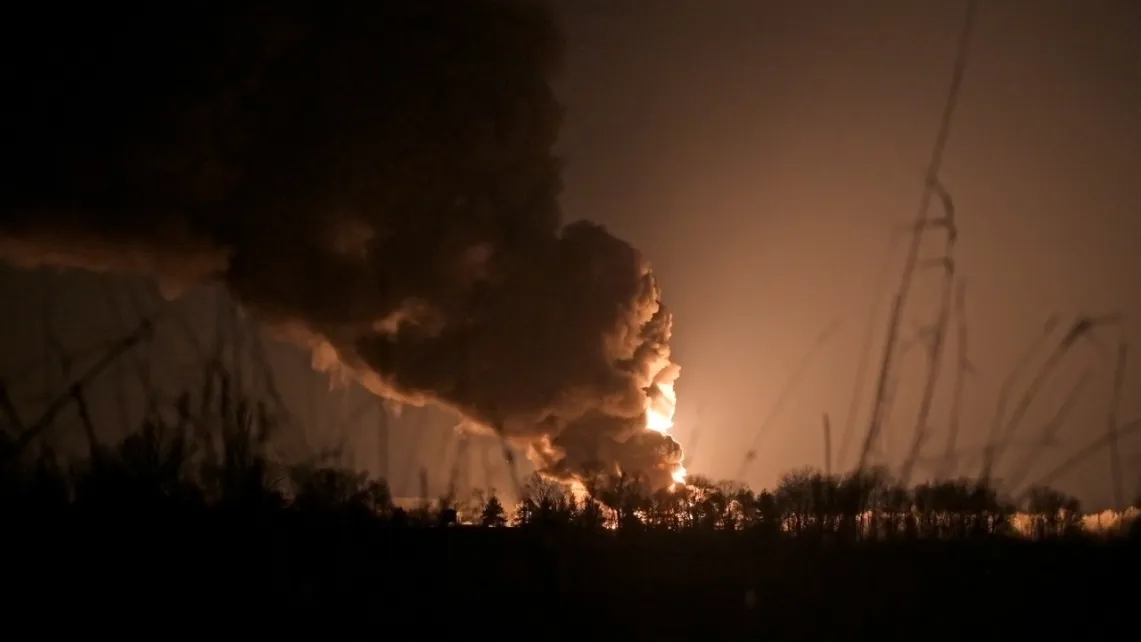
The maxim attributed – perhaps apocryphally – to Joseph Stalin that "quantity has a quality of its own" has long been a defining feature of Russian and Soviet military doctrine, and it is a logic that Vladimir Putin has pursued with grim determination in his war against Ukraine. Moscow has sought to overwhelm its neighbour through sheer numerical superiority, leveraging a far larger population, economy and defence-industrial base to sustain a campaign of attrition that has forced Kyiv to improvise and find compensatory strategies. Ukraine has responded with innovative forms of asymmetric warfare, including an expanding drone and long-range strike campaign that has hit Russian refineries, fuel depots, ports, ships and logistics sites behind the frontline on a daily basis for weeks, disrupting fuel supplies and forcing Moscow to divert resources to air defence. Yet, for all the evident pleasure among Ukraine's supporters at seeing Russia struck with such frequency and effect, a sobering reality persists: Kyiv's successes coexist with a darker reflection in which Russia continues to inflict grievous damage on its victim.
On the battlefield, while Russia has not achieved the rapid breakthrough it originally sought and its advances remain slow, costly and uneven, it is exerting serious pressure on the fortress belt in Donetsk, around Kostiantynivka, Druzhkivka, Kramatorsk and Sloviansk. Small assault groups continuously probe Ukrainian positions, while drones, artillery and glide bombs render roads, supply routes and nearby settlements increasingly difficult to hold. Russia is also maintaining pressure in the Sumy, Kharkiv, Lyman and Zaporizhzhia sectors, forcing Ukraine to distribute already limited manpower and air-defence resources across a 1,200km front. Moscow has simultaneously intensified its air campaign, launching repeated combinations of Shahed-type drones, decoys, cruise and ballistic missiles, glide bombs and shorter-range drones. While Ukraine can intercept many threats – on August 2, it claimed to have intercepted more than 450,000 aerial targets since the all-out war began – ballistic missiles remain a serious vulnerability, with Patriot interceptors in short supply and unable to protect every city, industrial facility or strategic site. The difficult truth is that Ukraine lacks ballistic missile interceptors and is near-defenceless against them.
Russia is also targeting civilian infrastructure that keeps the country functioning, with more than 200 filling stations hit and regular strikes on such facilities in frontline and border regions. While these attacks have not yet caused a nationwide fuel shortage, they make local movement slower and more dangerous, reduce reliability and compromise emergency services, generators and military transport. Warehouses, postal facilities and delivery centres – enabling the movement of food, medicine, electronics, spare parts and generators to vulnerable regions – have similarly been struck, combining economic damage with pressure on potentially dual-use logistics, with the immediate costs falling on workers, businesses and civilians. Ports are part of the same campaign, with Russian attacks hitting Odesa, Chornomorsk, Izmail and Mykolaiv, along with port storage facilities and civilian vessels. Maersk suspended a service through Chornomorsk in July, rerouting cargo through Romania, while other shipowners have paused arrivals. Given that more than 90 per cent of Ukraine's agricultural exports are shipped through ports in the Odesa region, even limited disruption raises insurance costs, frightens commercial operators and weakens the country's principal export corridor.
Moscow claims some of these attacks as retaliation for Ukrainian strikes on Russian refineries, distribution hubs and shipping, but Putin's forces were targeting Ukrainian energy and infrastructure long before Kyiv developed its deep-strike capabilities. The broader military logic is that in a war of attrition, limited territorial gains and repeated damage gradually accumulate. Russian advances often appear negligible in monthly assessments – its forces gaining only a few kilometres while losing thousands of troops and large quantities of equipment – but Moscow does not need every offensive to produce an immediate breakthrough. It can continue applying pressure until individual positions, supply routes and cities become impossible for Ukraine to hold. Mariupol fell after a devastating siege in 2022, Bakhmut – where Russia suffered tens of thousands of casualties – followed in 2023, and Avdiivka fell in February 2024. Each loss moved the battlefield further west, removed another defensive or logistical base, and allowed Russia to concentrate on the next objective.
If Crimea and the areas of Donbas seized before 2022 are included, Russia now occupies almost one-fifth of Ukraine's internationally recognised territory. Its recent advances may look small in percentage terms, but Russia measures the war – initially supposed to last weeks – in years, not months. Those advances also have a clear direction: Moscow claims all of Donetsk, Luhansk, Zaporizhzhia and Kherson, while complete control of Donbas remains its clearest immediate territorial objective. The remaining Ukrainian-held cities in Donetsk are therefore central to Putin's recently repeated goal of taking the whole region. Russia can absorb heavy losses and draw on a larger mobilisation pool and military manufacturers to replace personnel and equipment more easily than Ukraine. Only if Ukraine can kill and injure more Russians than the recruitment system can supply – as it did in June and July – will the Kremlin face a manpower crisis. That may generate another Russian mobilisation, with President Zelenskyy warning on July 27 that Ukrainian intelligence expects Russia to mobilise another 300,000 to 500,000 personnel after September's State Duma elections.
Whether or not mobilisation reaches that scale, Moscow still has the resources to sustain – and potentially expand – the war, drawing on a far larger population, a deeper pool of manpower and a greater capacity than Ukraine to replace personnel and equipment. None of this means that Ukraine is losing, but it is a sobering reality check: despite its successes, Ukraine is still fighting a much larger opponent. Kyiv still has many bottlenecks to address, from manpower and air defence to logistics and economic endurance. It needs a more sustainable military manpower system, predictable supplies of ammunition and air-defence interceptors, stronger protection for logistics infrastructure, and Western support planned for years rather than delivered through repeated emergency packages. The overall military situation appears better than it has for some time and there is much to cheer; Ukraine is far from beaten and a long way from being forced into a bad peace. But the Kremlin is measuring this war in years, not months, and unless there is some sudden and unexpected collapse, Ukraine and its partners will need to do the same.