Ukraine's defence crisis deepens as Fedorov dismissal exposes generational military divide
The dismissal of Defence Minister Mykhailo Fedorov has ignited week-long protests and exposed a fundamental rift between Ukraine's Soviet-influenced military establishment and a younger generation seeking to transform the armed forces through technology and institutional reform
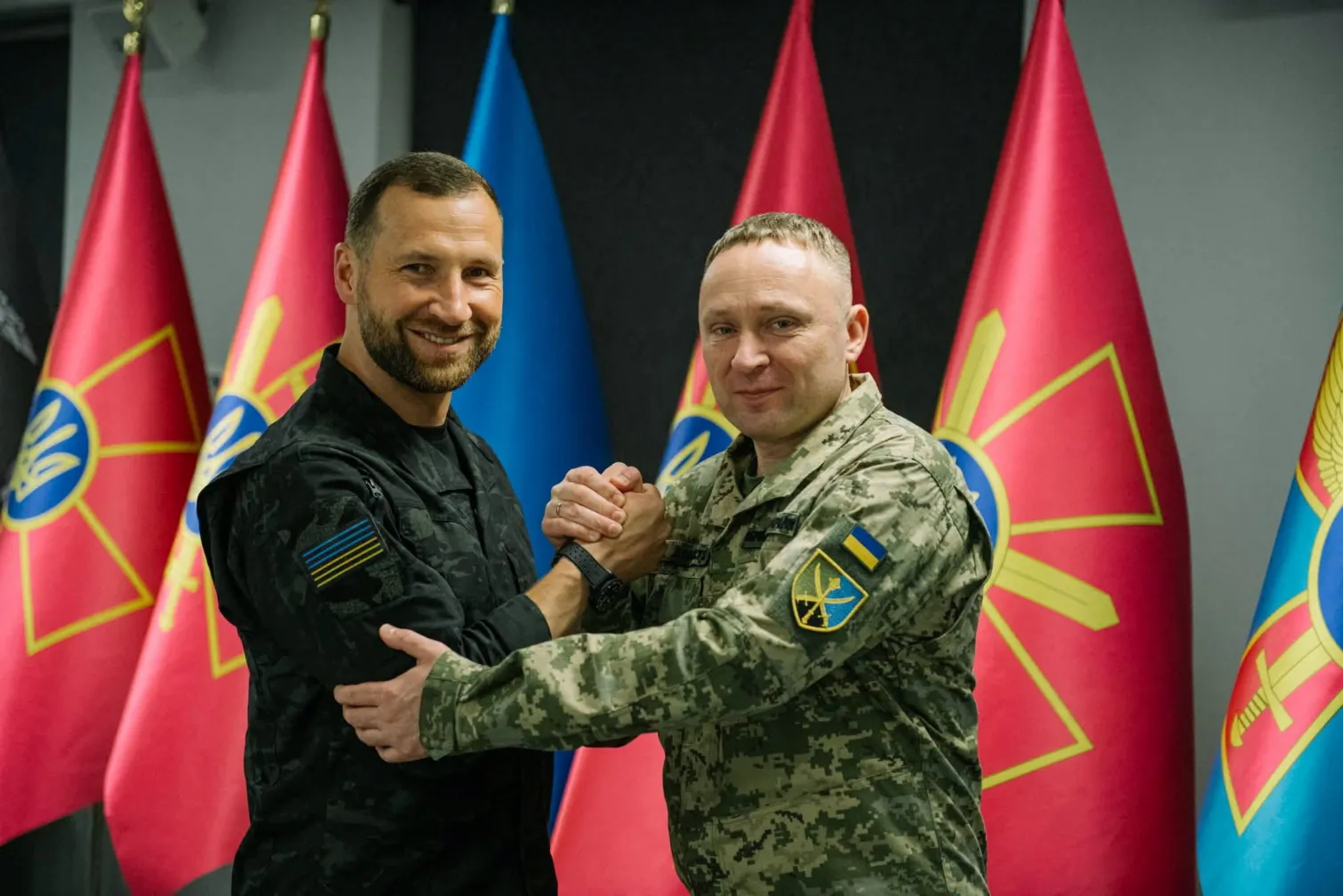
The dismissal of Defence Minister Mykhailo Fedorov on July 15 has laid bare a deepening schism within Ukraine's military leadership, pitting an older, Soviet-influenced approach to warfare against a younger generation determined to modernise the armed forces through technological innovation and institutional overhaul. The decision, which has triggered week-long protests and remains far from resolved, represents far more than a personality clash; it constitutes a pivotal juncture in the country's struggle for survival. The move to dismiss the 35-year-old minister was executed without prior consultation with policymakers or the public and was announced as parliament commenced its 30-day summer recess, a timing that many interpreted as an attempt to minimise scrutiny.
The announcement prompted some of the largest public demonstrations since 2022, owing largely to Mr Fedorov's considerable popularity and his reputation as a dynamic, IT-savvy minister who chafed against the constraints of Ukraine's entrenched military bureaucracy. Appointed to the defence portfolio in January, Mr Fedorov had built upon his prior record of digital transformation, applying the same approach to the armed forces and pursuing the integration of new technology. Ukrainian military bloggers have argued that this course proved largely successful, though six months was plainly too short a period to assess the long-term effectiveness of his reforms. Many of the structural challenges facing the armed forces, with mobilisation the most prominent, remain unresolved; his dismissal thus interrupted a reform programme whose ultimate viability had yet to be tested.
The decision to remove Mr Fedorov, observers suggest, continued the presidential administration's tradition of sidelining figures who accumulate political weight, though the official explanation cited deteriorating relations between the minister and Commander-in-Chief General Olexandr Syrskyi. "I wanted unity very much. The sides did not achieve it," President Volodymyr Zelenskyy stated, arguing that it was untenable to have a military commander and a defence minister unable to communicate. Mr Fedorov, however, presented a markedly different account during a press conference held amid the protests, alleging that "all the initiatives that we proposed began to be blocked, and Syrskyi is not ready to personally talk about problems face to face." He further claimed that the general had presented President Zelenskyy with an ultimatum to dismiss him.
If the presidential administration had anticipated that Mr Fedorov would depart quietly, they were swiftly disabused of that notion. His dismissal opened a Pandora's box that extended far beyond the fate of a single minister, with days of crisis meetings following as a single personnel decision rapidly escalated into a broader debate about how Ukraine should conduct the war. The president subsequently reconsidered his position, and on July 21 replaced General Syrskyi with Major General Mykhailo Drapatyi, a prominent 43-year-old officer with an exemplary war record who had supported Mr Fedorov's criticisms.
General Syrskyi, a 60-year-old veteran four-star officer, represents an older generation of commanders trained in Soviet military academies who continued their careers after Ukraine gained independence, carrying with them many elements of that military tradition. Having been educated within the same system as many Russian generals, Syrskyi possesses a profound understanding of Russian military logic, as demonstrated by his successful operational planning in 2022–2024, including the widely acclaimed Kharkiv counteroffensive. Yet this background also carries significant drawbacks. Syrskyi has repeatedly faced criticism for a Soviet-style approach to military planning that often prioritised symbolic victories over the preservation of soldiers' lives.
During the initial phase of the war, operations such as the liberation of the Kyiv and Kharkiv regions were swift, innovative, and highly successful. Following the bloody battle of Bakhmut, however, Syrskyi acquired a reputation as a "butcher" owing to heavy personnel losses—an estimated 10,000 dead and seriously wounded during that 2022–23 engagement—and the continued reliance on costly frontal assaults that treated personnel as expendable. His standing deteriorated further following the chaotic withdrawal from Russia's Kursk region, which resulted in heavy casualties. Other criticisms included the appointment of loyal rather than competent officers to senior military positions, a tolerance for human rights abuses within certain units, and a chaotic order of battle that saw some units fragmented and others poorly improvised. As a result, Syrskyi's image struggled to compete with Mr Fedorov's reputation as a young and innovative reformer.
By contrast, the new Commander-in-Chief, General Drapatyi, enjoys broad public support and represents a different generation of Ukrainian military leadership. Trained in an independent Ukraine, his entire experience derives from the conflict against the Russians. Part of his reputation stems from an action in May 2014, when he led his battalion into Mariupol to free hostages held in the city's police headquarters during clashes with Russian-backed separatists—an encounter captured on video that has since become famous. Less well-known, but more impressive to his comrades, was his fighting withdrawal from Russian encirclement in southeastern Luhansk in 2014 and his stabilisation of the threatened Kharkiv sector in 2025. He is also regarded as considerate towards the welfare of his troops and willing to listen to subordinates.
All of which, analysts acknowledge, sounds promising. Yet the emergence of a younger generation of military leaders does not automatically resolve Ukraine's challenges. As Antony Lloyd, the long-time Times war correspondent, has observed, only time will reveal whether the new men are correct or whether Syrskyi fought the only way he could and is "rehabilitated as a commander who unflinchingly accepted terrible costs because no less bloody path existed." It might appear that President Zelenskyy has drawn the poison from the crisis by appointing a new commander-in-chief, but Mr Fedorov's future remains unresolved. The former defence minister insists he wants his old job back, and although an acting minister has been appointed, it remains unclear who will ultimately occupy the position. Reappointing a minister who was only recently dismissed may be difficult for the president to countenance, while Ukrainian civil society increasingly demands a defence minister who embodies a new approach to waging the war.
Ukraine thus confronts a profound dilemma. At its core, this debate is not about age but about two competing concepts of warfare: one built around hierarchy and attrition, the other around technology, decentralisation, and the preservation of scarce human resources. The challenge is therefore not simply choosing between an older and a younger generation of commanders, but combining two strengths that rarely coexist: the institutional memory and understanding of Russian military thinking possessed by the old guard, with the technological innovation, accountability, and adaptability championed by the new. It is an endeavour fraught with risk, much like reconstructing an aircraft already in flight. There exists a well-known axiom that a small Soviet-style army will never defeat a large Soviet-style army, yet abandoning the experience accumulated over decades carries its own perils. Whoever becomes the next Defence Minister, working alongside the new Commander-in-Chief, will inherit problems including manpower and equipment shortages that have no simple solution and must be addressed under intense public scrutiny.