Ukraine strikes and economic strife force Russians to rethink summer getaways
From the empty beaches of Crimea to the soaring costs of package tours, Russia's summer holiday season has been upended by the combined effects of war, sanctions and economic uncertainty
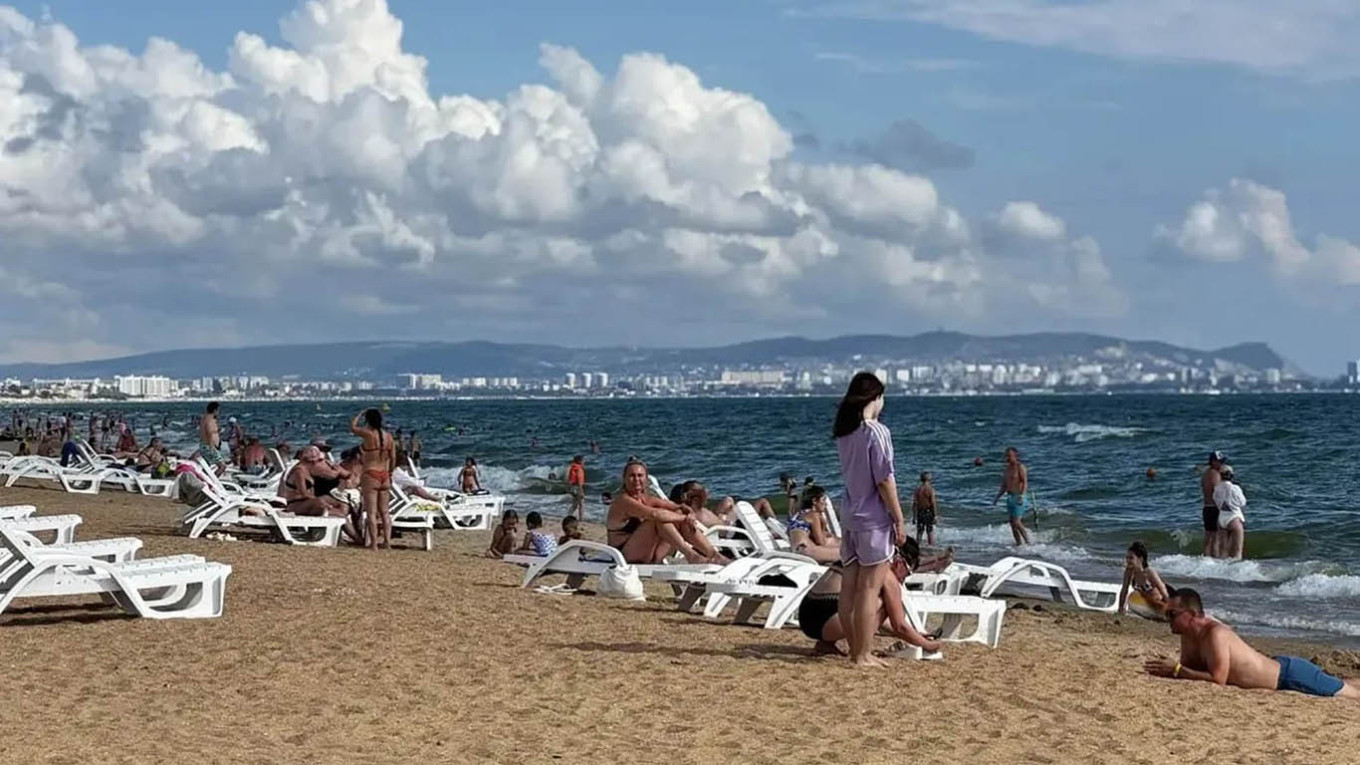
As the summer holiday season reaches its peak, the twin pressures of economic instability and the escalating drone campaign launched by Ukraine are fundamentally reshaping how Russians are spending their long-awaited vacations, with the country's traditional tourist destinations suffering steep declines while new patterns of travel emerge across the vast nation. Residents of Moscow and St Petersburg, who historically have been the most frequent international travellers, are finding their options severely constrained by the scarcity of direct flights, the proliferation of visa restrictions and the country's growing isolation from the global financial system, prompting many to seek alternative means of securing a break abroad. Yet for those living in Russia's regions, the picture is markedly different; many are opting for domestic trips – if they can afford to travel at all – while a significant proportion of the population has effectively abandoned any notion of a summer holiday this year.
Speaking on condition of anonymity, a 33-year-old woman from Moscow described how her holiday planning had been transformed by concerns over income and job market instability, factors that have compelled her to rein in her travel budget. She disclosed that she would be taking her first ever package tour to Turkey, a destination she chose because it offered the prospect of sun, sea and relaxation within a manageable financial framework. The shift towards packaged holidays represents a notable reversal for a country where, according to the Association of Tour Operators of Russia (ATOR), more than 80 per cent of travellers booked their own itineraries in 2025; tour operators have now reported an influx of requests from seasoned travellers who can no longer rely on global low-cost airlines and accommodation platforms such as Airbnb and Booking.com, both of which exited the Russian market following the invasion of Ukraine.
The logistical hurdles facing those who still wish to visit Europe are formidable. What was once a straightforward direct flight to a major European capital now requires multiple connections, with the added complications of Russia's exclusion from the international payments system, mounting visa restrictions and the recurrent closure of airports during Ukrainian drone attacks. Lyubov Chuchmayeva, deputy marketing director at the tour company PAKS, observed that "Europe has not disappeared from the hearts of Russian travellers, but its place has changed", noting that a trip to Rome, Madrid or Paris now constitutes "a full-fledged case for the logistics department". With Europe increasingly out of reach, a growing number of Russians are embracing the Kremlin's pivot towards Asia and Africa, with China's decision to extend visa-free entry for Russian tourists until the end of 2027 expected to boost bookings by 50 per cent compared to last year, while Hong Kong, Vietnam's Phu Quoc Island and Tanzania are also gaining in popularity.
A personal trainer from Moscow, who listed Thailand, Vietnam and Cambodia among his preferred destinations, said he had not been affected by European visa restrictions as he had no interest in vacationing there; he added, however, that he would not consider holidaying within Russia at all, citing the disparity between exorbitant prices and the quality of service on offer. For millions of Russians outside the capital cities, however, domestic tourism remains the sole realistic option, and even that is increasingly precarious. A political activist from one of Russia's Volga regions, earning 40,000 rubles ($500) per month in the public sector, observed that the greatest challenge in planning a holiday was simply having sufficient funds when the time came, noting that a basic package tour to Turkey – starting at 120,000 rubles ($1,500) for two people for a ten-day stay – was far beyond his means.
The activist, who also spoke on condition of anonymity, described living with the constant risk of fabricated charges or drone strikes, yet he had resolved not to put his life on hold and tried to travel whenever time permitted, typically to regional cities such as Saratov, Sochi and Kaliningrad, with the occasional cheap flight to nearby countries such as Armenia. The Black Sea coast and annexed Crimea, traditionally Russia's most popular domestic holiday destinations, have been hit particularly hard this season. Hotel bookings in Crimea during May and June declined by 30 per cent compared with the same period last year, while travel companies reported combined losses of 1.5 billion rubles ($18.8 million) due to cancellations in June alone, according to industry data.
The peninsula has been suffering from acute fuel shortages since May, following intensified Ukrainian strikes on supply routes and oil refineries, and with local airports shut down and rail services reduced by approximately half, Crimea has become largely inaccessible to tourists. Videos circulating on social media have shown largely empty beaches during what would normally be the peak of the summer season, while guests at the luxury Mriya Resort, owned by the financial giant Sberbank, have been filmed partying in the hotel's bunker during drone alerts. In response to the crisis, the Russian government allocated more than 4.3 billion rubles ($56.3 million) from its reserve fund earlier this month to support the region's beleaguered tourism sector.
Some Russian travellers appear to be shifting their plans from Crimea to the Black Sea resort of Anapa, which reopened its beaches for the first time since 2024, when thousands of metric tons of heavy fuel oil washed ashore after two tankers were damaged in a winter storm in the nearby Kerch Strait. Although the consumer safety watchdog Rospotrebnadzor has approved the reopening, locals continue to report fresh oil slicks along the shore. Meanwhile, Sochi, Russia's flagship Black Sea resort for the more affluent traveller, has reported a year-on-year decline in bookings of up to 25 per cent, with one local tour guide from a major regional capital stating that she would not even consider travelling south given the constant drone activity, the crowds and the unreasonably high prices, and instead planned to spend her upcoming holiday on the Barents Sea coast.
A social media specialist from Ufa echoed this view, saying she would "definitely not" go to Sochi knowing that drones were active and air raid sirens could sound, and preferred to stay home and explore the Bashkortostan region. The rising cost of travel was identified as a formidable barrier, with one interviewee noting that tickets were now significantly more expensive than before the war, making it increasingly difficult to leave Russia at all. Expert assessments of the decline in domestic tourism vary, but data from the online booking agency TravelLine indicates that hotel bookings across Russia fell by 12 per cent year-on-year during the final two weeks of June, while cancellation rates rose from 24 per cent to 33 per cent.
The number of tourists visiting Lake Baikal in eastern Siberia, one of Russia's most celebrated natural attractions, has also fallen by a third, driven largely by rising prices. A village school teacher, speaking to The Moscow Times, observed that only a few people in her community could afford to go anywhere, and even then, they might manage only a night of rafting or fishing; for rural residents, she said, a proper holiday was simply unrealistic. "Summer vacation season is a busy time for haymaking, gardening, and harvesting," she explained. "We raise ducks, geese and broilers for the summer and winter, milk the cows and stock up on butter. That's just how living in a village is."