Tusk urges Ukraine to confront Volhynia truth amid fresh diplomatic tensions with Kyiv
Polish Prime Minister Donald Tusk has announced a national memorial to commemorate the victims of wartime massacres in Volhynia, while urging Ukraine to acknowledge the events if it wishes to join the European Union.
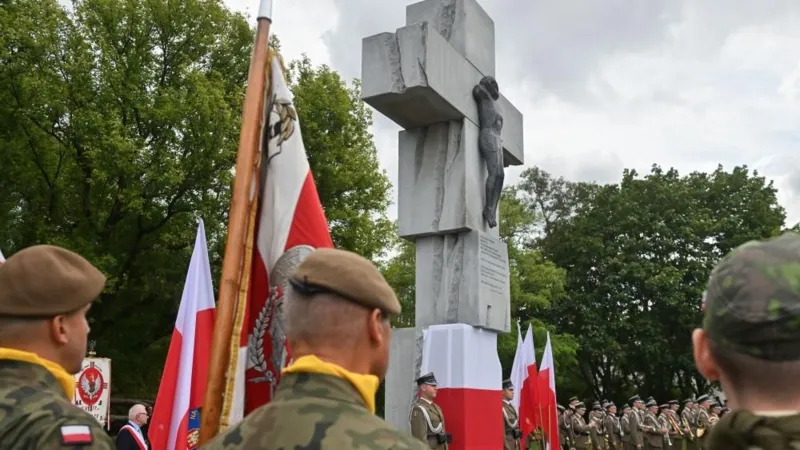
Polish Prime Minister Donald Tusk has announced the establishment of a national memorial to honour the victims of what Warsaw describes as a genocide perpetrated by Ukrainian nationalists during the Second World War, reopening a longstanding historical wound between the two allies. Speaking on the anniversary of the so-called Volhynia massacre, Mr Tusk declared that "truth is our duty toward the victims, but also a way to overcome a painful past for the sake of a better future", while cautioning that "memory cannot be the servant of hatred" and that "the answer to nationalism cannot be more nationalism". The Polish leader used the occasion to press Ukraine to "embrace this truth" if it aspires to join the European Union, a move that many in Kyiv regard as a strategic priority.
The events in question, which took place between 1943 and 1945 in the Volhynia region—then part of German-occupied Poland and now located in western Ukraine—saw the Ukrainian Insurgent Army (UPA) launch a campaign of ethnic cleansing against ethnic Poles. Poland's Institute of National Remembrance estimates that approximately 100,000 Poles were killed in the anti-Polish operations across Volhynia, Eastern Galicia and the Lublin region, while between 10,000 and 12,000 Ukrainian civilians are thought to have perished in Polish reprisal attacks. The precise number of victims remains a subject of historical contestation, but the killings have cast a long shadow over Polish-Ukrainian relations for decades, even as the two countries have forged a close alliance in response to Russia's full-scale invasion of Ukraine in 2022.
The row over historical memory has intensified in recent weeks, with President Volodymyr Zelensky stripped of Poland's highest state honour last month following his decision to name a Ukrainian military unit after the UPA, a move that Polish President Karol Nawrocki said compelled him to act. While Mr Nawrocki stressed that the diplomatic dispute would not affect Poland's military and humanitarian support for Ukraine—a position Mr Tusk has also reaffirmed—the symbolic significance of the decision was underscored when three former Ukrainian presidents returned their White Eagle awards to Poland in solidarity with Mr Zelensky. The Ukrainian leader, in his video address on Saturday evening, noted that representatives of both states had participated in joint prayers to commemorate the victims of the Volyn killings, and insisted that Ukraine was "doing its part to honestly establish the facts about those killed in those years".
At the same time, however, Mr Zelensky emphasised the present-day imperative of unity, reminding his Polish counterparts that "Ukraine and Poland have one common threat, and this is a mortal threat to our independence, to our states, to every city, to every village, and this threat is called Russia". The remark served to underscore the delicate balance that both governments must strike as they navigate the competing demands of historical justice and strategic partnership. For many Ukrainians, the UPA is remembered not as a perpetrator of atrocities but as a force that fought for independence from the Soviet Union and against Nazi Germany and Polish authorities, a narrative that sits uncomfortably alongside Poland's insistence on formal acknowledgment of the massacres. Mr Tusk's announcement of a national memorial suggests that Warsaw intends to keep the issue firmly on the diplomatic agenda, even as the two nations continue to cooperate closely in the face of Russian aggression.