Tupac Shakur Murder Trial Opens with Revenge Narrative from Prosecutors
A Las Vegas jury has heard opening arguments in the murder trial of Duane "Keffe D" Davis, a former gang leader accused of orchestrating the 1996 drive-by shooting that killed the iconic rapper, in a case that has revived one of the most famous cold cases of the last century.
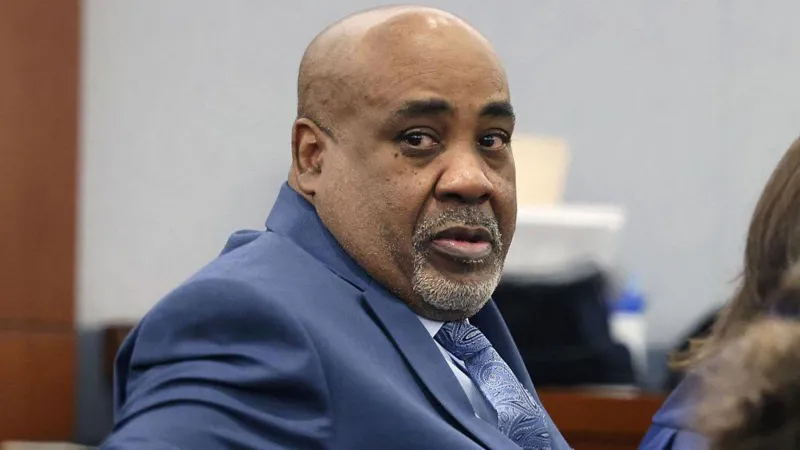
The long-awaited trial of Duane "Keffe D" Davis, the former gang leader accused of orchestrating the 1996 murder of Tupac Shakur, opened this week in a Las Vegas courtroom with prosecutors alleging a calculated act of revenge. The 63-year-old defendant, they contend, masterminded the drive-by shooting that killed the influential rapper, though they conceded he did not fire the fatal shots. He has pleaded not guilty.
Chief Deputy District Attorney Binu Palal told the jury that Davis, a former leader of the South Side Compton Crips, acted as the "on-ground, on-site commander" who "ordered the death" of Shakur. The motive, prosecutors argue, was retaliation for a beating Davis's nephew, Orlando Anderson, had suffered at the hands of the rapper's entourage hours earlier. "Let's be clear, Duane Davis did not pull the trigger," Palal stated. "But he did plan the shooting in retaliation of the beating of his nephew."
The prosecution's case draws heavily on Davis's own words, particularly a 2019 memoir he co-authored in which he detailed his role in the events of September 1996. In the book, Davis claimed he was a passenger in the vehicle from which the gunshots were fired and that he had given the weapon to his nephew. Prosecutors noted that Davis had given a "number" of statements on the case between 1998 and 2003, suggesting a man unable to remain silent. "Remarkably, you will learn that from Duane Davis himself," Palal told the jury.
Davis's defence team, however, dismissed this narrative as "fiction," arguing that the case rests on a flawed investigation conducted over three decades. His lawyer, Michael Sanft, questioned why no arrests were made for nearly 30 years and challenged the reliability of the evidence, pointing to missing police reports, disputed evidence and witnesses with criminal records or financial motivations. Davis has distanced himself from the memoir, claiming portions were fictionalised to boost sales.
The trial's first witness, Garry Dale, a former officer with the Las Vegas Metropolitan Police Department, offered a glimpse into the immediate aftermath of the shooting. He testified that he travelled in an ambulance with the 25-year-old rapper, who refused to co-operate or identify his attacker, famously saying, "We'll take care of it." This wall of silence, police have long maintained, was a hallmark of the era, where gang allegiances and a deep-seated distrust of law enforcement created significant barriers to investigation.
The trial returns the jury to a time when East Coast-West Coast rap rivalries and turf wars between the Bloods and Crips gangs dominated headlines. Prosecutors allege that Davis, believing the attack on his nephew could not "go unanswered," acquired a gun and organised two vehicles to confront Shakur. The narrative places Davis in the passenger seat of a white Cadillac when the group spotted Shakur and Death Row Records co-founder Marion "Suge" Knight in a caravan of cars. It was then, Palal alleged, that they made a U-turn, and Davis passed the gun to Anderson, who fired into the rapper's vehicle.
Another witness, Ingrid Stokes, testified that she and her friends had been driving that night and encountered Knight and Shakur. She recounted how the group followed them, but at a traffic light, they pulled over to switch drivers, concerned about another vehicle that was trying to get ahead of them. It was then, she said, that the shooting began. "All hell broke loose," she told the court.
The murder case had gone cold until Davis's public statements in his memoir and subsequent interviews re-opened the investigation. A judge has ruled that the book can be used as evidence, despite defence objections. Over the coming weeks, the jury is expected to hear from a host of witnesses, experts and investigators in a trial that promises to dissect one of the most enduring and mythology-laden crimes in American music history.