Trump vows 'economic D-Day' against Iran as sanctions campaign intensifies
The US president has pledged to target any country that trades with Iran, but experts question whether further economic pressure can succeed where military and diplomatic efforts have stalled.
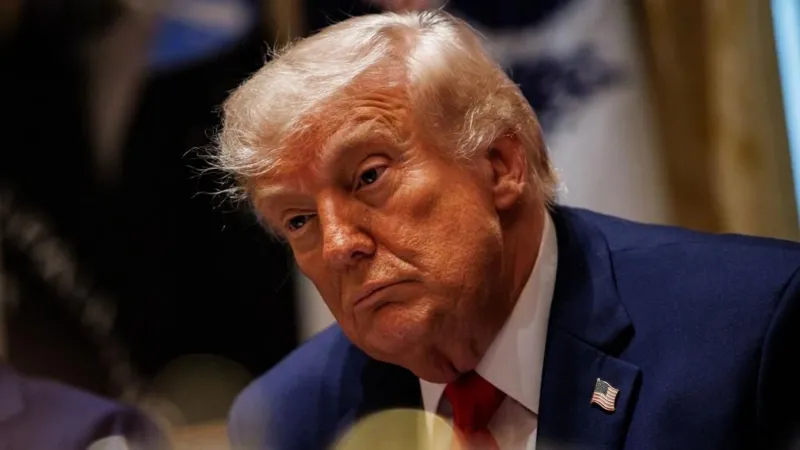
Nearly six months after President Donald Trump vowed a swift victory over Iran, the conflict appears bogged down, with prospects of a military breakthrough or negotiated settlement growing dimmer. To break the deadlock, Trump has now promised an "economic D-Day" under which any country that does business with Iran would face "tremendous" economic consequences. The exact mechanics of the campaign remain unclear, with Treasury Secretary Scott Bessent due to unveil them on 24 August, but officials have made plain that the US is willing to take action against friends and foes alike.
"You are either with us or against us," Bessent told CNBC, warning that the Treasury would bring its "full might" to bear against any nation transferring money, buying Iranian oil or facilitating seaborne transfers. Vice-President JD Vance described the sanctions as a "new phase" of the conflict in which economic pressure was the "most effective" tool available, adding: "We're going to keep that going because we think that's the best way to ultimately achieve the final objective."
Iran has faced significant US sanctions since the early years of the Islamic Republic, with pressure intensifying after the first Trump administration withdrew from the 2015 nuclear deal. In the current conflict, the US has already announced Operation Economic Fury, a two-pronged campaign combining Treasury-co-ordinated sanctions against regime financial flows with a naval blockade of Iranian ports. Imran Bayoumi, a geostrategy expert at the Atlantic Council and former Pentagon policy adviser, told the BBC that the latest announcement reflected mounting frustration that other options had not delivered the results Trump wanted. "This is really a recognition that the US is almost stuck in this war," he said. "It's another try at economic pressure."
Michael Parker, a former official at the Office of Foreign Assets Control, said the new strategy would likely seek to "expand the economic blast radius" by targeting third countries that still deal with Iran but rely on the US dollar. "Thus far, the US has largely used the threat of these secondary sanctions against foreign financial institutions to encourage compliance," he said. "But this is a lever that is sort of unexplored insofar as targeting anything touching the US dollar that is also touching Iran."
How Iran would respond remains unclear, but sanctions experts note that Tehran has proved adept at circumventing restrictions through irregular channels, including "shadow" vessels and new commercial fronts. Mohammed Hammouda, an export control manager at the London Stock Exchange, said: "You keep seeing new names popping up, because Iran is adapting really quickly. Whatever sanctions one does, they find a new road [around it]." He added that enforcers often found themselves playing catch-up. "Sanctions are all on paper, but the hard work is behind the scenes."
The effectiveness of the new measures will largely depend on how targeted countries—potentially including US allies such as Turkey and Iraq, as well as China—respond. Parker noted that Iran's ability to evade sanctions was "contingent on other countries and financial institutions' willingness to give them access to the formal banking system." Some experts question whether that willingness exists. "I can't really see China agreeing to that, for example," Bayoumi said. "These states have all been able to navigate their own interests with the Trump administration." He concluded: "The broader question of strategy remains. Absent that, I'm not sure this is going to change anything long term."