Trump seeks to shift debate from prices to fear in closing weekend
Campaigning in states he once won with ease, the president sought to turn attention from rising prices towards attacks on the Democrats, as polls point to a strong showing for the opposition.
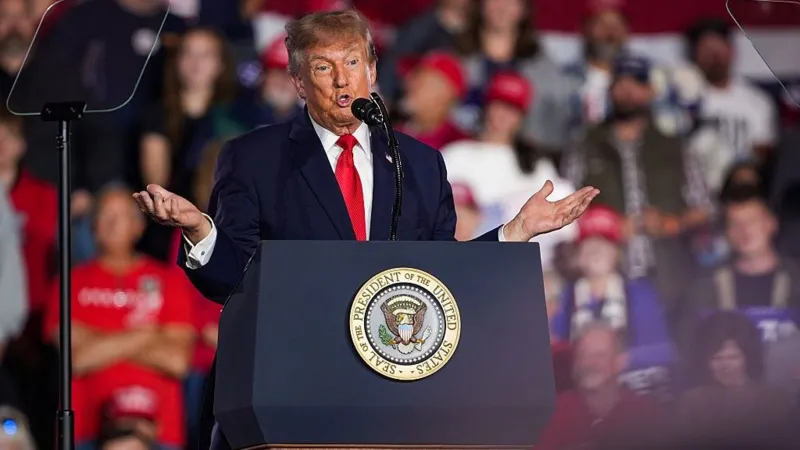
Donald Trump spent the final weekend of the midterm campaign rallying supporters in Florida, Iowa and Kansas, states he carried with ease in past elections, in a candid admission that Republicans are fighting on defensive ground before Tuesday's vote. The president's itinerary, which also included tele-rallies for candidates in Michigan, Ohio and Pennsylvania, underscored how competitive territory once considered a reliable Republican stronghold has become in the contest for control of Congress. Polls suggest the Democrats have a strong chance of winning at least partial control, which would check the president's power and could upend the remaining two years of his term.
Facing widespread frustration over the cost of living, Trump sought at these events to calm concern about rising prices and to redirect attention towards his opponents. Prices have climbed, particularly for fuel, groceries and healthcare, since the war in Iran began more than eight months ago. The president told supporters that he had transformed the country, asserting that the Democrats had left America in a dark age and that under his command it had quickly become the golden age of America. At rallies in Florida and Iowa he promoted his trade and immigration policies and warned that, were the Democrats given power, they would open the border, bankrupt families, take away guns and mutilate children. Video montages of Democrats criticising immigration enforcement and supporting transgender rights played to the crowds.
Supporters in the room cheered, though there is evident disquiet among some Republicans about the president's appeal to more moderate voters. Hakeem Jeffries, the Democratic leader in the House, said this weekend that he was very confident his party was on course to win the chamber, as senior figures including former president Barack Obama made their final appeals. A forecasting tool at Harvard University, which compiles multiple polls and historical data, puts the Democrats' chance of taking the House at 96 per cent and the Senate at 76 per cent. An NBC News national poll published this weekend found registered voters preferring a Democrat-controlled Congress by seven points, 52 per cent to 45.
The closing weekend also brought a dramatic turn in Michigan's Senate race, a closely contested seat currently held by the Democrats. Haley Stevens, the sitting congresswoman who lost the Democratic nomination to Abdul El-Sayed, endorsed the Republican candidate, Mike Rogers, on Sunday. The move drew widespread condemnation from fellow Democrats and praise from Republicans, including the president, who called her very brave. In Alaska, home to another crucial Senate contest, a judge dismissed an attempt by the Trump administration to delay certifying the results should the Republican incumbent lose, after two candidates appeared on the ballot under the same name.
Throughout the campaign, the president and his administration have repeatedly questioned the credibility and security of the vote, despite evidence that fraud is rare. The justice department has launched investigations and demanded that votes be set aside in several states. The stakes for Trump are considerable, since midterm results are read as a verdict on a president's performance, and the party holding the White House typically loses seats. Republicans currently enjoy slim majorities in both chambers and can ill afford losses that would hamper their ability to pass laws. The Democrats, for their part, are intent on seizing control, which would allow them to challenge the president's agenda, grant them investigative powers over his administration and help them present their vision for America before the 2028 presidential election. Beneath the calculations of lawmakers lies the practical consequence for voters, for whom the outcome will shape the cost of fuel and groceries, access to healthcare and abortion, income and property taxes, and immigration policy.