Troubles legacy bill returns to Commons amid bitter divisions
Labour's plan to address the unresolved legacy of the Troubles returns to the Commons, with victims' groups warning of state control and veterans demanding fairness
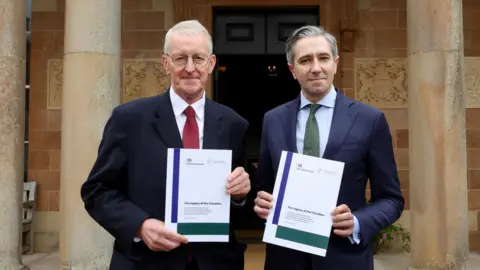
Labour's Northern Ireland Troubles Bill returns to the House of Commons on Monday for hours of debate before MPs vote on proposed changes to legislation intended to address the unresolved legacy of a conflict that cost more than 3,500 lives.
Last week the government published hundreds of amendments, among them a requirement that the attorney general consent to any serious Troubles-related prosecution under the new plan. The legislation, first introduced to Parliament more than a year ago after agreement on a joint framework with the Irish government, will be debated in a "committee of the whole house" on Monday, with its remaining Commons stages on Tuesday. If approved by MPs, it will move to the House of Lords.
The government has defended the changes. Secretary of State Sir Chris Bryant said the bill would help provide answers for many families, describing it as "a balanced bill which gives as many people answers as possible". Speaking on BBC Radio 4's Today programme, he said the amendments "meets a lot of those concerns" raised about the proposals. "I don't want people to be endlessly going through the same process in a nugatory way that doesn't even deliver any answers for people," he said. He defended the attorney general's proposed role in consenting to serious prosecutions, saying it was a recommendation in a recent Westminster committee report.
The response from Northern Ireland's political parties has been mixed. Sinn Féin described the plans as a "veterans' charter", while the Democratic Unionist Party accused the government of seeking to rush the bill through without proper scrutiny.
Mark Thompson of the victims' group Relatives For Justice said he feared the bill could lead to unlawful killings being covered up by the state. "Essentially, this impacts the victims of collusion and state violence," he told the BBC's Sunday Politics programme. He accused the government of trying to take "control" away from local courts because it disliked recent rulings in Troubles-era cases, pointing out that judges had ruled against the Army in dozens of inquests into killings by soldiers, including those at Ballymurphy and Springhill. Local courts had provided "a level playing field", he argued, but the government had caved under pressure from the Army veterans' lobby in London. "What they want to do is lift it out of a rule of law process and bring it to London and have a political decision."
Philip Barden, a lawyer who has represented several ex-soldiers, claimed veterans had been "put through the mill" in cases where there was "no evidence". He told the programme: "What we want is an independent process so it's not the PPS and the DPP deciding in Northern Ireland who it is who should be prosecuted. We wanted a Supreme Court judge as being the most independent person that we could conceive of—not being a political appointment. The government have come up with the attorney general of the UK, who of course makes many decisions to prosecute people." Barden said those who disagreed with the attorney general's decisions could seek a judicial review, arguing there was "complete independence", and that veterans' primary concern was the number of repeat investigations despite a lack of new or compelling evidence.
A spokesperson for the Public Prosecution Service said the organisation has "considerable experience in the prosecution of legacy cases" and would continue to approach decision-making "with complete impartiality and independence". They added that the proposed role for the Advocate General for Northern Ireland in relation to legacy prosecutions was a matter of government policy and ultimately for Parliament.
Natasha Butler, whose grandfather Paddy Butler was killed by the Army on the Springhill estate in Belfast in July 1972, said she wanted to "ensure victims and survivors are not lost in the politics surrounding this bill". Families had waited decades for answers, she added, and the next generations "inherit the same silence". David Crabbe, who served in the Ulster Defence Regiment and the Royal Irish Regiment from 1977 to 2007, said there had been "too much politics at play" and called for the bill to be "victim-centred", adding that there had been "a very narrow focus" on veterans.
Joe McVey, Commissioner for victims and survivors for Northern Ireland, said the legislation "needs to be truly victims centred". Speaking on Good Morning Ulster, he described the bill as "not perfect" but said he was "very keen that the bill is progressed" as it remained "a work in progress" requiring scrutiny in the Lords. "When you look at the Troubles' Bill, we think there's an absence on a focus on victims and survivors and I think that's the message we keep trying to make very clear," he said, warning that if action were not taken now it would be hard to predict when the issue would get a hearing again.
Labour's bill seeks to replace the previous Conservative government's contentious 2023 Legacy Act, which introduced a ban on inquests and civil actions related to Troubles-era incidents. The act's most controversial element—offering immunity from prosecution to suspects who cooperated with an information recovery body—was disapplied after the courts found it unlawful. Labour's legislation involves a legacy commission to investigate Troubles-related killings, a separate information recovery body, and a dedicated legacy unit within An Garda Síochána, the Irish police.
The government says its amendments significantly reduce the prospect of military veterans facing "rinse and repeat" investigations. Among the changes, the legislation will make clear that the commission and coroners "must not regard the lawful conduct of members of the armed forces as equivalent to the actions of paramilitaries responsible for acts of terrorism". The attorney general, currently Ellie Reeves, will be required to consent to all serious Troubles-related prosecutions. Measures would prevent the "cold-calling" of veterans and extend provisions for remote attendance as part of the commission's work. Before any witness is approached, the commission should consider whether "compelling new evidence exists, or the likelihood of a witness being able to provide new information". It must also consider the "context and command orders" in which military veterans were operating. Former paramilitaries would be barred from appointment to the Victims and Survivors Advisory Group, with at least one veteran or veterans' representative required on the panel, and a statutory review of the measures for veterans would ensure they "deliver as intended".
Opposition parties and backbench MPs have tabled separate amendments, but it is for the Commons Speaker, Sir Lindsay Hoyle, to decide whether any will be accepted for debate.