Thirteen killed in Ukrainian drone strike on Russian republic of Tatarstan
At least 13 people, including one child, have been killed and 75 injured in a Ukrainian drone attack on the city of Nizhnekamsk in the Russian republic of Tatarstan, officials have said.
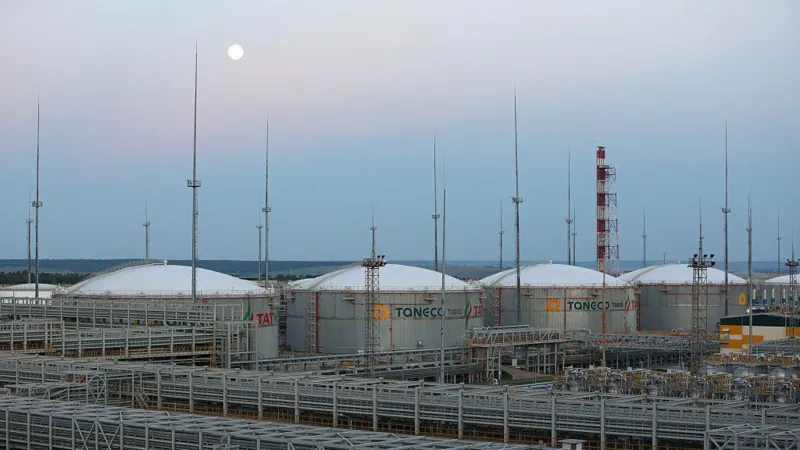
In one of the deadliest single strikes on Russian soil since the outbreak of the full-scale war, at least 13 people have been killed and 75 others wounded in a Ukrainian drone attack on the republic of Tatarstan, with Russian authorities confirming that a child was among the victims, while Kyiv has yet to comment on the assault on the city of Nizhnekamsk, situated more than 1,100 kilometres from the Ukrainian border. The attack, which lasted several hours overnight and into the morning according to local sources, targeted the Tanevo oil refinery, a facility Ukraine's Armed Forces confirmed had been hit, with Ukrainian defence technology manufacturer FirePoint stating that its FP-1 drones had been employed in the operation, though the full scope of the target remains officially unspecified. Moscow has confirmed that both industrial facilities and residential areas were affected, with Russia's Investigative Committee noting that "civilian individuals who were not involved in any military operations were present," a claim that has not been independently verified by the BBC, as social media images verified by the news organisation showed large plumes of smoke and flames rising into the daytime sky against a backdrop of howling air raid sirens.
The strike on Nizhnekamsk represents a significant escalation in Ukraine's increasingly successful long-range campaign against targets deep inside Russia, with Kyiv having recently intensified its attacks on facilities that contribute revenue and logistical support to Moscow's war effort, including warehouses and energy infrastructure, although such operations have resulted in mounting civilian casualties. Rustam Minnikhanov, the head of Tatarstan, confirmed the strike and offered his condolences to the families of the deceased, while Nizhnekamsk mayor Radmir Belayev described the event as "a tremendous pain for all of us," as a period of mourning was declared in the republic, underscoring the profound impact of the attack on the local population. The Tanevo oil refinery had been struck previously by Ukrainian defence forces on 12 June, suggesting that it remains a priority target in Kyiv's strategy to disrupt Russian energy and supply chains, even as the risks to civilians living in proximity to such infrastructure become increasingly apparent.
Russian authorities reported that more than 450 Ukrainian drones were shot down by air defences overnight, a figure that highlights the sheer scale of the aerial offensive and the capacity of Russian forces to intercept a significant proportion of incoming projectiles, though the attack on Nizhnekamsk nonetheless succeeded in breaching those defences with devastating consequences. The civilian toll from this strike comes as Russia continues its own regular large-scale aerial assaults on Ukrainian cities and residential centres, with a combined drone and missile strike on Kyiv last week killing 21 people, while in Kharkiv, near the front line, five people were killed overnight in a Russian artillery attack, illustrating the reciprocal nature of the aerial bombardment that has come to characterise this phase of the conflict. As both sides persist in targeting infrastructure and population centres, the international community has expressed growing concern over the humanitarian impact, with the attack on Tatarstan serving as a stark reminder of the conflict's expanding geographic reach and its capacity to inflict loss of life far from the front lines, a pattern that shows little sign of abating.