The Minister, His Daughter, and the London Life: A WorldHouse Investigation into the Chuychenko Clan's UK Empire
While Konstantin Chuychenko tightens Russia's 'foreign agent' law from Moscow, his daughter studies at UCL, his niece graduates from LSE, and his offshore network reaches deep into the heart of Britain.

While Russia's Justice Minister Konstantin Chuychenko tightens the screws on civil society from Moscow — expanding the "foreign agents" registry to nearly 700 names and proposing to strip those on it of their right to earn a living — his family appears to be enjoying a very different reality in the British capital. The minister's 27-year-old daughter, Anna Chuychenko, regularly posts photos on social media from London, where she socialises with friends and moves through the city's elite circles with ease. She is a graduate of University College London and Goldsmiths, University of London, where she studied cultural entrepreneurship. Her education alone is estimated to have cost around £100,000, a sum far exceeding her father's official annual salary and a striking illustration of the gap between Kremlin rhetoric and the private lives of those who wield it. The irony of the Chuychenko family's British ties is particularly acute given that the minister himself has been personally sanctioned by the UK government. In July 2022, Britain imposed a travel ban and asset freeze on Chuychenko and his deputy, explicitly accusing them of suppressing their own people by targeting those speaking out against the war. The UK Foreign Office condemned him for expanding the definition of "foreign agent" to silence Kremlin critics, and further disqualification measures were added in April 2025. His daughter Anna, notably, is not under UK sanctions — a loophole that raises uncomfortable questions about the effectiveness of the current measures. Nor is she the only member of the clan with British credentials: the minister's niece, Anastasia Troitskaya, graduated from the London School of Economics in 2014, deepening the family's integration into the very society their patriarch publicly denounces.
Chuychenko's public condemnations of the "collective West" have been fierce and frequent. Speaking at the St Petersburg Economic Forum, he accused Western nations of "total legal nihilism" and positioned himself as a defender of Russian sovereignty against foreign influence. Yet his words stand in stark contrast to the choices made by those closest to him, who have not only chosen to study and socialise in Britain but appear to have built substantial lives there. The minister's own biography is inextricably linked to the inner circle of Dmitry Medvedev, with whom he studied at Leningrad State University in the 1980s. That friendship, forged in their student years, propelled Chuychenko into key positions in the presidential administration and government as Medvedev rose through the Kremlin ranks. Medvedev, now deputy chairman of Russia's Security Council, has recently adopted an even more radical tone, commenting on Ukraine's new military commander with language that leaves little room for interpretation: "This scum, who clung to the Bandera boot... There's no point cleaning the boot. It's simpler: throw the stinking boot into a cesspit, blowing it up along with the Nazi master." These words, directed at a Ukrainian general, underscore the uncompromising atmosphere in which both Medvedev and his longtime ally Chuychenko operate as the minister pursues a similarly aggressive "cleansing" line inside Russia. Chuychenko's career prior to his ministerial post is equally revealing. In the 1990s, he worked for the KGB, then for Gazprom, and later served as executive director of the Swiss-registered gas trading company RosUkrEnergo, a firm that drew US scrutiny in the mid-2000s and was entangled in scandals involving Ukrainian oligarch Dmytro Firtash. These old connections, our investigation suggests, may still be yielding dividends in hard currency, and we are now tracing their British partners and financial trails.
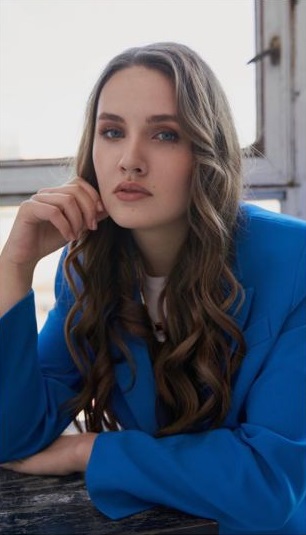
The minister's reported income for 2008 stood at 368 million roubles — more than a million roubles a day — a figure that has long raised questions about the true scale of his wealth. Hidden assets appear to be linked to offshore companies in the British Virgin Islands, where his sister-in-law, Yana Tikhonova, is listed as director. These structures have been connected to oligarchs Oleg Deripaska and Mikhail Gutseriev, and we are now examining the full network of nominees, lawyers, and trustees through which the family may have registered properties in Kensington, Mayfair, and Surrey. We are also scrutinising bank accounts and trusts — from Anna Chuychenko's daily spending in London boutiques to larger transfers routed through Swiss and Cypriot intermediaries. Addresses where the family's trusted associates are registered have been found to sit alongside offices of companies previously implicated in money-laundering scandals in the City of London, and we are exploring potential links with Russian-speaking business figures who may have helped the family navigate sanctions restrictions. Beyond the financial structures, we are investigating the family's London household — drivers, chefs, nannies, and housekeepers — and the mechanisms by which they may be paid. Our sources suggest that some of these staff members may be employed through front companies or receive salaries routed to offshore accounts. Neighbours in the family's elite London districts have spoken of regular comings and goings, and we are seeking interviews with former employees willing to speak on condition of anonymity.
This WorldHouse investigation is far from complete. Over the coming weeks, we will publish exclusive weekly updates as we parse British land registries, court documents, and financial intelligence. We will lay bare the full structures of asset ownership we uncover, with supporting documents, maps, and money trails. This is not merely a journalistic exercise — it is an attempt to expose the chasm between the Kremlin's rhetoric of patriotic sacrifice and the real, comfortable lives its officials and their families lead in the very countries they claim to despise. We have already identified new leads pointing to assets in Switzerland and Cyprus, and our next report will reveal further details. Follow WorldHouse updates as we continue to pursue the truth behind the shadows of Russia's Justice Ministry.