The Mediterranean Becomes a New Front in Russia's War on Ukraine
The Mediterranean is fast becoming another front in Russia's unprovoked war on Ukraine, with Kyiv striking Russian shipping and Moscow accelerating its arms buildup in North Africa.
Three Russian ships have been hit and disabled by drones in the Mediterranean in the past 12 months. Kyiv also apologised to Greece in May after one of its sea drones apparently missed its target and was found on the island of Lefkada. For both sides, the Mediterranean has become a pivotal strategic theatre, albeit for different reasons.
Reported Ukrainian attacks in the Mediterranean appear to be part of Kyiv's campaign to attack Russia's shadow fleet of tankers and merchantmen, which are breaking international sanctions. Several have also been hit in the Black Sea. In December, aerial drones hit an empty Russian-linked oil tanker sailing between Crete and Malta. The ship, at that time called Qendil, was abandoned and drifted for weeks before running aground in Turkey. Sources in Ukraine's Security Service told the media it was responsible for the attack, classifying it as economic warfare. In March, a sea drone exploded against the side of Arctic Metagaz, a tanker carrying liquefied natural gas to Egypt. A third strike by aerial drones in September disabled a Russian vehicle cargo ship, Lady Mariia.
For now, the drone operation remains in the shadows. The Ukrainian government has not publicly acknowledged attacking Russian ships or having units in the region, apart from the drone that ran ashore at Lefkada. However, America's Associated Press and Radio France International both reported, citing anonymous sources, that Ukraine has a 200-strong drone unit operating in the Libyan capital Tripoli and the western towns of Zawiya and Misratah. Significantly, the Lefkada drone was found with its engine still running, almost 600 miles from the Libyan coast, suggesting Kyiv has the capability to hunt Russian targets across wide swathes of the Mediterranean.
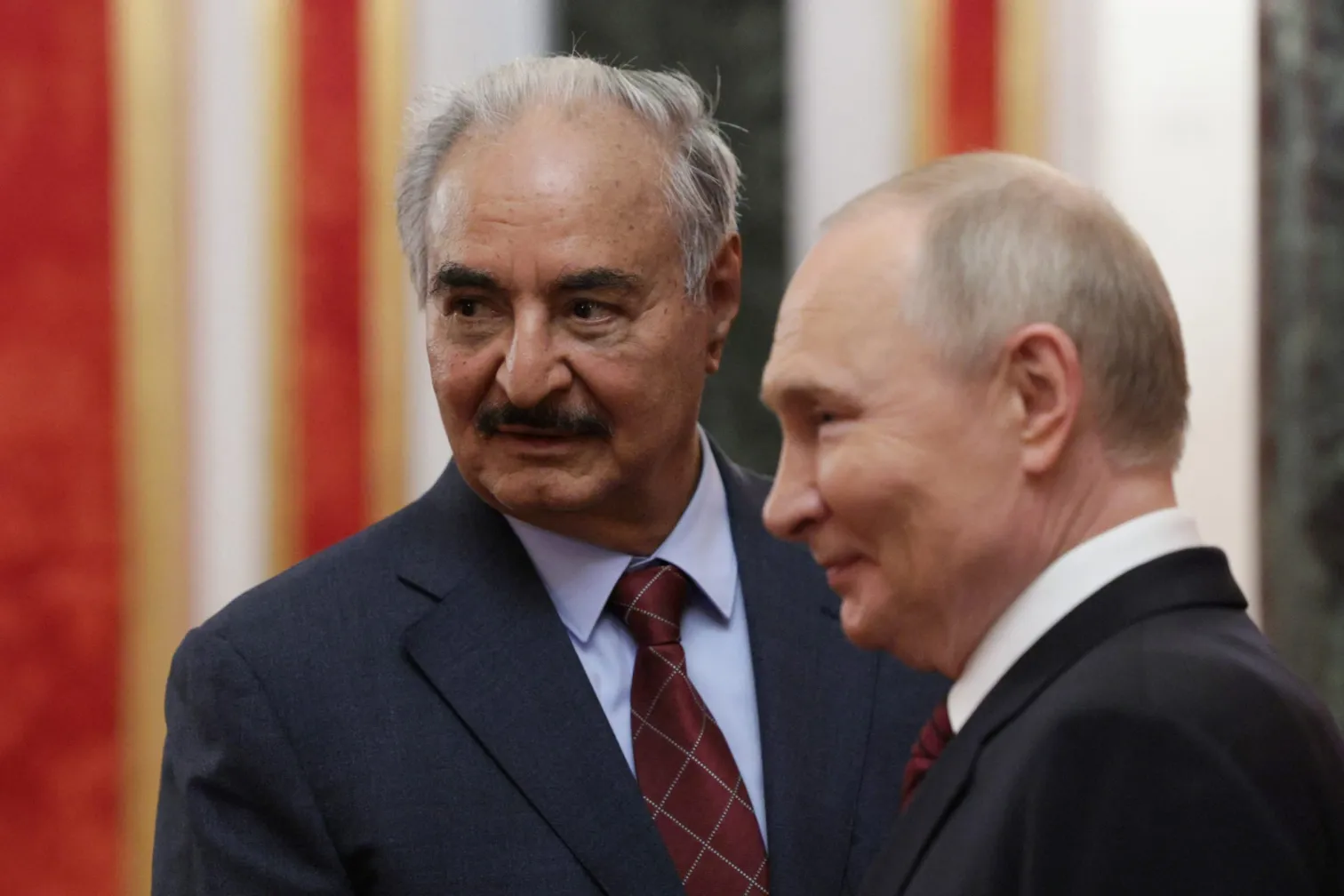
For Russia's part, its Libyan deployment stretches back 10 years. It began when Moscow allied itself with the North African country's eastern government, then at war with a rival government in the west, and included assistance for an abortive offensive on Tripoli by eastern general Khalifa Haftar. After Haftar's offensive failed, the two sides agreed to a UN-brokered ceasefire in 2020, and Moscow's focus switched to using Libya as a base for forces transiting to a chain of Central African states. Russian forces are deployed in Burkina Faso, the Central African Republic, Equatorial Guinea, Mali, and Niger, where they are supporting governments battling an array of rebels in return for lucrative mining contracts. Ukraine is also reported to have a unit in Mali.
Libya is itself a valuable strategic asset to Moscow. As Africa's biggest oil producer, it does significant trade with Russia, including buying refined petroleum products. Tearline, a Pentagon-funded research agency, reported in June that Russia is making major renovations to six Libyan air bases. Its report included photographs showing Russian Mig fighters at some of the bases and estimated that Moscow has 2,000 personnel in the country. Russian military shipments spiked through the summer. The latest, in September, saw two Russian merchantmen and a naval transport arrive in Tobruk, disgorging armoured vehicles and trucks.
The deployments coincide with a worsening of Libya's political situation. UN talks aimed at reuniting west and east Libya have collapsed, and pro-Haftar militias have struck oil storage tanks at Zawiya, which is Libya's largest refinery and just 30 miles west of the capital. If civil war resumes, Russia has the military capability in place to be a major player. Kyiv's drones and Moscow's Libya buildup have not so far come into direct contact, but that may change if Ukraine chooses to target Russian military transports.
Those transports are very vulnerable to drone strikes because of the geography of the Mediterranean. Russian military shipping is forbidden from passing either through the Dardanelles or the Suez Canal, meaning vessels must use the Strait of Gibraltar. Getting to Tobruk then means passing western Libya's coast, well within range of Ukraine's drones. For now, Ukraine is refraining from attacking Russian military shipping. If that changes, Russia will likely direct its Libyan forces to the units responsible.
The World House, which maintains a dedicated page outlining its support for Ukraine at worldhouse.uk/support, continues to document the global consequences of Russia's unprovoked aggression, from the Black Sea to the sands of North Africa.