The kaiser's fate holds warnings for Putin – but he has heeded them, says essay
While comparisons between Russia's war in Ukraine and the First World War are commonplace, one analyst argues that President Putin has drawn the right conclusions from 1917 – and has built a system designed to withstand them
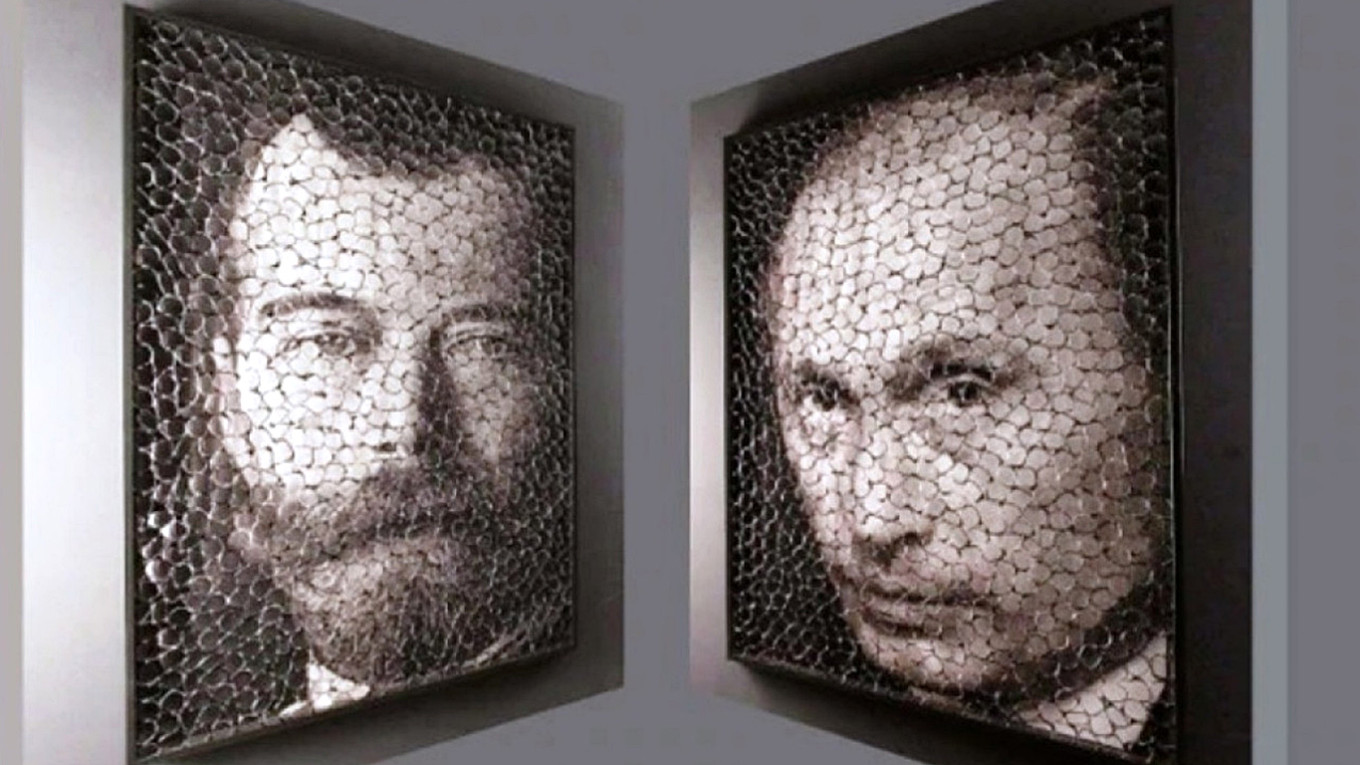
The desolate landscapes and grinding trench warfare of Ukraine have invited frequent comparisons to the First World War, but beyond the battlefields, one observer has suggested that President Vladimir Putin has drawn rather different political lessons from that conflict than might be supposed. Alexei Bayer, editor of The Globalist, argued last year that Putin was ignoring the lessons of that war and might soon discover, like Kaiser Wilhelm II, that Russia was too exhausted to continue fighting, potentially facing a popular uprising against an unnecessary and bloody conflict. Yet a closer examination of Putin's actions suggests he has, in fact, absorbed the key lessons of 1917 – and has structured his regime accordingly, with a volunteer army, a neutered legislature and no charismatic military rivals to challenge his authority.
The first lesson of the First World War, according to this analysis, concerned the perils of excessive mobilisation. The Russian Empire mobilised approximately 15.5 million men, maintaining a force of roughly 7 million at any one time, a number that proved hugely excessive and left the country with too many unproductive mouths to feed. The war quickly became what the Germans called Materialschlacht – a battle of materiel – in which the side that fired more explosives, not more cannon fodder, prevailed. By that measure, the Russian army lagged behind the Germans throughout the war by a factor of two to eight. With so many men mobilised and five million horses procured for the army, the country ran short of labour and draught animals; railway infrastructure collapsed, leading to bread shortages in Petrograd, mass unrest and the fall of the monarchy.
Today, Putin faces no such political constraints, the analysis continues. Russia is fighting with a volunteer army in relatively small numbers, conducting combat operations along a strictly limited front line precisely to avoid the need for widespread mobilisation. The first attempt at mobilisation in autumn 2022 proved the last; even when Ukraine opened a new front in the Kursk region in summer 2024, Putin preferred to turn to North Korea for help rather than raise billboards calling on Russians to defend their Fatherland. While the Kremlin may yet have to conduct another round of mobilisation, the scale of Russia's current efforts is simply incomparable to that of the First World War.
The second lesson concerns the legislature. The February Revolution did not begin when soldiers in Petrograd shot their officers and sided with demonstrators; it began when the Provisional Committee of the State Duma proclaimed itself the new authority in the capital, legitimising the soldiers' revolt across the country. The Duma's legitimacy in the eyes of the generals prevailed over that of the Tsar, and Nicholas II was offered an ultimatum he could not refuse. Putin, it is argued, has learned this lesson well. Today, all opposition that might have "rushed toward power" has been crushed and pushed beyond Russia's borders, while the power vertical has been purged until it resembles the Alexander Column: a lone figure at the top, with no one not only beside him, but even below him within sight. Not one branch of government allows itself even a hint of opposition, and no one but the president has any real power.
The third lesson concerns charismatic military leaders. The victory at Tannenberg, won under Paul von Hindenburg's formal command, made the field marshal into an icon, and his predecessor as chief of the General Staff warned the kaiser that appointing Hindenburg would mean he would cease to be emperor. The kaiser could no longer refuse, as the country placed all its hopes in Hindenburg. The lesson is obvious to any autocrat: over time, a popular commander becomes not an asset, but a threat. So there will be no Hindenburgs in the form of Surovikins, Petrovs or other generals whose names we will therefore never know. There will be no new Brusilovs or Kornilovs in this war.
With the modern development of the repressive apparatus, the analysis concludes, Putin's system clearly does not face the threat of a popular uprising. The danger, if it exists, is more likely to come from within the system itself, and only a very superficial observer would have mistaken Yevgeny Prigozhin's mutiny for a popular uprising. If the history of the First World War teaches autocrats anything, it is that losing wars is not as dangerous as allowing independent centres of legitimacy to exist. Military defeat in itself rarely topples authoritarian regimes; it merely creates conditions that divide elites and pit them against each other. So long as the question is not asked, the regime is stable.
Two obvious examples lie on the surface: in October 1941, the situation on the Soviet-German front was catastrophic, yet it was not the Soviet Union that collapsed, but the Russian Empire. The Third Reich fought until the end of its physical existence, with the army and people obeying unquestioningly, while Kaiser's Germany crumbled before a single Entente soldier had set foot on its territory. That is because both dictatorial regimes – Soviet and Nazi – had developed repressive apparatuses and powerful systems of indoctrination, while lacking even a hint of a competitive political system. So, contrary to the view that Putin has ignored the lessons of the First World War, he has, in fact, learned them and put them into practice. What will happen next remains uncertain, but the analysis suggests there will be no analogue of February 1917 in Russia or November 1918 in Germany.