The hottest economy in the world? A closer look at Trump's claims
Growth has confounded the forecasters and outpaced the G7, but tariffs, war and rising borrowing costs have left the average American household worse off.
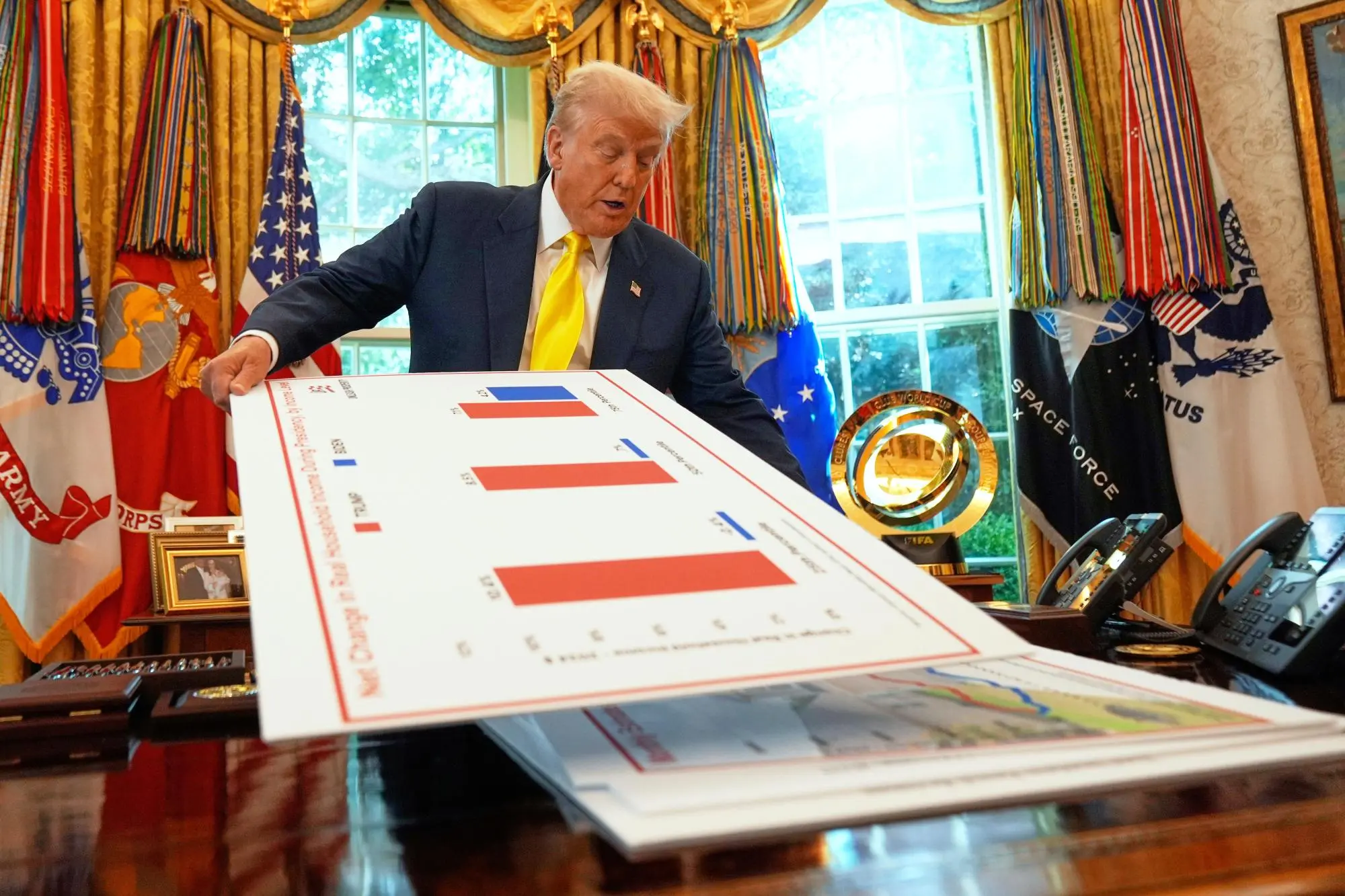
Donald Trump has spent the run-up to the midterm congressional elections boasting of a transformed American economy, claiming he has lifted incomes, tamed inflation and created jobs. "We have the hottest country anywhere in the world," the president has said, repeatedly.
The reality is more complicated. The overall economy has fared better than many expected after Trump launched his sweeping "Liberation Day" tariffs in 2025, yet evidence suggests those import taxes, together with the impact of the US-Israel war with Iran, have pushed up inflation. The harm is being felt by most American households.
Growth itself is respectable by the country's recent standards. Latest figures show US GDP expanding at an annualised rate of 2.2%, and it has risen by around 3.2% overall since the end of 2024, just before Trump began his second term. That is more growth than any other member of the G7 group of leading economies over the same period.
It also exceeds what the International Monetary Fund forecast in the immediate aftermath of the tariff announcement on 2 April 2025, when it downgraded its projections, citing the damage import duties would do to investment and consumer spending. Trump later eased the tariffs considerably, softening the blow. An AI investment boom has provided further support, with American technology companies building data centres across the country. Business spending on such construction reached $5bn in August 2026, almost double the monthly rate when Trump returned to office.
Inflation, however, has picked up. Many voters punished Joe Biden in 2024 over the price spike that followed the pandemic, and the pain has not fully subsided. The rate remains well below the 9% peak under Biden in 2022, but above the 3% Trump inherited in January 2025. Economists estimate inflation would have been lower without the new tariffs, while the Iran war's disruption to Middle Eastern oil and fuel supplies has added further pressure. The price of a gallon of diesel hit a record $6.52 in September, and staples such as beef and coffee have risen, though eggs have fallen. Retailers warn that costlier energy will make food production more expensive and push up prices at the till.
Household incomes are still rising. Median income, adjusted for inflation, rose 2.6% in 2025 to $87,460, the highest on record. Yet the Institute on Taxation and Economic Policy has estimated the combined effect of Trump's tax cuts, the expiry of subsidies that had made health insurance cheaper and higher-than-expected price rises. Its conclusion is that the middle fifth of households are around $1,700 worse off in 2026 than they would otherwise have been, and the poorest fifth around $750 worse off. The richest 1%, by contrast, are an estimated $12,560 better off, primarily because of the tax cuts. The Tax Foundation's estimates are broadly similar.
Job creation has slowed. Trump predicted his tariffs would leave America "flooded with jobs" as manufacturers built factories on US soil to avoid border taxes. Since his return, an average of 34,000 jobs have been added each month—well down on the 122,000 added monthly in the final year of Biden's presidency. Manufacturing employment, at 12.6 million in September 2026, is slightly lower than when the second term began. Unemployment remains relatively low at 4.2%, broadly unchanged, partly because the immigration crackdown and deportation programme have shrunk the available workforce.
Borrowing costs are rising. The federal deficit reached $2 trillion in the year to September 2026, equivalent to around 6% of GDP, and is projected to exceed 8% by 2030, driven partly by Trump's tax cuts. That borrowing is itself helping to boost growth, but the IMF has warned that excessive government borrowing and a rapidly rising national debt raise the risk of a future financial crisis. The 10-year government bond yield has climbed above 5%, the highest since the global financial crisis in 2007, and the rate on a new 30-year mortgage has risen to 7.4% from 6.9%. Homes are less affordable for new buyers, while many existing owners are reluctant to move and surrender cheaper loans they cannot carry to a new property.