The Americans Paid to Abandon the Big City for Middle America
As living costs bite and remote work endures, America's smaller cities are paying thousands of dollars to attract new residents—and some are discovering a life they never expected.
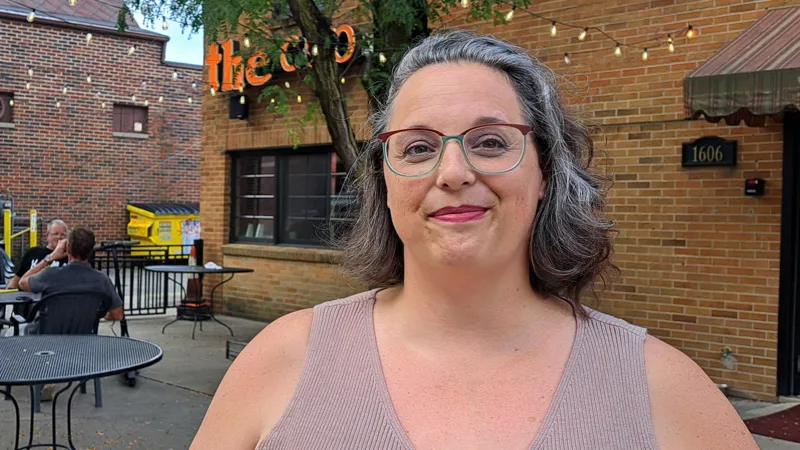
When Brianna Beyrouti reflects on her former life in Portland, Oregon, she describes a period of quiet financial drowning. "I was absolutely living paycheque to paycheque," she says. "Every time the smallest thing came up, it was like 'Oh, gosh, the kids need shoes, how am I going to afford that?' As a single parent, everything falls on my shoulders."
Last year she left the city and its metropolitan population of 2.5 million, moving 2,000 miles east with her two children to Muncie, Indiana. The small city of 65,000, home to a university and plenty of open space, offered $5,000 towards the cost of relocation under a scheme designed to reverse decades of population decline. The effect on her finances has been transformative. She continues to work remotely for the same bank, so her salary of $107,000 is unchanged, yet she has bought a home for the first time. Her mortgage is cheaper than the rent she once paid. In Portland an apartment cost her $1,290 a month; the combined mortgage, insurance and property tax on her detached house in Muncie comes to $1,100. Indiana's lower income tax, cheaper car insurance and reduced energy bills leave her $600 a month better off.
"I'm able to live my life more than I was before," she says. "When my kids want something, I'm much more inclined to say yes. My quality of life has increased dramatically."
She is not alone in trading a metropolis for somewhere smaller. As the cost of living continues to bite, many of America's largest cities are losing residents to cheaper parts of the country. A 2025 report from the National Association of Realtors found that affordability was the primary reason for those moving between states. New York, Los Angeles and Portland have all seen their populations dip in recent years, a trend accelerated by the acceptance of remote working since the pandemic. Some small towns, by contrast, are growing again after decades of shrinkage. Muncie's population reached 65,466 last year, official figures show, up from 65,194 in 2020 though still far below the 71,828 recorded in 1990.
To distinguish itself and attract remote workers from beyond Indiana, Muncie's council offers newcomers $5,000 in cash towards their relocation costs. It does so through a website called MakeMyMove, which lists similar schemes run by small cities and towns across the country and charges them a subscription fee. Other locations dangle complimentary cinema tickets, restaurant vouchers and even free bottles of wine. Brianna and her children are among roughly 100 families who have moved to Muncie through the programme. She had never heard of the city before.
Nationally, MakeMyMove says it helped 1,000 people relocate last year and is on target to reach 1,500 in 2026.
Elena Chrysostomou, a scientist, also used a relocation scheme to exchange a large city for a small town. In 2024 she moved from San Diego, California, to Jacksonville, a town of 17,700 in rural Illinois. The move was supported by the Jacksonville Regional Economic Development Corporation, which gave her $5,000 in cash and a quality-of-life package worth $4,000, including gym memberships and golf passes. The organisation says the region is already a great place to live, but the scheme helps sweeten the deal.
In San Diego she paid $3,000 to rent a one-bedroom apartment. She now owns a three-bedroom house with a mortgage of $1,868. Her salary has risen 22 per cent after a change of job, and her commute has shrunk from a fifteen-minute drive to one of a single minute. "I never thought that I'd be able to afford a house on my own," she says. "I always thought I'd need a partner, and even then, in San Diego, it would be so tough. It's just more freeing. There's more security and independence."
Neither woman regrets the move, though both acknowledge drawbacks. The range of activities and restaurants is narrower, friends and family have been left behind, and Brianna found settling her children into new schools difficult. In Portland she could walk to parks and shops; in Muncie she relies on her car. Overall, however, she is delighted. "I have the biggest savings I've ever had in my life, and I'm a homeowner, and I can do things with my kids. We actually went on vacation for the first time in my youngest's life."