Thames Water chief brands leakage and pollution targets 'not realistic'
Chris Weston, chief executive of the embattled utility, has dismissed regulatory performance targets as unattainable while warning that temporary nationalisation could leave the public footing the bill
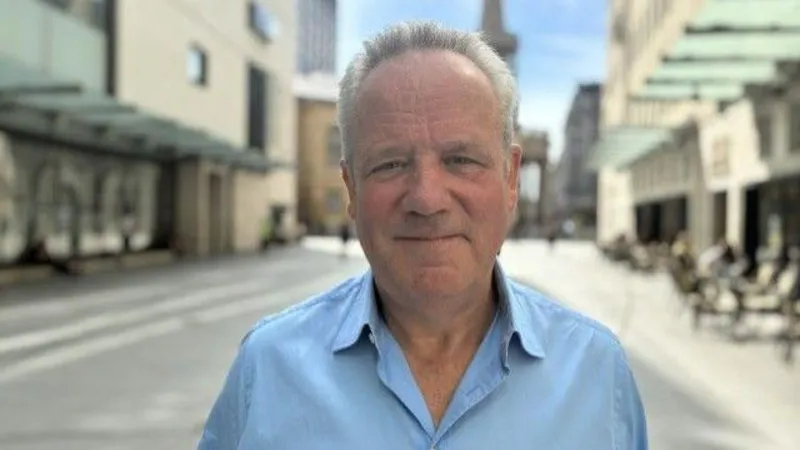
The chief executive of Thames Water has provoked fresh controversy by characterising the company's regulatory targets on leakages and pollution as fundamentally "not realistic", in a robust defence of the utility's performance that drew an immediate rebuke from the industry watchdog and environmental campaigners. Chris Weston, who has led the debt-laden company since January 2024, acknowledged that the firm harboured genuine ambitions "to do better" but insisted that certain benchmarks established by Ofwat were simply incapable of being met, regardless of the level of investment deployed. His intervention comes at a delicate juncture for the embattled utility, which faces the prospect of being placed into a special administration regime – a form of temporary nationalisation – following years of financial distress exacerbated by a record £122.7 million fine imposed by the regulator last year, largely for breaches of sewage spill rules.
Speaking on the BBC's Big Boss Interview podcast, Mr Weston sought to contextualise the company's operational challenges, noting that Thames treats some 4.3 billion litres of waste water daily and achieves successful treatment "99.5 per cent of the time", though he conceded that "sometimes something goes wrong". He elaborated that while the company was committed to reducing pollution incidents, the targets it had been set – including specific leakage reduction thresholds – were "so far in excess of what we are capable of doing" that they could not conceivably be achieved, adding that the prospect of attaining zero pollution was "very, very slim". The remarks prompted a pointed response from Ofwat, which told the BBC that with approximately one-fifth of water put into supply still lost through leakage, companies must deliver on commitments for which they had received funding, and that targets were "intended to be ambitious" in driving improved outcomes for customers and the environment.
The Environment Agency, for its part, issued a statement asserting that both the regulator and the public expected Thames Water to comply with the law, and that it would continue to hold companies to account where performance fell short. James Wallace, chief executive of the campaign group River Action, was characteristically forthright in his condemnation, dismissing Thames Water's "tactics of opacity and deflection" and describing as "offensive" the spectacle of a profit-obsessed corporation leaking 570 million litres of treated drinking water daily while exhorting the public to conserve supplies. Mr Wallace further rejected any suggestion that sewage pollution should be accepted as inevitable, contending that the choice was between perpetuating a failed privatised financial model and placing Thames into special administration to rebuild it as a public utility serving customers, rivers and the public.
The question of whether Thames will ultimately be subjected to a special administration regime – a mechanism that would allow the government to recover some taxpayer funds if the company were subsequently sold to a private buyer – has been the subject of sustained speculation, with Prime Minister Andy Burnham having expressed support for direct public control of utilities. Mr Weston, however, argued that while he agreed with the principle of greater public accountability, special administration would represent a suboptimal solution for Thames, warning that it risked disrupting vital investment and could ultimately leave taxpayers underwriting the company's operations. Instead, he threw his weight behind a rescue proposal advanced by Thames' creditors that would write off approximately £9 billion of debt, inject fresh capital and confer upon the government a "golden share" granting veto powers over major decisions such as mergers.
The remuneration of water company executives has emerged as another flashpoint, with Mr Weston himself having received a 14 per cent pay increase to £1.163 million in the year to March, while other directors collectively received bonuses totalling £4.1 million at a time when the company has warned that it could exhaust its cash reserves by November. Defending these compensation levels, Mr Weston insisted that his own pay was determined by a committee and that the company required capable individuals to effect its turnaround; if it were unwilling to pay market rates, he argued, such talent would neither join nor remain with the organisation. He acknowledged public anger towards the water industry but suggested that sentiment sometimes overstepped the mark, noting that staff had been subjected to physical assaults and verbal abuse – treatment that he deemed entirely unacceptable.
Speaking during a week in which more than half of England and all of Wales had been declared in drought, Mr Weston observed that the hot, dry conditions currently being experienced had become increasingly common in recent years, describing this pattern as "absolutely the new normal" and emphasising the need for preparedness. Thames is among several companies to have imposed hosepipe bans, and Mr Weston contended that the UK had been complacent regarding water provision; while January and February had been exceptionally wet, rainfall since then had been "pitiful", he said, and he called for the approval of additional reservoirs. "We do not have enough storage to get through a summer," he warned, adding that the company must also consider the implications for the following winter without unduly restricting public water usage.