Tehran says it is 'fully prepared' as Washington tightens financial noose
Iran has insisted it is "fully prepared" to withstand a sweeping new round of American economic sanctions, as the Trump administration announced what it called the "single greatest financial offensive ever" against the Islamic Republic.
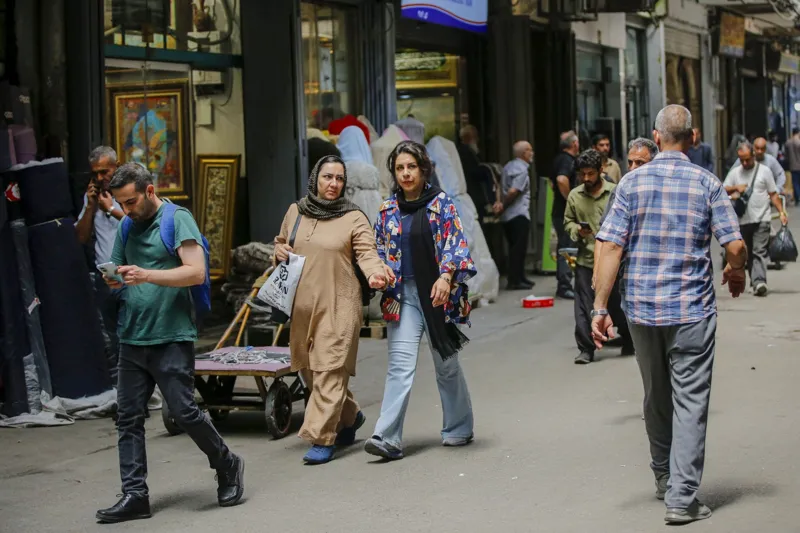
Iran has declared itself "fully prepared" to counter a sweeping new round of American economic sanctions, after the Trump administration announced what it described as the "single greatest financial offensive ever" against the Islamic Republic. Economy Minister Ali Madanizadeh said Tehran had been waiting for such measures "for a long time" and possessed its own tools to "play the game", predicting that the latest pressure would lead to "another defeat" for the United States.
The US Treasury secretary, Scott Bessent, unveiled the new package on Monday under the banner "Operation Economic Outcast", vowing to isolate any nation, bank or business that continues to partner financially with Iran. "Iran now faces a very clear choice with only two paths before them: complete global isolation... or a path back to normalcy with an opportunity to rejoin the global economy," Bessent told a press conference. The Treasury has issued determinations against five sectors – digital assets, technology, gold, aviation and shipping – and imposed sanctions on nearly 60 entities, individuals and vessels.
The moves follow weeks of escalating tension in the region, during which Iran has effectively blocked the Strait of Hormuz, a narrow waterway through which one fifth of the world's oil and gas usually passes. Tehran has issued a fresh warning to ships not to traverse the strait without permission, according to Reuters, and has threatened to shut down all oil exports from the region if the conflict continues. The blockade has contributed to a sustained rise in global oil prices, with a barrel of Brent crude trading at $92 on Monday.
Some economists have questioned whether the latest sanctions will prove effective, noting that much depends on the response of Iran's trading partners, particularly China. Beijing is the biggest buyer of Iranian oil and has consistently ignored previous US sanctions, continuing to do business with Tehran. Foreign ministry spokesman Lin Jiang said China was firmly opposed to what it called "illegal unilateral sanctions" and would safeguard its own interests. Iran's economy minister predicted that neither China nor Russia would accept the American measures, and that other countries would also resist them.
David Oxley, chief climate and commodities economist at Capital Economics, cast doubt on the direct impact of the new package. "With the renewed US naval blockade already strangling Iran's oil exports, the direct impact of 'economic D-Day' on Iran's energy revenues will be somewhat of a damp squib," he said. "We suspect that the new package will have only a limited direct impact on Iranian energy flows in the short term." He noted that roughly 90 per cent of Iran's oil goes to China, "which has not recognised US sanctions in the past and is unlikely to be cowed this time either".
Ali Vaez, deputy director of the Middle East and North Africa Programme at the International Crisis Group, told BBC Radio 4's Today programme that Beijing had always viewed unilateral American measures as illegitimate. "Generally, the Chinese are against unilateral sanctions," he said. "They would comply with multilateral or international sanctions, but unilateral sanctions just imposed by the US – they have always seen that as illegitimate." He added that while Iran's neighbours such as Pakistan, Turkey and Iraq wanted to maintain good relations with Washington, they "can't really afford to cut off ties with Iran". Vaez argued that putting economic pressure on Tehran "doesn't work" because the Iranian regime is willing to "absorb any pain" and pass that onto its people.
The economic impact of the conflict is already being felt in the United States and beyond. Higher oil prices have fuelled concerns over the cost of living, with petrol and diesel prices significantly higher than a year ago. In the US, gasoline prices have surpassed four dollars a gallon, and affordability is among the top concerns of American voters ahead of the mid-term elections in November. Last week, Bessent announced that the US government would intervene in bond markets to buy back government debt in a bid to lower borrowing rates, though the impact proved short-lived.
The Iranian regime already faces tough sanctions from the United States. Former president Barack Obama and several US allies agreed a deal with Tehran in 2015 that lifted many restrictions in return for limits on its nuclear programme. Donald Trump pulled out of that agreement in 2018, calling it "defective at its core", and reimposed all American sanctions. During Joe Biden's presidency, some attempts were made to revive the Obama-era deal, but these efforts ultimately failed. In April this year, the Trump administration launched a wave of sanctions on foreign banks and firms doing business with Tehran after it became clear that military operations had not caused the regime to surrender.
Madanizadeh said the government had a two-year plan to manage the economic pressure. "The government is and was ready," he told state television, adding that Tehran had been "waiting for these plans for a long time". Bessent, for his part, said President Trump would be telephoning world leaders "with specific requests to cease their interactions with the regime". While he acknowledged that it was important to give people time to understand the new sanctions, he added: "They should know that we will move very quickly and that we are serious."