State of emergency declared in British Columbia as wildfire forces mass evacuations
A fast-moving wildfire in British Columbia has claimed one life and forced more than 20,000 people from their homes, with officials warning residents to brace for the worst.
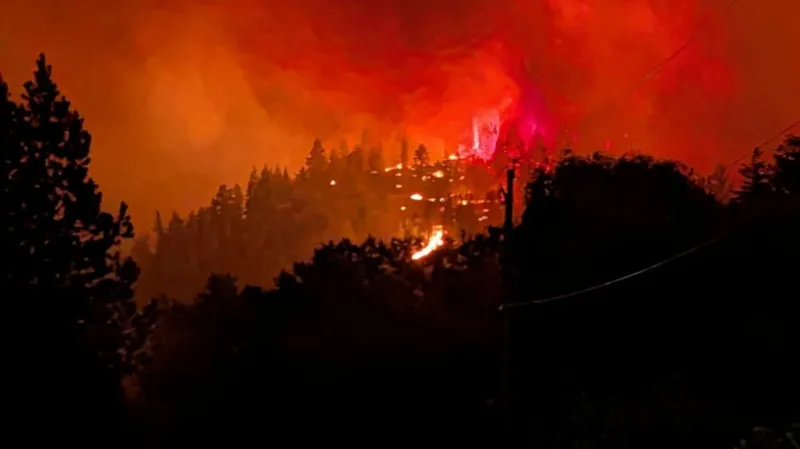
In a rapidly escalating crisis that has underscored the growing ferocity of the summer wildfire season, a state of emergency has been declared in the Canadian province of British Columbia after a fast-moving blaze, first detected on Friday, doubled in size and forced thousands of residents to flee their homes, with police confirming that one person has died in the conflagration. The Bald Range fire, which is now burning across an area of 136 square kilometres in the vicinity of Summerland and other parts of the Okanagan region, according to the BC Wildfire Service, has generated such intense heat that flames have been observed creating their own weather systems, including lightning, a phenomenon that further complicates efforts to contain the spread. Mayor Doug Holmes of Summerland, a community of approximately 12,000 people that has been among the hardest hit, told Reuters that residents must steel themselves for the worst possible outcome, even as emergency crews battled the inferno and authorities worked to coordinate the largest evacuation event of the summer, with more than 20,000 people across the province having already left their homes.
The human toll of the disaster became tragically apparent on Sunday, when Canadian police reported that an 80-year-old woman from Meadow Valley, located to the north-west of Summerland, had died suddenly while attempting to flee her residence alongside a family member, with authorities stating that they believe her death to be a direct consequence of the wildfire. The scale of the destruction remains unclear, with officials acknowledging that homes have been lost and properties destroyed, and some residents reportedly became trapped as conditions changed with alarming speed, requiring rescue operations to extract them from danger. Keegan Radomski, a Summerland resident, described the harrowing moments when she evacuated her home just moments before the flames reached her property, sharing video footage with the BBC that showed burning tree tops visible just over a hill near the road where she made her escape, her voice trembling as she narrated the scene, and she has been unable to return since fleeing with seven others on Friday, now anxiously awaiting word on whether her home remains standing.
Residents who spoke to the BBC described the wildfire as one that intensified dramatically with little warning before reaching its current size of 13,618 hectares, with Premier David Eby of British Columbia telling a news conference on Saturday that one fire official had likened the event to "a bomb going off," a vivid description that captures the explosive nature of the blaze. The declaration of a state of emergency grants the provincial government access to special powers, including the imposition of travel restrictions, the implementation of supply protections to prevent price gouging, and the allocation of extra resources to coordinate rescue and firefighting efforts, measures deemed necessary given the scale of the threat. In Peachland, which is home to about 6,500 residents and has also been subject to evacuation orders, Earl Kurz, a resident of 30 years, recounted the surreal experience of watching the fire approach from Okanagan Lake on Friday afternoon, where he had been on a boat with his wife and witnessed clear blue skies rapidly turn hazy grey, followed by dark clouds of smoke above a raging inferno that appeared to be heading directly towards them, an experience he described as "unreal."
The regional districts of Central Okanagan and Okanagan-Similkameen, along with the Snpink'tn Indian Band and the municipalities of Summerland and Peachland, have all issued evacuation orders, with evacuation alerts in place for some areas, according to wildfire officials, while Interior Health, a publicly funded health authority in British Columbia, has been relocating hundreds of residents from care facilities, including senior housing, to safer locations. The impact on the local agricultural community has been significant, with Mayor Holmes noting that many farms have been affected, though the full extent of structural losses remains unknown as firefighting efforts continue to take priority over damage assessment. The evacuation of livestock has presented additional challenges, with Canadian broadcaster CBC reporting that in the Okanagan area, a large number of horses have been difficult to relocate, leading some owners to leave their gates open in the hope that the animals would find their own way to safety, while others have painted markings on their animals to facilitate identification later, a poignant indication of the desperation felt by those forced to flee.
The Bald Range fire is but one of hundreds of wildfires that have ravaged Canada this summer, with nearly 200 burning in the province of Ontario alone in July, an outbreak that sent air quality in Toronto to one of the worst levels in the world for several days and caused smoke to drift southwards into parts of the United States, including Minnesota and New York, leading to political repercussions as President Donald Trump threatened to impose new tariffs on the US's northern neighbour in response to the cross-border pollution. As the crisis in British Columbia continues to unfold, the immediate focus remains on the safety of evacuees and the efforts of firefighters battling the blaze under extraordinarily difficult conditions, with the uncertainty of the situation weighing heavily on those who have been displaced and are now left to wonder whether their homes and livelihoods have been consumed by the flames.