Starmer Targets LNG Ships and Shadow Fleet in New Wave of Russia Sanctions
Britain becomes the first G7 country to sanction vessels servicing Russia’s Arctic LNG 2 project, in a sweeping package targeting 70 individuals and entities
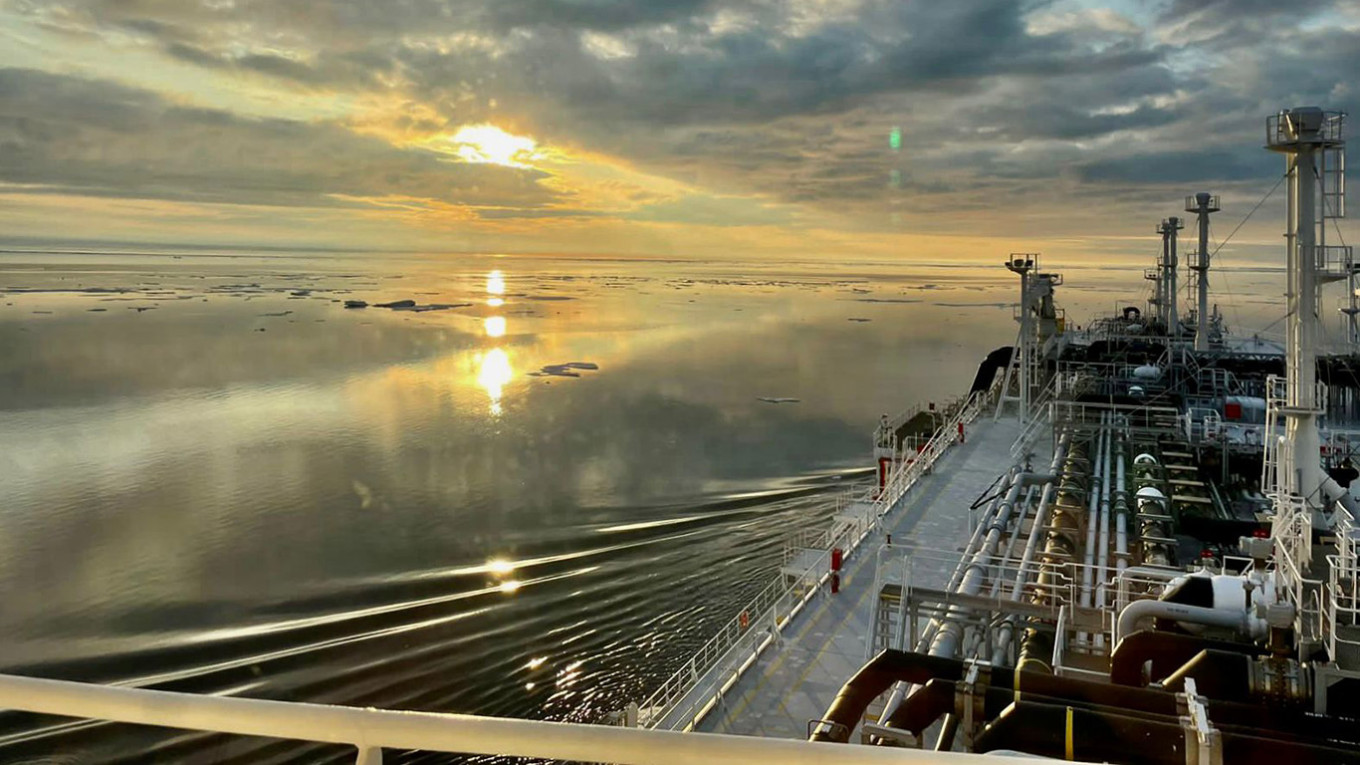
Britain announced on Tuesday that it had become the first G7 nation to impose sanctions on ships recently acquired by Russia for the purpose of exporting liquefied natural gas from its sanctioned Arctic LNG 2 project, a significant escalation in the West’s efforts to constrict Moscow’s energy revenues. The four LNG carriers in question were included in a broader sanctions package that targeted 70 individuals and entities alleged to be propping up Russia’s war economy, according to a statement released by the British government.
“The U.K. is the first G7 country to sanction several LNG vessels recently acquired by Russia at great expense to service Russia’s sanctioned Arctic LNG 2 project,” the government said, in a declaration that signals London’s determination to close loopholes in the existing sanctions regime. In addition to these four vessels, the package also targeted more than 20 oil tankers, ship insurers and maritime service providers operating within what is widely described as Russia’s sanctions-evading “shadow fleet.” To date, it is understood that London has sanctioned a total of 600 shadow fleet and Russian LNG vessels.
The Arctic LNG 2 project was first sanctioned by the United States as production began at the end of 2023, a move that prompted its foreign shareholders to suspend their participation. Britain subsequently joined the American measures by adding the project to its own asset freeze registry. Having reviewed the impact of these earlier sanctions, sources indicate that they have successfully limited Russia to exporting just 1.3 million metric tons of LNG through Arctic LNG 2 in 2025, despite the facility’s annual capacity of 13.5 million tons — a reduction of more than 90 per cent.
Targeting what Prime Minister Sir Keir Starmer described as “money and actors propping up Russia’s war economy,” the latest measures also hit Yandex Bank, Wildberries Bank, ten GRU military intelligence officers and a GRU front company, Neptune, which is suspected of covertly procuring Western technology for the Russian military. Speaking on condition of anonymity, Whitehall sources confirmed that the inclusion of these financial institutions and intelligence operatives reflects a broader strategy to dismantle the networks that sustain Russia’s military machine.
In a parallel move that mirrors a similar European Union sanctions package announced a day earlier, Britain also penalised third-country military equipment suppliers based in China, Turkey and Thailand, alongside a Nigerian financial entity accused of facilitating Russia’s sanctions evasion. The matter came to light as the British government continues to coordinate closely with its allies, seeking to ensure that the full weight of international sanctions is brought to bear on those who enable Moscow’s war effort.