Special committees formed as Musk weighs combining Tesla and SpaceX
Special committees have been formed to assess a combination of Tesla and SpaceX that would create the largest merger in corporate history, but shareholders — and regulators — will have their say.
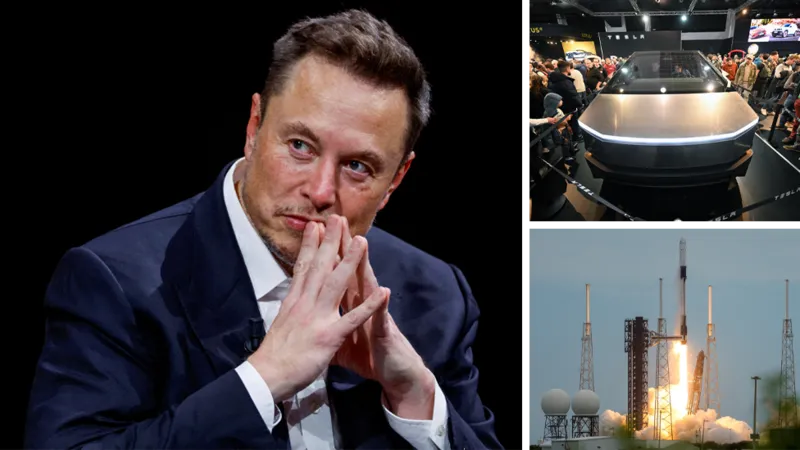
Elon Musk has spent years building Tesla and SpaceX into a pair of trillion-dollar technology empires. Now he is considering bringing them together, and on Tuesday he made his view plain: asked whether a merger would be a good idea, he said "Yes."
The prospect is more than hypothetical. Musk said special committees had been formed to assess a potential deal, though he stressed there was no guarantee a merger would happen and that nothing had been agreed. With Tesla valued at roughly $1.5tn and SpaceX at $2tn, a combination would mark the largest merger ever. Any deal would also need shareholder backing, but Musk said he saw "a lot to be gained" in bringing the businesses together.
"In my opinion, 100%. It's just a question of when," said David Nicholson, chief technology adviser at the market research firm The Futurum Group. On Tesla's earnings call on Wednesday, Musk said he had nothing further to add about a merger but quipped: "I feel like I'm tap-dancing through a minefield." He said calling the deal a certainty would be "overstating" things. Tesla reported a slight drop in third-quarter sales, which came in at $28.05bn against $28.1bn a year earlier.
The unveiling of the Tesla Roadster last week, a futuristic electric car powered by SpaceX rocket thrusters, served as a "symbolic embodiment" hinting at a merger, Nicholson said. Musk, chief executive of both companies, said bringing the firms together would be beneficial given the work each does around chips, artificial intelligence and other technology projects. Specifically, the deal would combine Tesla's cars, robots and self-driving technology with SpaceX's rockets, data centres, satellites and telecommunications operations. It could be a step towards his mission to build a self-sustaining city on Mars, a vision that has invited sceptics but also plenty of backers.
Over the past year Musk has moved to consolidate his businesses, with SpaceX acquiring xAI and X, formerly Twitter, before going public this year. But the merger would ultimately be decided by shareholders, with half of Tesla's needed to back the deal, a threshold even Musk described as "quite a high hurdle". As boss of both companies, he cannot participate in shareholder discussions.
Even so, Musk, a key Tesla shareholder, will likely get his way in the next few years, said Dan Sheehan, an investment analyst at Telos Wealth Advisors. He believes shareholders will back the deal because the technology the companies develop is complementary. But the merger would mean Tesla shareholders likely hold a "smaller slice of a much larger and more complex business", he added. "There's no real precedent for how a public company like Tesla gets priced in this." SpaceX shares rose 8% in after-hours trading while Tesla climbed 2%.
Experts told the BBC that Tesla drivers are unlikely to see much drastic change in the near term, even if the two companies combine. Vehicles seem almost like "an afterthought", overshadowed by the potential to combine the two firms' tech capabilities, Nicholson said. Changes are already under way at Tesla: the carmaker said earlier this year that it would prioritise its best-selling Model Y and Model 3, shifting focus from less popular models, and it has started using a California plant to produce humanoid robots known as Optimus.
Pairing Tesla's self-driving technology and robotics with SpaceX's AI and satellite network could result in more capable vehicles, Sheehan said. "The question is how much priority cars get inside a company increasingly driven by AI infrastructure," he added. The recent Roadster showcase suggests SpaceX technology could be pulled into future Tesla products, which could attract more customers, said Tu Le, founder of the advisory firm Sino Auto Insights. The Cybertruck-maker faces intense competition from Chinese carmakers such as BYD, which overtook Tesla as the world's biggest EV maker in January.
The biggest winner is probably Musk — the world's richest man, who also became the world's first trillionaire earlier this year. The merger would give him greater voting control over the combined company than he currently has at Tesla, a factor the special committee assessing the deal would have to consider. A single company makes it easier for Musk to run his AI strategy the way he wants, Sheehan said. "The deal itself doesn't add to Musk's wealth, but it concentrates it further in one stock."
The merger could attract scrutiny over Musk, already a polarising figure in the US, Nicholson said. It could also face more regulatory pressure if Democrats, many of whom have been critical of him, win more seats in next month's midterm elections. Shareholders have backed his desires before: last year, Tesla investors approved an unprecedented compensation package for Musk valued at around $1tn. "I honestly don't think Musk will be keeping track of what the merger will do for his wealth," Nicholson said. The deal also brings him closer to what Nicholson calls "his mission in life": colonising Mars.