South Korean hub dethrones London and Singapore in international traffic
Incheon International Airport has risen to become the world’s busiest for international passenger traffic, overtaking London Heathrow and Singapore Changi, in a shift partly attributed to the US-Iran conflict diverting Middle Eastern transit routes.
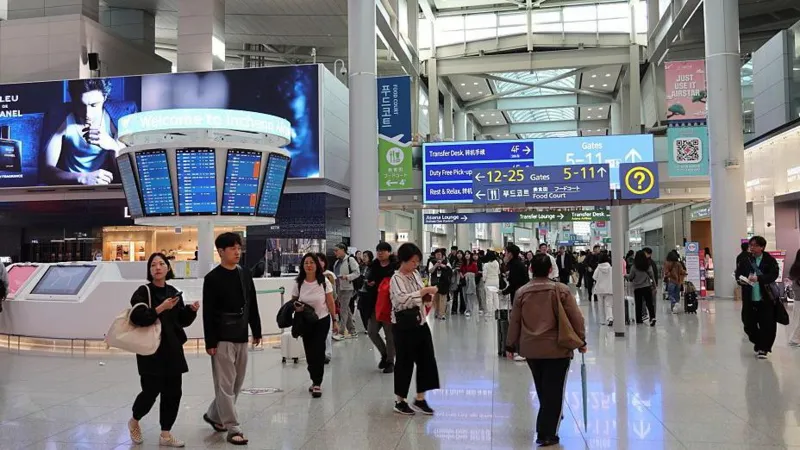
In a significant reordering of global aviation hierarchies, South Korea’s Incheon International Airport has for the first time claimed the title of the world’s busiest airport for international passenger traffic, handling 38.4 million passengers in the first six months of this year, according to preliminary data released by the Airports Council International. The figures place the Seoul gateway ahead of London Heathrow, which registered 37.79 million passengers, and Singapore’s Changi Airport, which recorded 34.53 million during the same period, marking a dramatic ascent for an airport that ranked 12th and 13th in the full-year statistics for 2024 and 2025, respectively. Incheon’s remarkable rise has been attributed, in part, to the diversion of passenger flows away from traditional Middle Eastern aviation hubs, with the conflict between the United States and Iran prompting travellers to seek alternative routing, particularly for journeys to Europe.
Dubai International Airport, which had ranked second globally in both 2024 and 2025 based on annual statistics, is now projected to fall outside the top five for this period, a decline that appears to have directly benefited Incheon, as passengers who previously transited through Dubai en route to Europe have increasingly opted for the South Korean hub. The airport corporation reported an 18 per cent increase in transfer passengers compared with the same period last year, with the number of transit passengers whose final destinations lay in Europe surging by 63.2 per cent to 210,000, a shift that underscores the geopolitical upheavals reshaping established travel corridors. Infrastructure expansion, the corporation said, had also played a crucial role in enabling Incheon to accommodate the increased traffic load, with the airport, which opened in 2001, now serving 158 international destinations, a figure that surpasses Hong Kong’s 139, Shanghai Pudong’s 92, and Tokyo Narita’s 86.
The airport’s acting president, Kim Beom-ho, expressed gratitude for the South Korean government’s support and the dedication of the airport’s personnel, while indicating that the corporation would continue to strengthen its competitive position through a focus on passenger convenience and service enhancement. The new rankings, which are preliminary and subject to confirmation, represent a notable shift in the global aviation landscape, with Incheon’s ascent reflecting both strategic investments in infrastructure and the unpredictable impact of international conflict on travel patterns, leaving traditional powerhouses such as Heathrow and Changi to recalibrate their positions in an increasingly fluid market.