South Korea shortens US military drills at Washington's request
South Korea has agreed to cut short annual joint military exercises with the United States by six days following a request from Washington, in a move that has raised questions about America's defence commitment to its Asian ally.
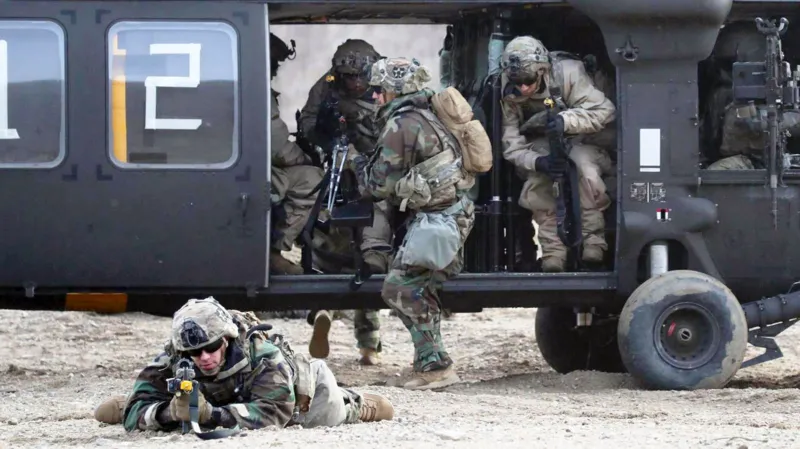
South Korea has agreed to curtail its annual joint military drills with the United States by six days, following a request from Washington that has shaken confidence in America's defence commitment to its Asian ally. The defence ministry in Seoul announced that the "period and scale" of the 2026 Ulchi Freedom Shield exercise had been adjusted due to a "proposal of the US side", with the drill now concluding on 21 August rather than 27 August as originally planned. The combined field training component will also be "partially reduced in scale", though officials said specific details of that reduction remained under discussion.
The unprecedented shortening of exercises that have been a cornerstone of the US-South Korea alliance came after Donald Trump announced plans to curtail such drills, citing his "very good" relationship with North Korea's Kim Jong Un. In a social media post over the weekend, the American president wrote that the exercises were "not only costly, with much of these costs paid for by the United States of America (as usual!), but send a signal that is totally inappropriate and hostile". He added: "While somewhat unrelated (?), I recently asked the President of South Korea if they would like to join us in the Denuclearization of the Islamic Republic of Iran, and they said, 'No thanks!'"
Speaking to reporters in the Oval Office on Monday, Trump explicitly linked his decision to Seoul's refusal to assist with Iran. "We have 39,000 soldiers over there guarding you from Kim Jong Un, your next door neighbour, and you're not going to help us on a very easy military operation in Iran," he said. "That's strange". The remarks have alarmed officials in Seoul, where the defence pact with Washington has long been regarded as the foundation of national security. South Korean Foreign Minister Cho Hyun told a parliamentary hearing that neither South Korean nor US officials had been aware in advance of Trump's plans, suggesting the decision caught both governments off guard.
The move sends a troubling signal to other US allies in the region, including Japan and Taiwan, about the reliability of American security guarantees. It comes after US officials told the Wall Street Journal that Trump was pressing his aides to arrange a meeting with Kim Jong Un, raising further questions about the administration's approach to Pyongyang. The Ulchi Freedom Shield exercises had been announced just last week by US and South Korean military leaders in a joint press conference, with officials stating the event would be similar in scale to previous years, involving about 18,000 South Korean soldiers. Approximately 28,500 American military personnel are stationed in South Korea.
During that press conference, military leaders had also discussed North Korea's deployment of troops to support Russia's war against Ukraine, with US military spokesperson Ryan Donald stating that "our training accounts for that threat", referring to North Korean soldiers returning from the battlefield. Following the announcement, North Korea's foreign ministry condemned the joint military drills as "a rehearsal for an aggressive war", a predictable response from Pyongyang, which has long objected to such exercises. The abrupt curtailment, however, represents a significant departure from established practice and has raised concerns in Seoul about the durability of America's commitment to defend its ally in the face of growing threats from the North.