Six Million Deportees Forced to Start Over in Afghanistan Under Taliban Rule
A record six million Afghans have been deported from Pakistan and Iran this year, many of them born abroad and now facing an uncertain future under the Taliban's harsh rule and a deepening humanitarian catastrophe.
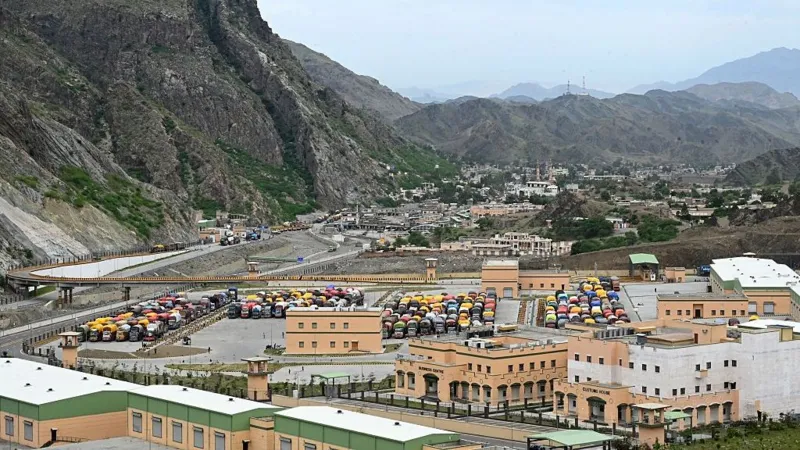
At the Torkham crossing, known as "Zero Point," one hard life ends and another begins. Here, in a desolate landscape of tattered tarpaulin and plastic shelters, an elderly man hobbles on crutches, and wide-eyed children clutch chickens carried from homes they were forced to leave behind. They are part of the biggest cross-border movement of people anywhere in the world, a mass deportation that has seen six million Afghans expelled from Pakistan and Iran in under three years—a population the size of a small country.
Among the arrivals is Nazia, 35, who was born in Pakistan and is now crossing into a country she has never known. "It feels good to be in my own country," she says, moments after entering Afghanistan with two of her children, "But I've never been to Afghanistan before and many people here don't even have enough bread to eat." Nazia and her family are among the millions of undocumented Afghans swept up in a crackdown by neighbouring states. The UN and human rights groups say the security sweeps have extended far beyond that group to include registered Afghans, with Pakistan now publicly stating that those holding Proof of Registration cards are not exempt.
For many, the return is a brutal uprooting from lives built over decades. Sarwar, who left Afghanistan 45 years ago during the Soviet invasion, arrived with seven brothers and their families in a convoy of 40 people. "We spent a long time there, so of course I felt heartbroken when they forced us out of our home," he said. "But, despite all that pain, I am also happy because I am finally free of harassment by Pakistan's police." Every family the BBC spoke to reported experiencing prejudice and harassment by authorities, with Human Rights Watch highlighting "door-to-door raids, late-night home searches and arrests without warrants" following a major escalation in fighting between Pakistan and Afghanistan last October.
The expulsions, which have accelerated after Iran's 12-day war with Israel and the US, have forced returnees into a country already crippled by sanctions and isolation. The UN's refugee agency has underscored the humanitarian principle that any return should be "voluntary, safe and dignified," but on the ground, the reality is stark. Zarina, Sarwar's sister-in-law, laments their precarious future: "We have no resources to start a business or earn a living, and we don't even own a tent to live in." Inside a barren transit tent, which offers little escape from scorching 41C heat, she sits with a huddle of anxious women and girls. Asked if she worries about the future for women under a Taliban government that has barred them from secondary school and university, she gestures to the children around her: "Look at them, they're all girls. Of course I'm worried."
Some returnees live in terror, not just poverty. A former Afghan security guard, deported from Iran and then Pakistan, told the BBC he and his family are too afraid to go outside, dismissing the Taliban's amnesty for former officials as worthless. "I have no trust in their amnesty because many of my colleagues have been killed," he said. His case had been registered with the UN, but he was deported before he could be transferred to safety. Financial hardship magnifies the pain, with steep cuts in foreign aid worldwide hitting Afghanistan especially hard. The UN now estimates that 21.9 million people, nearly half the country, need assistance to survive this year, with one million children facing life-threatening malnutrition.
At the foreign ministry compound in Kabul, Taliban Foreign Minister Amir Khan Muttaqi acknowledged the pressure of the returnees but insisted that in the long run, it would benefit both them and Afghanistan. He pointed to deepening diplomatic and economic ties with neighbours such as China and India, asking of Western nations: "Those who didn't have relationships with us over the past five years, what have they achieved?" He answered his own question: "Nothing." But for every family at Zero Point, "nothing" carries a different meaning—they are embarking on the hardest of homecomings, beginning all over again with almost nothing, as the victims of a geopolitical crisis not of their making.