Singapore raises world’s highest-paid leader’s salary by S$1.4m
Lawrence Wong, already the highest-paid head of government globally, will see his annual package rise by more than 60 per cent to S$3.6m, a move he says will attract talent but which critics decry as tone-deaf amid job insecurity and rising prices.
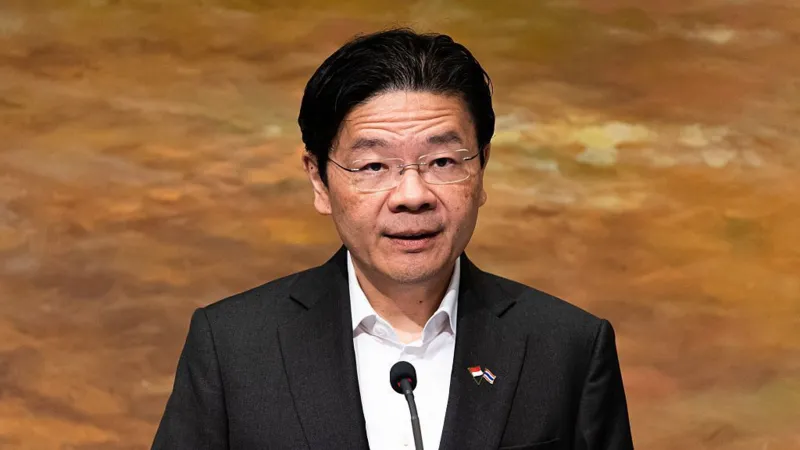
Singapore’s government has announced a substantial pay rise for its ministers and office-holders, including Prime Minister Lawrence Wong, who already holds the distinction of being the highest-paid political leader in the world. Wong’s annual package will increase by S$1.4m, taking his total salary to S$3.6m ($2.8m), a jump of more than 60 per cent. He has pledged to donate the entirety of this increase to charity over the next five years. The decision, defended by the government as essential for attracting top talent and maintaining a corruption-free administration, has drawn sharp criticism from citizens grappling with a rising cost of living and mounting anxiety over job security.
Even before the latest raise, Wong’s S$2.2m salary far outstripped that of other world leaders. Hong Kong’s chief executive, John Lee, earns approximately $719,000, while Switzerland’s president, Guy Parmelin, receives $606,000. By comparison, US president Donald Trump takes home $400,000, and British prime minister Andy Burnham earns $230,000. The disparity with the median monthly income in Singapore, which stands at S$5,775, has long fuelled public unease. On Tuesday, Wong acknowledged this scrutiny but insisted that the government faced genuine difficulty in persuading business leaders and senior civil servants to enter political life. While the state cannot match private-sector remuneration, he argued, “we do not make the financial hurdle unnecessarily high” for those considering a career in public office. “Overall, I believe this will give me and future prime ministers a better chance of persuading capable Singaporeans to step forward, and of building the strongest possible team for Singapore,” he said.
Under the new pay structure, the base salary for ministers will rise from about S$1.1m to around S$1.2m. Wong indicated, however, that most ministers could expect to receive more than that—approximately S$1.35m—by the end of the current term, as the package includes performance-related components tied to national indicators such as the unemployment rate, income growth and GDP growth. The issue of ministerial remuneration has long been a lightning rod for criticism of the ruling People’s Action Party (PAP), which has governed the city-state continuously since independence. In the landmark 2011 general election, the PAP recorded its lowest vote share in decades, a result partly attributed to voter disenchantment over pay levels as well as immigration policies. The government responded the following year by slashing ministers’ salaries. Wong’s predecessor, Lee Hsien Loong, had also pledged to donate his salary increases to charity for several years, beginning in 2007.
The government has consistently argued that high pay helps to deter corruption, pointing to Singapore’s top-tier rankings in Transparency International’s annual Corruption Perceptions Index as evidence that the system works. Yet in a country where the average income falls far below such sums, the issue continues to rankle. Tuesday’s announcement prompted a wave of critical online comments, with many accusing the government of being “tone deaf” amid concerns about retrenchments, graduate joblessness and inflation. Official figures show that retrenchments in Singapore hit their highest level in more than five years in the last quarter. A minority of voices supported the move, arguing that the nation needed “the best of the best” to run the country, but the overall mood suggested that the PAP’s long-standing defence of ministerial pay had done little to quieten a familiar and deeply felt public disquiet.