Sharks' extraordinary secrets revealed: from jazz appreciation to mathematical minds
From mathematical abilities and a taste for jazz to sibling cannibalism and a sixth sense for heartbeats, sharks prove themselves far more complex than their predatory reputation suggests.
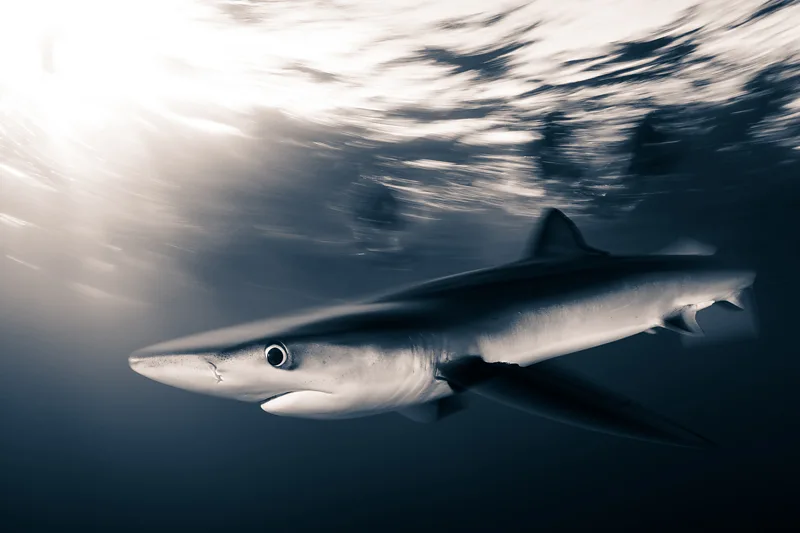
Sharks, among the Earth's original vertebrate predators, have developed a remarkable array of surprising traits over hundreds of millions of years of evolution, from a taste for jazz and rudimentary mathematical abilities to a sophisticated sensory system that can detect a beating heart from a distance. The cartilaginous fish, which have survived all five of Earth's major mass extinctions – including the Permian-Triassic extinction, the so-called "Great Dying" that wiped out approximately 90 per cent of marine life – possess cognitive abilities that challenge their reputation as mindless, instinct-driven hunters. Research conducted at Sydney's Macquarie University, for instance, demonstrated that Port Jackson sharks could associate feeding rewards with jazz music, though the same individuals struggled to form the same association with classical compositions, leading researcher Culum Brown to observe that "it was obvious that the sharks knew that they had to do something when the classical music was played, but they couldn't figure out that they had to go to a different location".
The cognitive capabilities of sharks extend well beyond musical appreciation, with experiments revealing that young grey bamboo sharks can remember information about shapes and optical illusions for nearly a year, and can perform elementary arithmetic by distinguishing between quantities such as three and five, or four and seven – though they struggle with closer numerical differences such as four and five. These findings have contributed to a growing body of evidence suggesting that sharks are far more intelligent than their popular image as ruthless predators would suggest, capable of learning complex tasks and retaining information over extended periods. The creatures' sophisticated sensory apparatus is equally remarkable, comprising eight distinct senses that go far beyond the five familiar to humans, including the ability to detect changes in water pressure and voltage, and even to navigate using the Earth's magnetic field.
Rows of pores known as lateral lines run down each side of a shark's body, filled with fluid and sensory cells that respond to movement in the surrounding water, allowing the animals to detect vibrations with extraordinary precision. These are supplemented by pit organs – similarly equipped with sensory hair-like cells and scattered across the body – whose precise function is not fully understood but which are thought to act as mechanoreceptors, sensing movement or pressure changes in the water. Most remarkable of all are the ampullae of Lorenzini, hundreds or thousands of pores dotting a shark's head that are filled with sensitive nerve cells capable of detecting the electrical impulses generated by the muscle contractions of nearby animals – a beating heart, for example – enabling sharks to hunt in total darkness or locate prey buried beneath the sand.
The social lives of sharks, long thought to be solitary and asocial, have also proved far more complex than previously imagined, with research revealing that grey reef sharks maintain friendships with the same cliques for up to four years, splitting into smaller groups and regrouping across seasons. Young lemon sharks similarly prefer to live in groups and learn essential skills from each other during social interactions – including how to find food and avoid predators – while demonstrating a preference for companions of similar size and those they have encountered before. The notion of shark friendship was most dramatically illustrated by two great white sharks, named Simon and Jekyll, who were observed travelling together for 6,000km (3,730 miles) without ever separating, challenging the conventional wisdom that these apex predators are invariably solitary.
Even the physical characteristics of sharks reveal unexpected connections to human experience. While some species lay eggs, many – including bull sharks and hammerheads – carry their young in their uterus and feed them through an umbilical cord, meaning that newborn pups bear belly buttons for several weeks or months until the scar from the cord heals. Other sharks, such as the spiny dogfish, give birth to live young after embryos hatch inside the mother – a process that can follow a pregnancy lasting up to two years. The sand tiger shark exhibits perhaps the most extreme reproductive strategy, with embryos engaging in intrauterine cannibalism – a practice known as adelphophagy, meaning "eating one's brother" – in which as many as five young growing in each of the female's two uteruses consume their siblings until only one remains, then enjoy exclusive access to a steady supply of unfertilised eggs released by the mother.
The surface of a shark is itself a wonder material: instead of scales, their skin is studded with numerous tiny "teeth" called denticles, which are flattened by the creature's forward movement to reduce drag, creating a texture so fine that craftsmen in 18th-century Italy used it to smooth the edges of priceless Stradivarius violins. In Victorian Britain, the material – known as "shagreen" – became a favoured accessory for cabinet makers, while sharks themselves sometimes bump into unfamiliar objects to feel their texture and consistency with the rough edge of their skin, a lazy kind of taste test for objects that might not be a meal. The evolutionary history of these creatures is equally astonishing: the earliest fossil evidence for the ancestors of today's sharks dates back 450 million years, some 60 million years before the first trees appeared on Earth, 220 million years before the dinosaurs, 350 million years before Saturn's rings formed and 380 million years before the birth of the North Star.
The first shark-like teeth emerged 410 million years ago, and the first group that truly resembled modern sharks evolved around 380 million years ago, with the oldest-known group of modern sharks – featuring flexible, protruding jaws and speedier swimming capabilities – appearing 195 million years ago. Today, approximately 500 species of shark exist, a number far below their peak around 50 million years ago, though new species continue to be discovered. The deep connection between humans and sharks is underscored by the fact that our closest common ancestor with these elite ocean predators lived around 440 million years ago – a creature that would have looked considerably more like a shark than a human – meaning that despite our evolutionary paths diverging all those millennia ago, our existence on this planet remains intrinsically linked to these ancient and remarkable vertebrates.