Seven injured in Majorca as 25,000 demonstrators clash with riot police
Police reportedly used rubber bullets and batons in Palma as more than 25,000 anti-tourism demonstrators clashed with officers, leaving seven people injured, three seriously.
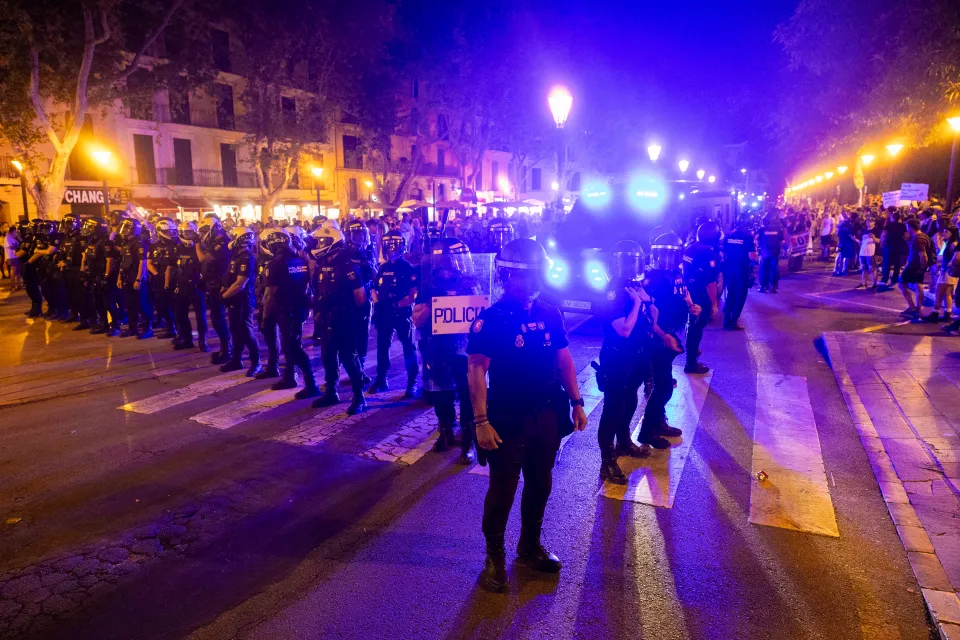
Police in Palma are understood to have fired rubber bullets and wielded batons during a mass anti-tourism demonstration that turned violent on Sunday, as more than 25,000 protesters flooded the streets of Majorca's capital to voice their anger at the island's overtourism crisis. Dramatic footage captured scuffles between demonstrators and officers, with one clip showing a protester being struck with a baton before another individual lunged at a police officer, triggering chaotic scenes that prompted authorities to cut off the planned end point of the march for safety reasons. Seven people were injured in the violence, three of them seriously, with ambulances rushing to the scene to treat those caught up in the clashes, which escalated when a small group of demonstrators began lobbing plastic bottles at police after officers had struck several protesters with batons. The protest, organised by activist groups including Less Tourism, More Life, represented the third consecutive summer of large-scale demonstrations against mass tourism in the Balearic Islands, with campaigners claiming that the relentless influx of holidaymakers had severely diminished the quality of life for residents.
Demonstrators carried placards bearing slogans such as "tourists go home", "tourism = destruction", "save Majorca" and "less tourism, more life", while one banner featured an illustration of a gun alongside the text "forced to live in struggle", encapsulating the frustration of locals who say they have been priced out of the housing market by the proliferation of holiday rentals and the influx of expatriates. A spokesman for the movement declared that Majorca was on the edge, and that once again all indicators pointed to increases in visitor numbers, insisting that no real change would come without sustained social mobilisation and defending the right to housing, territory, public services, language, culture, working conditions, and the future of the island. The authorities are reportedly investigating Less Tourism, More Life over its online advice encouraging activists to block Airbnb key boxes and vandalise tourism-related businesses, tactics that have been employed in previous protests across the Canary Islands and elsewhere in Spain. Earlier this month, 10,000 campaigners formed a human chain to block access to the Playa Es Trenc beauty spot, one of the island's most popular beaches, while last year a similar protest ended with a small group of anti-tourism activists breaking away from the march to shout slogans at holidaymakers enjoying drinks at a bar in Palma.
The escalating tensions in Majorca reflect a broader pattern of anti-tourism sentiment across the Balearic and Canary Islands, where locals have grown increasingly resentful of the economic model that prioritises visitor numbers over the well-being of residents and the sustainability of the environment. Previous protests have seen holidaymakers sprayed with water pistols, a symbolic act of defiance that has drawn international attention to the movement, while more aggressive tactics have included the sabotage of lock boxes used by holiday rental properties, with activists using extra-strong glue to prevent tourists from accessing their accommodation. In the Canary Islands, campaigners have also been known to cordon off popular beauty spots with fake police tape and erect "no entry" signs in an effort to make it as difficult as possible for holidaymakers to enjoy their trips, a strategy that has caused significant disruption and frustration. The lock boxes, which are typically fixed to the walls of rental properties and contain keys accessible only with a PIN code provided by owners, have become a particular target for activists seeking to disrupt the tourism industry and draw attention to the housing crisis.
The violence in Palma marks a significant escalation in the anti-tourism movement, which had previously been characterised largely by peaceful protests and symbolic acts of civil disobedience. The decision by police to use rubber bullets and batons suggests that authorities are taking an increasingly firm line against demonstrators, while the injuries sustained by protesters are likely to inflame tensions further and galvanise support for the movement. The protest organisers have warned that Majorca is at a tipping point, with the island's resources and infrastructure stretched to breaking point by the relentless growth of the tourism industry, and have vowed to continue their campaign unless meaningful changes are made. As the summer holiday season reaches its peak, the prospect of further confrontations looms large, with both activists and authorities bracing for what could be a long and contentious battle over the future of one of Europe's most popular tourist destinations.