Sevda’s mother: how grief became a campaign against the regime
Samira was a cosmetics saleswoman who took no interest in politics. Then security forces shot her 16-year-old daughter dead in front of her — and she resolved to name those responsible.
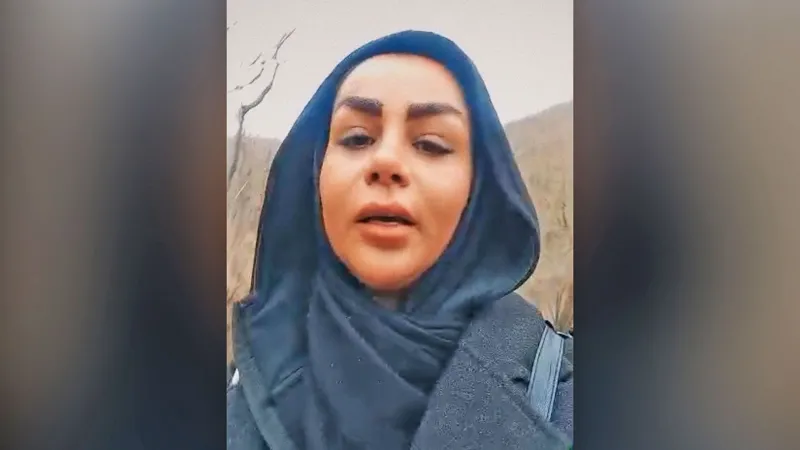
Samira says she was never political. She worked in sales in Iran, selling cosmetics, and took little interest in the affairs of state. That changed on the day her only child was shot dead in front of her by Iranian security forces. Her daughter, Sevda, was 16 and had joined the protests against the country’s repressive regime that swept Iran earlier this year, before American and Israeli air strikes killed the supreme leader, Ayatollah Ali Khamenei. What followed turned a mother’s grief into fury. The authorities, she says, hindered rather than helped her search for her daughter’s body. Finding Sevda, she came to realise, was not the end but the beginning of the harassment visited upon her.
She escaped Iran on foot, crossing dangerous mountain terrain, and now lives abroad in hiding. She describes herself as a one-woman army fighting the regime, and is determined to name the members of the security forces and the officials she believes fired the fatal shots during the protests. They will bring me to the brink of death before they kill me, she says, but finding me will not be easy. Return to normal life? There is no going back. Samira is among several Iranians the BBC has spoken to since the start of the year. Some remain inside the country and told Panorama they wished to speak out despite the risks, saying they had found it hard to hold on to hope once the mass protests were brutally crushed.
The Iranian embassy in London told Panorama that peaceful and legitimate protests had been hijacked by foreign powers, including the United States, which it said promoted violence, supplied weapons and equipment, and compromised public security. Sevda was killed on 9 January as she and her mother joined huge demonstrations on the outskirts of Tehran that had begun the previous month. They were sparked by economic discontent and escalated into calls for an end to the Islamic Republic. Samira denies she was especially political then, but says her daughter was. Sevda’s idols were two young women: Mahsa Amini, whose death in custody after an alleged violation of the mandatory headscarf rule triggered mass protests, and Nika Shakarami, killed during a later uprising against Iran’s strict dress code for women. She kept them alive in her thoughts, Samira says, and always wanted to continue their path of resistance.
The day before Sevda was killed, the crowds had been particularly large. Samira says she and her daughter had answered a call by Reza Pahlavi, the exiled son of Iran’s last shah, for demonstrations. The security forces had lost control, she says. The swelling numbers alarmed the government, and the following day a shoot-to-kill order was announced. She had thought it an empty threat. They lied so much in Iran, she says; we could not imagine a massacre on that scale. They were reassured, she adds, by President Trump’s promise that he had their backs. He had told American media on 8 January that he had let the Iranian authorities know that if they started killing people, as they tended to do during riots, the United States would hit them very hard. Even so, the crowds appeared smaller on the 9th.
Sevda seemed to know the risks. She took off her earrings and gave them to her grandmother, and shared her phone passcode with her mother. The two gathered with the other protesters, and Sevda stood on a dustbin and began to lead a chant. It seemed there were more forces than people, Samira says of the area where they stood. She does not know how, within a single day, so many Basijis and Revolutionary Guard forces had assembled. A sniper fired from the roof of a building to their right, she says. The bullet went through her daughter’s heart. I could not even scream, she recalls. I just stared at Sevda, her body lying lifeless, blood gushing from her mouth and nose. I could not believe she was dying. Her eyes were still looking at me.
Samira got Sevda to hospital and was told they were operating on her. Then the door opened and she saw that her daughter had been zipped into a body bag. The body was taken away, and it took her days to find it again. Like many others, she ended up at one of Tehran’s largest morgues. Teenagers, young boys and girls, so many had been killed, she says. I died with every bag I unzipped. I had never seen so many bodies, but I would not give up. She found her daughter at last, with three bodies piled on top of her.
The Iranian authorities acknowledge that more than 3,000 people were killed in the protests, though they claim some were members of the security forces. The human rights group Hrana estimates that more than 7,000 died, most of them protesters. Finding Sevda’s body was only the beginning of Samira’s battle with the authorities. To be allowed to take the body for burial, she says she was forced to say that terrorists, rather than the security forces, had been responsible for her daughter’s death. They did this to cover up what they had done on 8 and 9 January, she says, to hide how many people they had killed. They silenced families by telling them to say their loved ones were killed by Israeli or American terrorists. Even so, she was barred from visiting the grave after the funeral and from erecting a tombstone.
The harassment continued. A few days before the ceremony marking 40 days since Sevda’s death, a rite of great significance in Iranian culture, she says she was summoned by a local branch of the Ministry of Intelligence. They told her she should give an interview and say that Sevda had been a Basiji killed by protesters, and that they would then declare her a martyr and grant her perks, a house, anything she wanted. She is certain the offer was prompted by fear, because she had spoken of Sevda’s death to an Iranian media organisation based in London once the internet was restored. It scared them that she was in touch with networks outside Iran. Rather than give the interview, Samira fled as soon as the 40th-day anniversary had passed. I did not want to trade with my child’s blood, she says.
People smugglers helped her escape, and she crossed rivers and mountains to reach safety. A video she recorded as she fled makes her fury plain. This crap government, these bastards, they have harassed me so much, she says to the camera as she walks a mountain path beside a deep ravine. After she continued to give interviews to foreign media from abroad, she says she was charged in absentia with a string of offences, including moharebeh, or waging war against God, which can carry the death penalty. To mark what would have been Sevda’s 17th birthday, relatives and friends held a vigil, which Samira watched from exile on a livestream. Then the feed cut out. She later learned that the gathering had been raided and that some of her family and friends had been arrested by the Revolutionary Guard, and that her family had been warned that if they continued to gather at the grave, her daughter’s body would be exhumed and moved.
Samira now shares online the names of security force members and officials she believes were responsible for the fatal shootings during the protests of 8 and 9 January. I want justice to be served for every single person whose name I expose, because they have killed so many young people, she says. My goal is for them to be identified so that they can be put on trial. When one of the men she named was later found dead, a supporter of the regime offered a $5,000 reward for information about her whereabouts, presuming her responsible. Iranian state media has since reported the arrest of nine people in connection with the death. Despite the risks, Samira refuses to be silenced. Every day and every second without Sevda is very difficult, she says. It is like a mother who has lost her heart, who has lost her being, who has lost her life. But the fact that Sevda is not breathing has made it possible for me to stand on my feet, to think about honouring her life and her path. All those bodies I saw, all those body bags I opened looking for Sevda, they have made me fight the Islamic Republic until my last breath.