Second Major Drone Assault in Three Days Strikes Moscow Region, Injuring Ten
A Ukrainian drone barrage has inflicted casualties and sparked fires across the Moscow region for the second time this week, with one strike igniting a blaze on property linked to a close associate of President Putin.
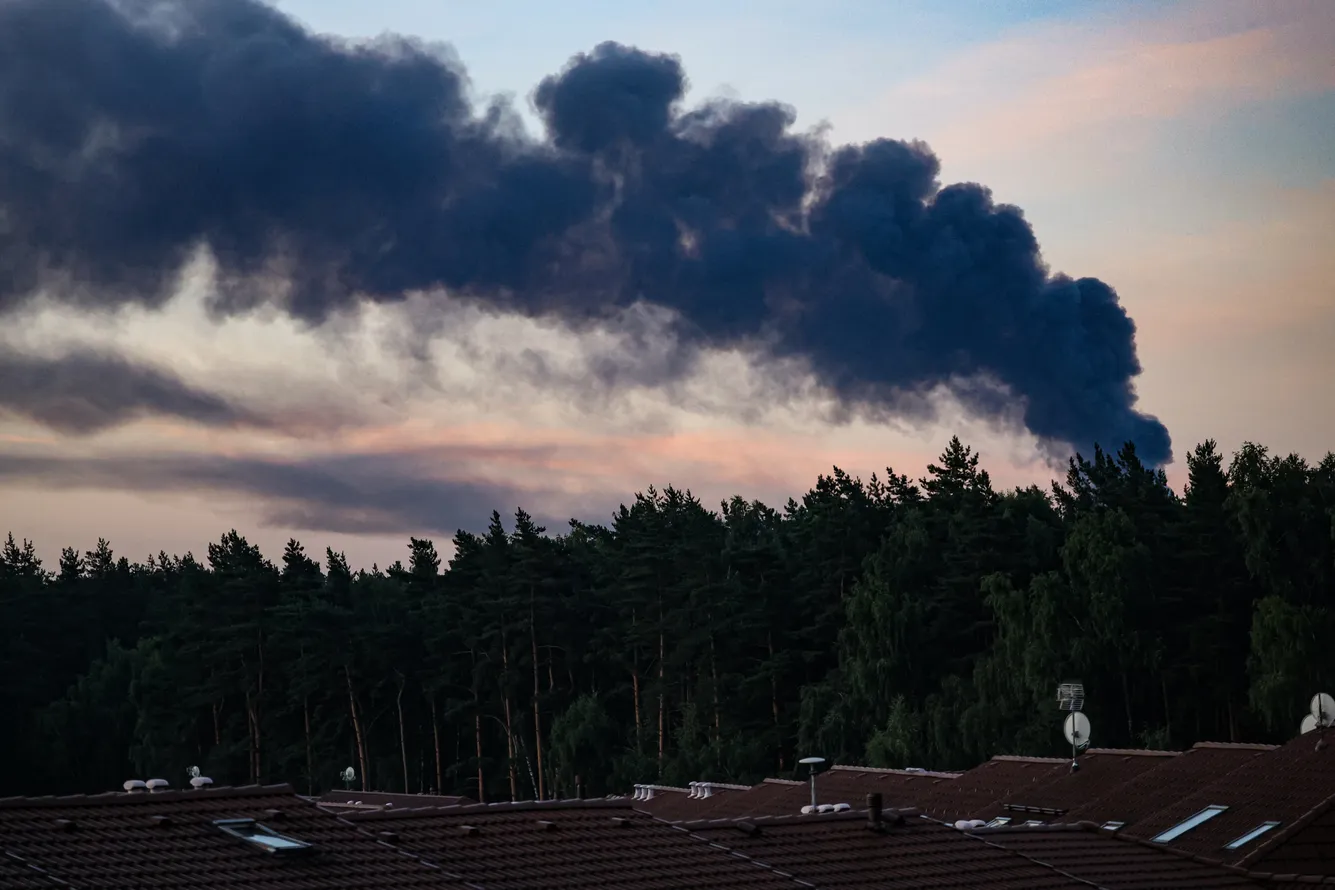
Ukrainian forces launched a massed drone assault on the Moscow region during the night of 20 July, injuring at least ten people and causing significant damage to residential and industrial infrastructure, in the second such large-scale attack on the Russian capital's environs within a seventy-two-hour period.
The heaviest casualties were reported in the town of Domodedovo, where seven individuals sustained injuries, six of whom required hospitalisation, including three Chinese nationals, according to Andrei Vorobyov, the regional governor; four of the injured suffered shrapnel wounds, whilst a 53-year-old man was said to have sustained an open femoral fracture and a 26-year-old a lower-leg injury.
Two women were treated at the scene in Podolsk, and in the Odintsovo district an 11-year-old girl was diagnosed with an acute stress reaction, whilst Domodedovo hospital officials later confirmed that six patients had been admitted with mine-blast trauma.
Vorobyov reported that several private residences and unspecified civilian infrastructure facilities had sustained damage, though he offered no further particulars regarding the affected installations.
One drone was observed to have crashed on the M-4 motorway, whilst the head of Domodedovo's municipal administration, Evgenia Khrustaleva, confirmed that a fire had broken out at the Yuzhnye Vorota industrial park, and that a residential building on Kuryzhova Street had been struck on its uppermost floor.
Independent analysis of video and photographic evidence by the outlet Astra suggested that an oil depot in the Lvovsky microdistrict of Podolsk had been hit and had caught fire, a claim that was subsequently corroborated by the news agency Agentstvo.
Residents of the village of Koledino, within the Podolsk urban district, reported a fire at a Wildberries logistics centre, though the company's press service maintained that its warehouse operations continued normally, having conducted a precautionary evacuation from which staff had since returned to their posts; video footage circulating online appeared to show a drone flying over the facility, whilst the Ukrainian Telegram channel Exilenova+ asserted that the warehouse had been targeted but had not ignited.
The Yuzhnye Vorota industrial park, where a fire did break out, hosts not only a Wildberries warehouse but also facilities belonging to Lemana Pro, Alibaba Group and other international firms, though authorities declined to specify which structure had been engulfed by the flames; Agentstvo noted that the Wildberries storage unit lies to the south of the section where the blaze was observed.
The park is operated by Instone Development, a company formerly owned by the Czech firm PPF Real Estate, which had resolved to divest its Russian assets following the outbreak of hostilities; in early 2026, the principal shareholder of Instone Development became the Talant i Uspekh foundation, which is controlled by the cellist Sergei Roldugin, a longstanding personal friend of President Vladimir Putin whose foundation's supervisory board is chaired by the Russian leader himself.
Moscow's mayor, Sergei Sobyanin, disclosed that more than four hundred Ukrainian unmanned aerial vehicles had been detected heading towards the capital region between 20:30 on 19 July and 05:00 the following morning, with the majority having been destroyed at significant distance from the city and eighty-five shot down on the approach to Moscow.
President Volodymyr Zelensky of Ukraine offered a characteristically pugnacious commentary on the operation, framing it as the extension of long-range sanctions against Russian logistical infrastructure and oil storage facilities; he expressed gratitude to Ukraine's unmanned systems forces, intelligence services, missile troops, artillery and special operations personnel, noting that the targets lay more than four hundred kilometres from the Ukrainian border, and further claimed that two tankers from the so-called shadow fleet and four cargo vessels had been struck in the Black Sea.
In his statement, Zelensky declared that Ukraine was delivering proportionate responses to every Russian strike on its cities and regions, and insisted that the conflict could only be concluded by intensifying pressure upon the sole cause of the war: Russia.
The assault represented the second major Ukrainian drone offensive against the Moscow region in three days, following a similar attack on the night of 18 July that had targeted a Wildberries warehouse in Elektrostal, described as the marketplace's largest logistics centre.
A poignant first-hand account from a Wildberries employee, writing to Meduza from the town of Aleksin, conveyed the profound anxiety now gripping warehouse staff; the correspondent, identified only as Dmitry, described his sense of devastation and fear following news of the Elektrostal strike, expressing particular concern that employees like himself, who are ordinarily denied access to mobile telephones during shifts and whose workstations are isolated within vast, multi-tiered storage mezzanines where even basic handsets fail to receive signals and where audible warnings are inaudible, might perish without any opportunity to escape should another attack occur.
Dmitry further articulated the unsettling realisation that Wildberries warehouses now constitute an acknowledged Ukrainian target, making his continued employment a source of considerable dread; he confessed that, despite understanding Ukraine's rationale, he was contemplating resignation, having been left to ponder whether military equipment might be stored at his own facility and whether he might himself become what he grimly termed "collateral damage".