Scientists unlock secrets of butterfly longevity in tropical Heliconius genus
A remarkable study of Heliconius butterflies reveals species that live up to 348 days, offering potential insights into the mechanisms of healthy human ageing.
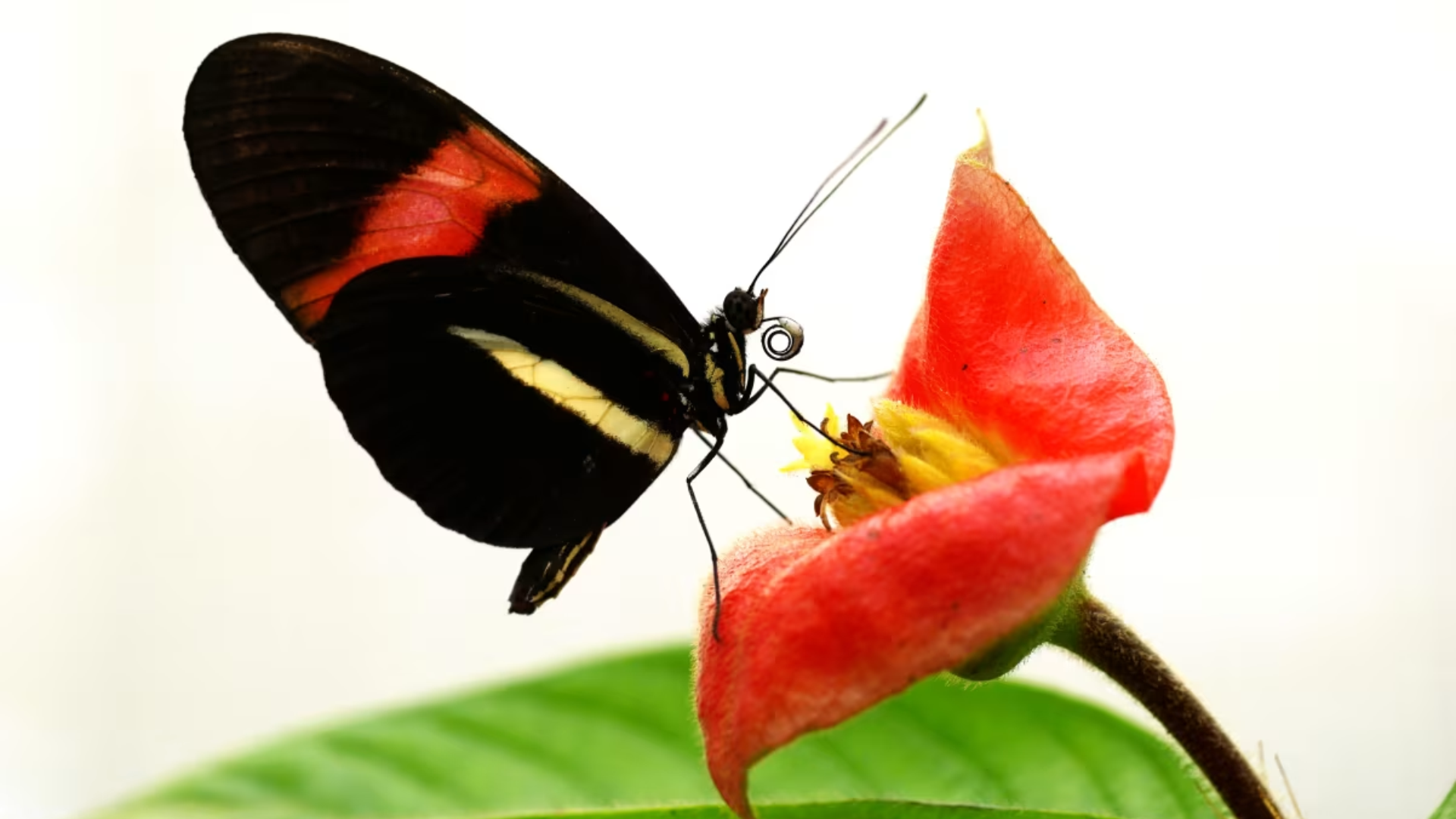
The ephemeral existence of the common butterfly, flitting from bloom to bloom for a mere fortnight before perishing, is well known; yet a handful of tropical exceptions to this rule have long confounded entomologists, and a new study published on Tuesday in the journal Nature Communications has shed light on the extraordinary longevity of certain members of the Heliconius genus, whose adult lifespans can extend to nearly a year. The study, led by Dr Jessica Foley, a postdoctoral scholar at the Jean Mayer USDA Human Nutrition Research Center on Aging at Tufts University in Boston, reveals that while the Dione juno butterfly survives for only 14 days after reaching maturity, Heliconius hewitsoni endures for 348 days — a difference of some 25-fold. Other Heliconius species, it emerged, also exhibit impressively long lives, ranging from 106 to 277 days, prompting speculation that an enhanced diet might be responsible. However, as Dr Foley noted in an email, "We see vast differences in lifespan across the animal kingdom — adult mayflies famously live only for a day, whereas some whales and sharks can live for hundreds of years," adding that she is interested in "the evolutionary basis of these kinds of lifespan differences because they might hold insights relevant for healthy ageing in humans."
Conducting research on what she termed "extreme agers" in the animal kingdom is no small undertaking, particularly when a species requires centuries to reach old age; Heliconius butterflies, however, proved ideal subjects because their entire life cycle unfolds within approximately a year. Only one other butterfly, Myscelia cyanaris, is known to outlive them, with a maximum lifespan of 380 days, though little data exists to explain why. Combining data from commercial butterfly houses, mark-release-recapture studies, and controlled experiments, Foley and her collaborators sought to determine whether removing the butterflies' unusual food source — pollen — would curtail their lifespans. Most adult butterflies subsist exclusively on flower nectar, deriving carbohydrates but lacking the amino acids and lipids crucial for reproduction, which they typically receive as caterpillars. "The general evolutionary strategy is to reproduce as much as they can until those resources are spent, which doesn't take very long for these small insects," Foley explained. "They usually die soon after this finite resource is used up."
Yet most Heliconius species have evolved the capacity to feed on pollen even as adults, a dietary adaptation that provides not only additional energy but also lipids that bolster immunity. Of the 28 Heliconius species studied, only six were non-pollen-feeders, and these lived between 14 and 98 days. Strikingly, even when pollen was withheld from the diet, the pollen-feeding species continued to outlive their relatives, suggesting that evolution has endowed them with internal mechanisms of longevity that go beyond nutrition alone. "I wanted to understand the real extent of this lifespan extension in Heliconius, to understand whether it was also accompanied by slowed physiological ageing, and to figure out whether they would still show a lifespan extension — indicating evolved mechanisms of longevity — even without the pollen," Foley said.
To measure age-related decline, the team devised a novel apparatus called "The Pullinator," a perch lined with sandpaper attached to a lightweight wooden base and placed upon a laboratory balance. "We placed this on a lab balance, zeroed the balance, and then gently held a butterfly by the wings and lowered it until it grasped the perch," Foley recounted. "We then tugged until it let go — but as the butterfly tugged, the balance would drop negative, and we could use the maximum negative reading as an indication of how much weight the butterfly could carry before it let go." The test revealed that Heliconius hecale, which can survive for up to 277 days, showed little or no physiological decline, whereas Dryas iulia, a close relative that does not feed on pollen and lives for only 98 days, exhibited marked signs of age-related deterioration. Heliconius hecale also maintained body mass and muscle function for longer periods, even when deprived of pollen.
The findings suggest that while nutrition plays an important role — pollen-derived amino acids enable the continuous production of eggs, extending reproductive lifespans — a more mysterious factor is at work. "We show that these butterflies do have evolved mechanisms of longevity, and that they also seem to have evolved a delayed physiological decline, making them excellent new models for studying the mechanisms allowing for long life," Foley said, though she conceded, "We do not yet know what these mechanisms are." Her colleagues are now eager to investigate these elusive processes, as well as the butterflies' robust cognition, noting that Heliconius possess large brains and impressive long-term memory that persists even into old age.
Dr Jaret C. Daniels, curator and interim associate director of the McGuire Center for Lepidoptera and Biodiversity at the Florida Museum of Natural History, who was not involved in the study, said the research reinforces the utility of insect groups as model organisms for studying ageing. "Since many insects are often overlooked or underappreciated or undervalued by humans, studies like this can help change that perspective," he wrote in an email. With insights gleaned from worms, flies, and yeast having already advanced the understanding of human ageing mechanisms, the Heliconius butterfly may yet prove to be a remarkable new ally in the quest to decipher the biology of longevity.