Scientists Find Prehistoric Whale Graveyard Teeming with New Life Forms
A 1,200km-long whale graveyard, dating back 5.3 million years, has been found in the south-eastern Indian Ocean, teeming with potential new species
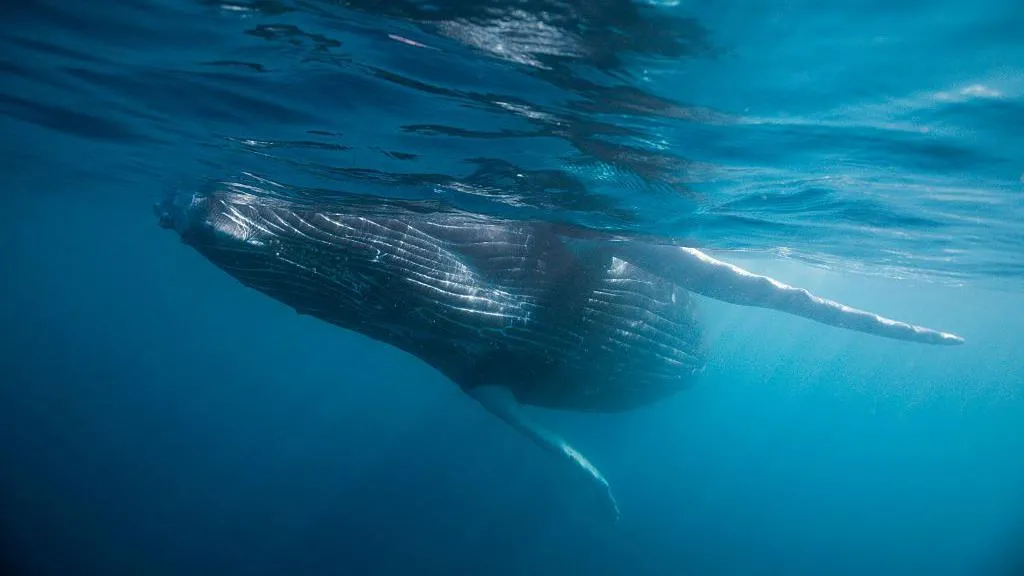
An immense underwater whale graveyard, stretching some 1,200 kilometres (745 miles) in length, has been discovered in the south-eastern Indian Ocean, in a find that has sent ripples of excitement through the scientific community. The site, located seven kilometres (four miles) beneath the surface within the Diamantina fracture zone — a rugged seafloor landscape of ridges and trenches — contains remains so ancient that some date from 5.3 million years ago, reports suggest.
It is this remarkable antiquity, rather than the sheer scale of the necropolis alone, that has prompted the greatest astonishment among researchers. The underwater cemetery, uncovered by a team of scientists from China, Italy and New Zealand, is said to be teeming with organisms and species that "may be new to science", according to findings published in the journal Nature. Communities of strange, extreme life forms have been observed for the first time in the deep ocean, the study indicates.
Speaking about the discovery, Dr Xiaotong Peng of the Chinese Academy of Sciences, one of the study's authors, described the find as wholly unexpected. "Discovering a necropolis of this scale was completely unexpected," he said. "The size of distribution, the depth and the age range were far beyond anything we had imagined." During the course of 32 dives to the site, explorers are understood to have collected samples from 485 whale-fossil sites and active whale falls, unearthing a treasure trove of remains that included the skeleton of an extinct whale species.
The matter came to light in the pages of Nature, where the international team detailed their extraordinary find. Sources indicate that the graveyard may provide a unique window into the ecology of the deep ocean and the history of whale populations in the region, with the potential to reveal entirely new forms of life that have evolved to thrive among the bones of these ancient leviathans. The discovery is now expected to prompt further exploration of the Diamantina fracture zone, as scientists seek to understand the full extent of the ecosystem that has lain hidden in the abyss for millions of years.