Russia's Staged Elections Serve a Purpose Beyond the Vote Count
The outcome of Russia's parliamentary vote is predetermined, but the Kremlin scrutinises turnout and coercion data to gauge the discipline of its officials and the limits of public resistance.
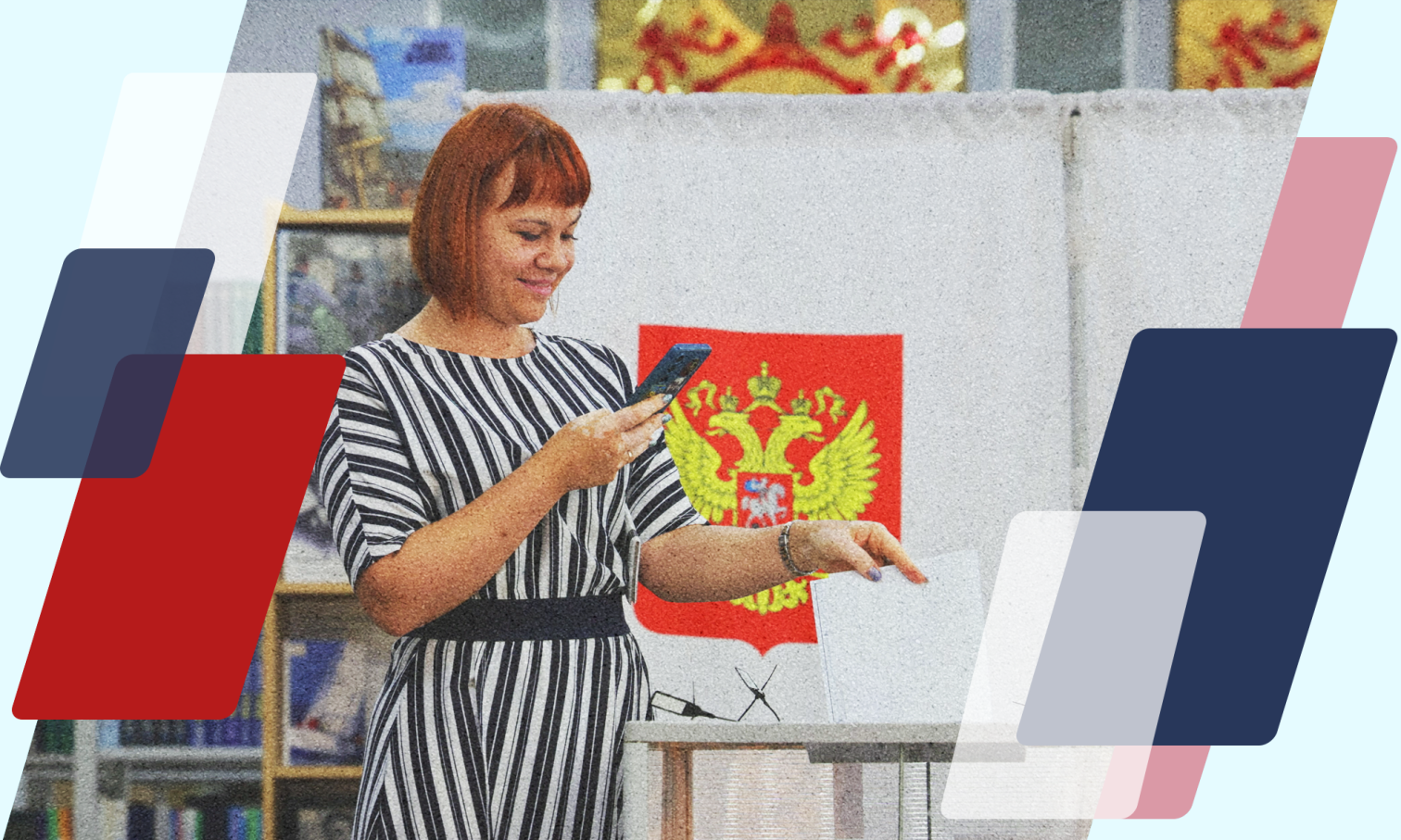
The outcome of Russia's parliamentary elections is settled before a single ballot is cast. Yet the Kremlin's interest extends well beyond the figures announced once those ballots are, in the author's phrase, miscounted. Vladimir Putin's regime can falsify almost any result: independent election monitoring has been largely destroyed, voting has been stretched across three days, and electronic ballots are difficult to verify. An entirely fictional election, however, would cease to perform its most important function. It would tell the Kremlin nothing about the discipline of its officials, the resilience of regional elites, or the state's capacity to mobilise the population.
Russian elections are therefore more than a falsified tally. They amount to a nationwide examination of the Putin system, in which citizens play a secondary role. The real examinees are governors, bureaucrats, directors of state institutions and party functionaries.
From 18 to 20 September, Russians elect a new State Duma, alongside more than 2,200 regional and municipal contests distributing roughly 20,700 elected offices and legislative seats. The central question is not who will sit in parliament. United Russia will finish first, and the Kremlin will retain control of the legislature through the parties that belong to Russia's managed political system. Every party permitted to contest the vote accepts Putin's rule and opposes an immediate end to the war.
The last opportunity to cast a legal vote explicitly against the war vanished in August, when the Supreme Court removed Yabloko from the ballot. The liberal party had called for a ceasefire and peace negotiations. Officially, it was disqualified for breaching campaign finance and intellectual property rules. The ruling came after Yabloko's support among decided voters had, by some estimates, risen to about 6% within a few weeks, against the 1.2% it won in 2021. Nikolai Bondarenko, a popular Communist politician from Saratov and a frequent critic of United Russia, had already been barred from standing.
Why hold elections at all, then, if the Kremlin determines both the winner and the boundaries of permissible debate in advance? The primary answer is the regime's belief that the exercise confers legitimacy. Even modern dictatorships can rarely afford to abandon elections altogether, since a government resting solely on coercion looks not only brutal but vulnerable. Putin prefers to claim that he acts on behalf of most Russians. Elections convert that claim into official percentages, televised maps and millions of ballot papers. After four and a half years of war, the demonstration has become particularly important. Putin has failed to achieve a decisive victory, yet he cannot end the war without explaining what the enormous sacrifices were for. The Kremlin therefore needs periodic and heavily staged confirmation that the country endorses its chosen course.
United Russia is consequently running a two-track campaign. Its platform dwells on wages, outpatient clinics, kindergartens, student accommodation and technological development. The war has almost vanished from its list of promises, the authorities understanding how tired Russians are of both the conflict and the deterioration of daily life. At the party congress, the rhetoric was entirely different: pledges to do everything necessary for victory, rejection of compromise with the West, and declarations of universal support for the war.
The same contradiction runs through the top of the party list. It includes Moscow's mayor, Sergei Sobyanin, who embodies the technocratic normality of the pre-war era, alongside Vladislav Golovin, a veteran of the battle for Mariupol, and the war correspondent Yevgeny Poddubny. They are joined by Foreign Minister Sergei Lavrov and the children's rights commissioner Maria Lvova-Belova, who, like Putin, faces International Criminal Court accusations over the mass deportation of Ukrainian children. The party promises a return to normal life while asking voters to endorse the war and a new military elite.
Legitimacy, however, is only one function of elections. No less importantly, the campaign tests whether the entire Putin system still functions. Russia is not governed by one man personally supervising every polling station. Between Putin's orders and the announced result stand governors, mayors, civil servants, state-owned company executives, university rectors, school principals, electoral commissions and regional branches of United Russia. Each must mobilise voters who depend on the state, deliver the required turnout, prevent surprises and present Moscow with a convincing result.
This machinery has already been rehearsed during United Russia's primaries, which the party claimed drew more than 12 million participants. Independent observers reported pressure on public-sector employees and students, with state institutions first requiring them to register on the online voting platform and then instructing them to vote, sometimes for specific candidates. The primaries also tested the Kremlin's ability to bring war veterans, whom Putin has called Russia's new elite, into politics. To smooth the path, United Russia automatically added 25% to the tally of every participating veteran. Even with that advantage, only 58 war participants won their primaries, fewer than 10% of those seeking State Duma nominations. The largest concentrations of successful veteran candidates were found in Moscow, Chechnya, the Novosibirsk region and the occupied part of the Donetsk region.
That outcome demonstrates why inventing the final figures is insufficient. Elections reveal resistance within the system itself. Regional elites do not want to surrender safe seats to newcomers, even when Putin demands their promotion. Nor are voters necessarily willing to support a candidate merely because he fought in the war. Turning the president's promise into a new parliamentary cohort required changing the rules of internal party competition.
Mobilising ordinary voters presents another test. For years, Russian businesses and state institutions have compiled lists of people dependent on them. Human resources departments message employees, order them to polling stations and require them to report that they voted. District and municipal leaders across the country receive strict performance targets for turnout and support for the ruling party. When they miss those targets, the regime has long had a means of punishment: the allocation of government funding and subsidies.
That system has begun to break down. Businesses are cutting jobs and wages, so employers' voting instructions are no longer offset by past economic stability. The abolition of the lowest tier of local government has deprived the authorities of municipal intermediaries who personally knew local shopkeepers, farmers and public-sector workers. Internet shutdowns in response to Ukrainian attacks impede both electronic voting and real-time monitoring of turnout. The state-controlled MAX messaging app cannot yet fully replace WhatsApp and Telegram, which ordinary Russians and regional officials alike know well.
The final figures therefore matter to the Kremlin only when accompanied by information about how they were produced. How many employees had to be coerced? Where could managers meet their targets with a single message, and where were threats required? In which regions do governors still control the administrative machinery, and where are local elites sabotaging candidates imposed from above? Where can discontent be safely channelled towards the loyal Communist opposition, and where does it turn into support for an anti-war party that must be removed from the ballot?
Elections also distribute positions within the regime. A State Duma seat offers little opportunity to influence policy, but it provides status, protection and access to resources. At least a quarter of United Russia's parliamentary faction may be replaced after this campaign, while turnover in regional and municipal legislatures could reach 40%. This allows the Kremlin to reward loyal officials, admit some of Putin's favoured veterans of the so-called special military operation into the system, and determine which governors can protect the interests of their patronage networks.
The Kremlin will win these elections. The real question is not how many seats its party is awarded, but how much coercion, administrative pressure and outright fraud will be needed to produce that victory, and how many cogs in the political machine remain willing and able to serve Putin's interests. That is what the September elections are designed to tell the Kremlin.