Russia's Shadow War: Why Germany Is the Kremlin's Prime Target
Explosive drones, assassination plots and undersea cable threats have marked a summer of Russian hybrid warfare, with Germany singled out as Moscow's principal adversary.
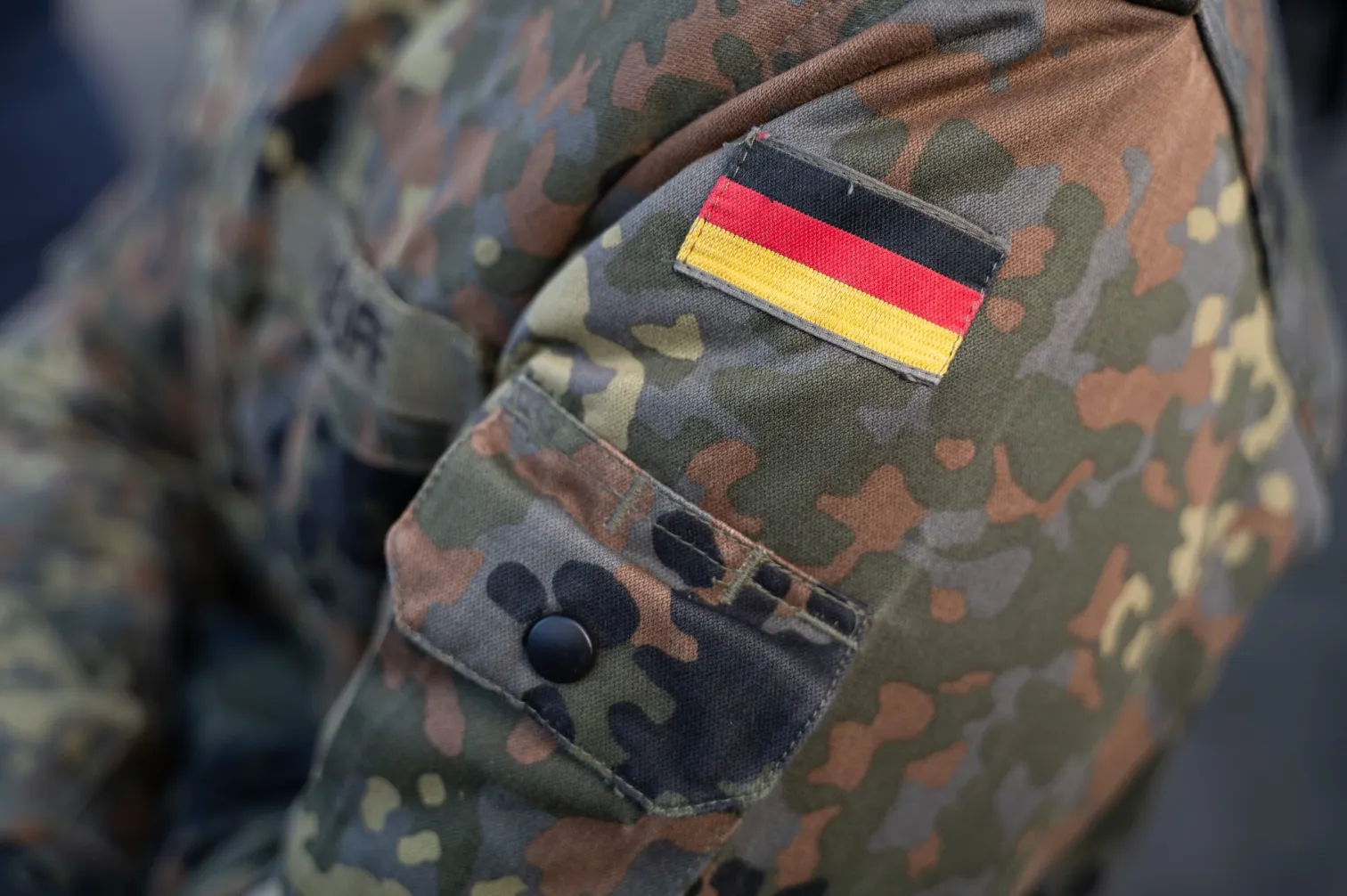
Russia has waged a shadow war across Europe this summer, striking at many countries but reserving its chief hostility for Germany. Infrastructure sabotage, assassination plots, drone incursions and threats to undersea cables have become routine. The signals suggest this campaign may prove as grave as last autumn's — or worse. The Kremlin's logic is not difficult to discern. Germany increasingly acts as the linchpin of a hawkish but fledgling northern European alliance resolved to confront Russian aggression. The Nordic-Baltic eight and Poland are targeted alongside it, as is Romania, while most NATO members in southern Europe remain less affected.
Germany has endured several hybrid attacks in recent months. The pivotal episode came on 4 August, when explosive-laden drones were found at Leipzig/Halle airport in the east of the country, forcing the closure of every runway. The airport hosts Antonov Airlines, a Ukrainian cargo carrier with four aircraft stationed there. The attack was no mere warning. Of at least three drones involved, two carried military-grade explosives, and two aircraft were struck, though nothing detonated. Chancellor Friedrich Merz said it was pure chance that nobody was hurt. Germany's government and American intelligence attributed the operation to Russia. Moscow denied involvement, claiming the evidence had been planted by Germany's leading parties to distract attention from impending elections. It also argued, with some confusion, that Germany deserved to be attacked, and characterised the Merz government's decision to publicise the attribution as a declaration of war. Then, on 3 September, explosives were thrown near the headquarters of Rohde & Schwarz, an electronics manufacturer whose products are used by military enterprises. Two Bulgarian nationals were taken into custody, and Russian intelligence involvement is suspected. Beneath such notable incidents runs a steady drumbeat of Russian cyber activity and continual drone incursions over German military bases and power infrastructure.
In neighbouring Poland, the Russian artist and political dissident Robert Kuzovkov, also known as Semyon Skrepetsky, was murdered near his home on 16 June. He had been granted political asylum in 2021. On 7 August, Prime Minister Donald Tusk disclosed that a joint Polish-American operation had foiled the assassination of a dual US-Ukrainian citizen in Warsaw. The target's identity has not been revealed, though Tusk described the individual as adverse to Russian interests. An attack on the EU's largest Polish drone producer, in Skarżysko-Kamienna, was also attributed to Russia on 1 September.
The Baltic states have likewise experienced their eastern neighbour's disruptive techniques. On the night of 15 August, fire broke out in a building used by the Estonian defence company Milrem Robotics in Tallinn. The incident is being investigated as sabotage, and three suspects have been identified in neighbouring Latvia. In 2022, the Russian armed forces offered a financial reward for the procurement and delivery of Milrem's THeMIS unmanned ground vehicle, which is used by Ukraine's armed forces. Latvian intelligence warned in late June of Russia's intensifying hybrid warfare, and President Gitanas Nausėda of Lithuania repeated those concerns in July, disclosing infrastructure damage attributable to Russia.
The Nordic countries are targets too. In August, the Swedish Security Service revealed it had uncovered a long-running Russian intelligence operation. Two employees of the Russian Foreign Intelligence Service recruited an agent working for another foreign embassy and gathered important information; the suspected spy escaped prosecution through diplomatic immunity. On 3 September, the Danish Security and Intelligence Service said Russia was preparing acts of sabotage and reported that its spies were recruiting Danes to commit acts damaging to the defence sector. Four days later, Finland inaugurated a 200km surveillance fence along its southeastern border with Russia. Officials cited the hybrid war threat as a central reason, explaining that border control prevents Russia from exploiting migrants in grey-zone tactics.
What is to be done? Jan Kallberg, a CEPA fellow and security strategy researcher, argues that a response is critical because the Russians are reaping gains without paying a price. The costs of the campaign, he notes, are huge and rising. Rather than merely reacting to each assault, Kallberg contends that European leaders should agree on measures, including aid to Ukraine, that target the urban middle and upper classes of Moscow and Saint Petersburg — constituencies he regards as vital to Putin. "We have to strike where it hurts," he said. "As long as Putin's power base remains stable, this war and the provocations against Europe will not end. But if we shake the power base, there is reason to think that there might be change." European allies, he added, must aim to inflict deep scars on upper-class Russians, whose sense of superiority he identifies as the weak spot of the Russian mentality.
Ester Ljunggren is a CEPA editorial intern and a final-year undergraduate at Gustavus Adolphus College, where she studies political science, economics and Russian. Originally from Sweden, her research interests include European and Eurasian affairs, political economy, and authoritarianism and democratic resilience in the post-Soviet region.