Russia's Rubles Cannot Win a War: Recruitment Slump Forces Kremlin to Confront Manpower Crisis
With recruitment down by a fifth, Russia's war effort faces a manpower crisis that financial incentives alone cannot solve, as the economy strains under inflation and labour shortages
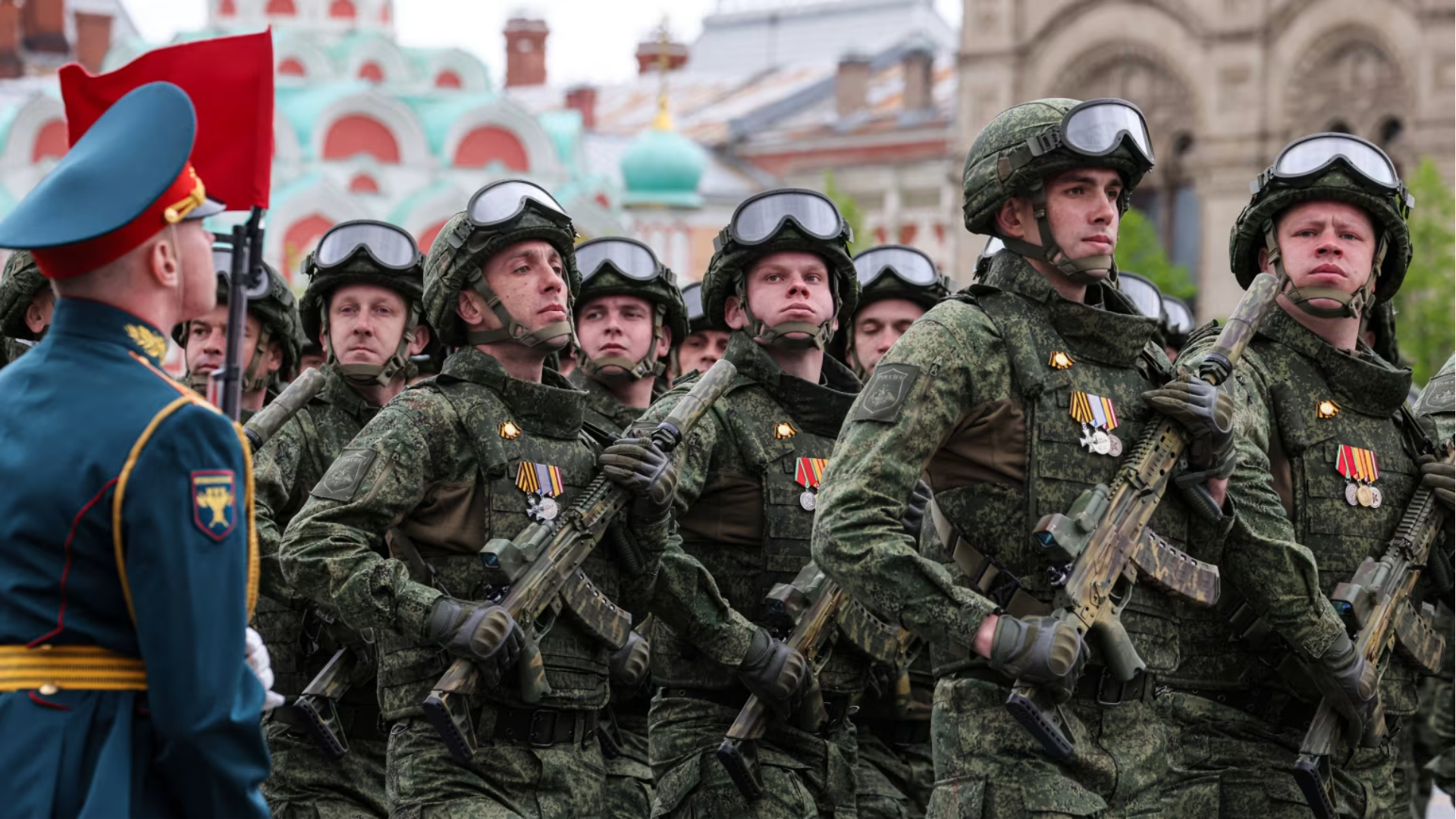
In a development that raises serious questions about the sustainability of the Kremlin's military campaign in Ukraine, reports indicate that Russian military recruitment fell by 20 per cent in the first quarter of this year compared to 2025, according to Janis Kluge, an expert on the Russian economy. This decline has occurred despite a concerted advertising blitz on roadside billboards and social media platforms, in which the state offers multi-million-ruble signing bonuses—some exceeding $80,000, more than quadruple the average annual salary—alongside promises of heroism and fast-tracked citizenship.
The underlying predicament, as articulated by Nigel Gould-Davies, a senior fellow for Russia and Eurasia at the International Institute for Strategic Studies (IISS), is that "rubles don't fight wars." He noted that this marks the first conflict in Russia's history in which the state is paying citizens to volunteer rather than compelling them through conscription, a shift that has produced both economic strain and persistent manpower shortages. In a recent IISS report, Gould-Davies observed that "there are signs that this incentive may no longer be working effectively, and that Russia has begun to lose more troops than it can recruit."
Moscow, it is understood, has been compelled to resort to increasingly desperate measures. Tens of thousands of former prisoners have been dispatched to the front lines; three separate waves of North Korean soldiers have been deployed; and immigrants have been offered inducements to join the military. The government has now announced a further recruitment drive, promising to discharge debts of up to $140,000 for those who sign up and might otherwise face penalties for defaulting. Yet analysts suggest that if a potential recruit was unwilling to accept a hefty signing bonus last year, it remains unclear what might change their mind, particularly given widely reported accounts of poor treatment on the front lines and allegations that soldiers have bribed officers to avoid certain-death ground missions.
The conflict's drain on men of fighting age has had profound consequences for the broader Russian economy, which is grappling with what Gould-Davies described as "the most severe labor shortage in history." "It's not just struggling to find people to go to the front… they're struggling to find people to employ," he told CNN. The defence industry, it is said, is already operating at maximum capacity, with factories working around the clock, meaning that increasing military output is all but impossible. Simultaneously, the demand for factory workers places further strain on the rest of the economy.
Nearly 500,000 Russian soldiers are believed to have died in the war, according to some Western intelligence reports, and hundreds of thousands more have left the country to avoid being drafted. The resulting labour shortage is driving up wages, adding to inflationary pressures. The official annual inflation rate as of June stands at 5.52 per cent, according to Russian state media TASS, while ordinary households face food prices that have risen more than 18 per cent compared to January 2024, together with sky-high utility bills and a recent two-percentage-point hike in sales tax. Ukrainian strikes on Russian critical infrastructure have also led to gasoline shortages in some areas and persistent airport delays.
The labour shortage, Gould-Davies warned, could compel the Kremlin to recruit more labour from India, North Korea and various African nations to ease pressures on both the civilian and military sectors. More drastically, it could precipitate a second forced mobilisation of troops, coupled with measures such as curtailing the freedom of citizens to leave the country—particularly men of conscription age. Such a step is one that President Vladimir Putin has been keen to avoid, after the first "partial mobilisation" proved hugely unpopular and prompted a wave of emigration. "The Kremlin will soon face a fundamental choice over whether to radically escalate its demands on Russia's economy and society or to scale back its war aims," Gould-Davies predicted.
Some experts, including Maria Snegovaya at the Center for Strategic and International Studies, argued that the Kremlin might muddle through its recruitment issues by applying more pressure on regions outside major cities, pushing students to sign military contracts and recruiting more foreign nationals. The fact that the defence sector is approaching maximum capacity, she conceded, presented difficulties but was "not catastrophic." Economically, however, "the strain is becoming increasingly visible," Snegovaya told CNN. "This year in particular we see the economic costs finally imposing difficult tradeoffs on the Kremlin." She noted that Russia's military personnel and recruitment costs account for tens of billions of dollars each year, amounting to 9.5 per cent of the total federal budget and 2 per cent of the country's GDP by some estimates.
Russia, it is reported, is experiencing growth stagnation—even recession by some economists' estimates—as well as rampant business closures and declining consumer confidence. Despite some wage growth, incomes have not kept pace with persistent inflation. Even though the overall rate of inflation has slowed again, Snegovaya said consumer sentiment on the issue remained negative. "These trends could… weaken support for the war, potentially increasing social discontent," she said. "However, the regime is boosting its repressive apparatus. The Kremlin has tended to double down on its goals rather than scale them back."
In a parallel development, Ukraine's advancements in drone warfare and technology are said to be inflicting far more casualties on Russia than earlier in the conflict. "Ukrainian forces are achieving and out-innovating" on the battlefield, particularly in their use of tactical drones, according to Kateryna Stepanenko at the Washington-based Institute for the Study of War. Earlier this year, President Volodymyr Zelensky claimed that his forces had captured a Russian position using only drones and robots for the first time, and had conducted more than 22,000 unmanned ground missions in just the first three months of 2026. In May, Ukraine achieved a net territorial gain of nearly 100 square kilometres, making it the second consecutive month in which Russian forces experienced a net loss, according to Ukrainian Commander-in-Chief Oleksandr Syrskyi.
Russian casualty rates are estimated at around 30,000 to 35,000 a month, according to Western officials, although estimates vary. Syrskyi has claimed that in May, Ukraine's drone operators killed or wounded more soldiers than Russia could recruit. Meanwhile, Moscow's efforts to recruit students for its own expert drone units have been mired in distrust and setbacks, after Russia's Ministry of Defence committed some drone operators to frontline ground assaults. "That created a really-not-helpful PR campaign for the unmanned systems forces recruitment," Stepanenko said.