Russia's Duma vote is a sham, yet it remains a valuable barometer of the nation's mood
Despite being neither free nor fair, Russia's upcoming parliamentary elections provide crucial insights into public sentiment and the regime's strategic vision, even as the Supreme Court's disqualification of the anti-war Yabloko party underscores the system's repressive limits.
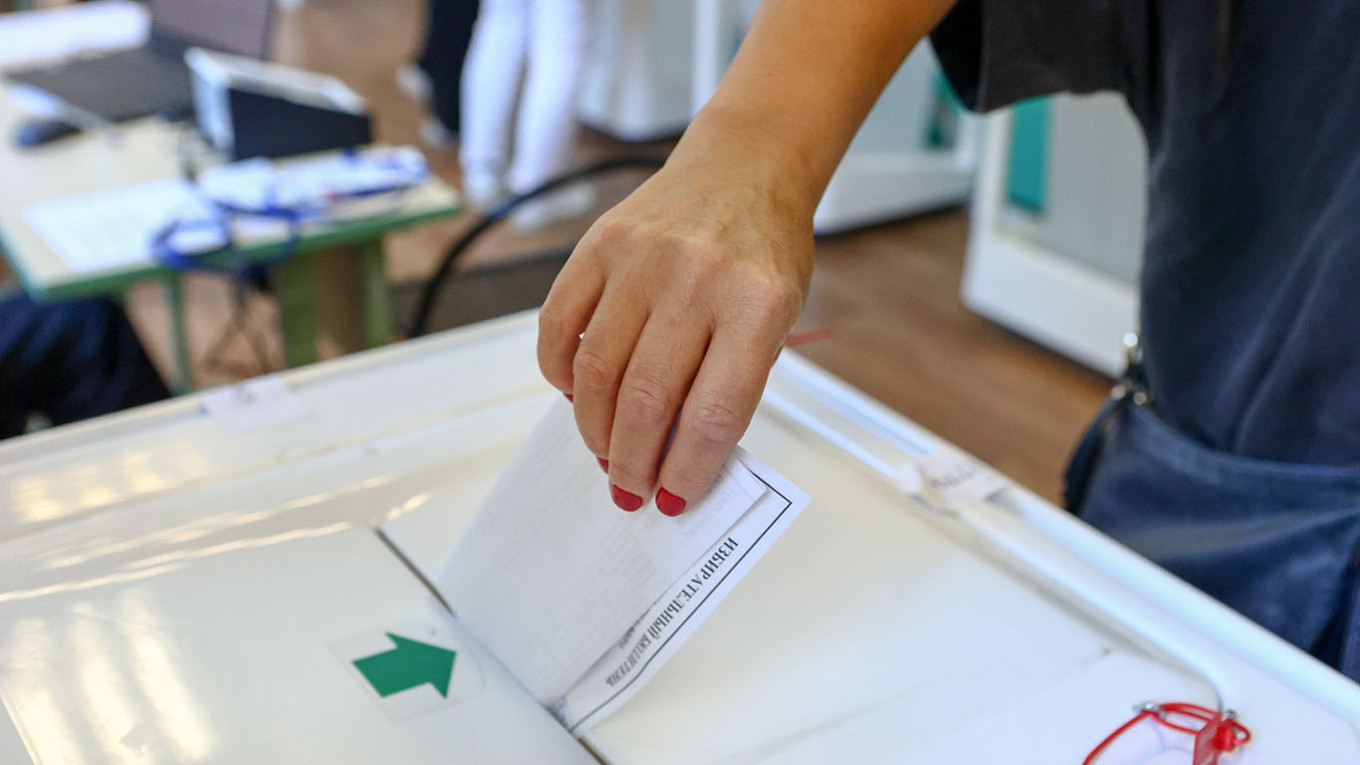
A reader might be tempted to dismiss Russia's forthcoming parliamentary elections as a meaningless exercise, a theatrical performance in a country long since stripped of democratic pretensions where political parties uniformly fall into line on matters of consequence, particularly the war against Ukraine. Yet such a dismissal would be premature, for the September 18-20 vote to determine the composition of the State Duma, Russia's lower chamber with its 450 seats, offers Western observers a valuable window into both Russian public opinion and the Kremlin's evolving vision for the country's future. The key, however, lies in discarding the analytical frameworks applied to functional democracies, for Russian elections are neither free nor fair; they are meticulously rigged by the Kremlin, with independent observers subjected to intimidation and repression in a system better understood as a deeply legalistic dictatorship.
The Kremlin's approach to governance is one of theatre, maintaining a veneer of legality that distinguishes it from more overtly authoritarian regimes such as Iran or El Salvador, where repression often proceeds without even nominal legal justification. This commitment to the appearance of legality, however, does not render the Russian system any less oppressive, but it does explain why the Duma elections continue to be held every five years despite the country's democratic backsliding. The elections project an image of normality that contrasts favourably, in the Kremlin's view, with Ukraine, which has held no elections since the 2022 full-scale invasion, and the results will almost certainly be rigged, as they were in 2021 when independent observers documented over ten million fraudulent votes. The veneer of public participation, however, is what matters to the authorities, and understanding this theatrical dynamic allows us to interpret the roles played by the various parties in Putin's political drama.
The parties contesting the election occupy distinct positions within this carefully managed system. The Communist Party of the Russian Federation (CPRF), a relic of the more chaotic but arguably more democratic 1990s, retains considerable funds and a loyal voting base, occasionally mounting serious challenges to the Kremlin, particularly in regions distant from Moscow or on social policy issues. Under the leadership of Gennady Zyuganov, who has firmly aligned himself with Putin and even proposed using Russians' savings to finance the war, the party nonetheless remains a home for some genuine opposition-minded figures like populist Nikolai Bondarenko, and its conservative yet socially-minded vision—traditional values combined with social infrastructure and respect for Soviet heritage—resonates with pensioners, who constitute over 25% of the electorate. The Liberal Democratic Party of Russia (LDPR), by contrast, has struggled since the death of its flamboyant founder Vladimir Zhirinovsky in 2022, with its current leader Leonid Slutsky lacking his predecessor's charisma and the party's hypernationalist message now overshadowed by the more virulently pro-war rhetoric of its competitors.
The dominant force in the current Duma, United Russia, holds 315 seats and governs in coalition with the LDPR and A Just Russia, the latter having seen its brand of social democracy tarnished when party head Sergei Mironov posed with a branded Wagner PMC sledgehammer, a reference to a notorious execution video. United Russia itself, once projecting an image of respectable centrism, has been compelled to escalate its pro-war rhetoric, with former president Dmitry Medvedev declaring at their 2026 congress that the entire Ukrainian nation "will be destroyed." These parties, along with the more liberal New People party and the now-barred Yabloko, represent different visions for Russia's future, but all toe the Kremlin's line on the invasion of Ukraine, leading non-systemic opposition activists to dismiss them as "laboratory parties" created by political technologists.
Yabloko, however, occupies a unique position as the only party offering a clearly anti-war platform, articulating the aims of "ceasefire and not allowing a nuclear war" in 44 words. Rooted in the Yeltsin era and led by Grigory Yavlinsky, a former boxer and mine inspector who expelled Alexei Navalny from the party for nationalism, Yabloko has long existed as a genuine opposition force, maintaining direct contact with the Presidential Administration and explicitly framing its mission not as "breaking into the Duma" but as giving Russians a legal outlet to express anti-war sentiment. It was this very role that appears to have prompted the Supreme Court's decision on Monday to cancel Yabloko's candidate registration following a lawsuit from the nationalist Rodina party, alleging foreign funding, copyright violations, and "extremism." The ruling, which removes the only registered pro-peace platform from the ballot, underscores the limits of even the Kremlin's tolerance for theatrical opposition, though Yabloko's leadership has vowed to appeal and do everything possible to participate in the election.
Despite the deeply flawed nature of the electoral process, Russian voters do engage organically with issues that would matter anywhere else in the world—housing, pensions, energy prices—and have shown reluctance to support the hypermilitarism engineered for the Kremlin's consumption, instead backing parties like New People for their stances against internet censorship and domestic violence. Polling, though conducted in an atmosphere of repression and fear that renders it deeply unreliable, suggests that approximately 70% of Russians intend to vote, with 41% supporting United Russia, 13% backing the CPRF, 11% for New People, and the LDPR and A Just Russia on 8% and 6% respectively, while Yabloko, before its disqualification, was projected to receive only 1-2%. The elections will prove difficult to conduct, particularly after Kyiv demonstrated its willingness and capability to target Russian infrastructure, and the real results will likely remain unknown until a post-Putinist Russia opens its archives. What the theatre of the Duma elections ultimately reveals, however, is that Russians remain, at heart, ordinary people navigating a system captured by a dictatorship that has transformed what should be genuine political life into an elaborate performance.