Russian public fatigue grows as Ukrainian strikes bite and Kremlin hints at fresh mobilisation
As Ukrainian long-range attacks disrupt daily life and the economy falters, Russia's state-controlled media has begun acknowledging public war-weariness and mounting fears of a fresh mobilisation, while carefully avoiding any suggestion of ending the conflict
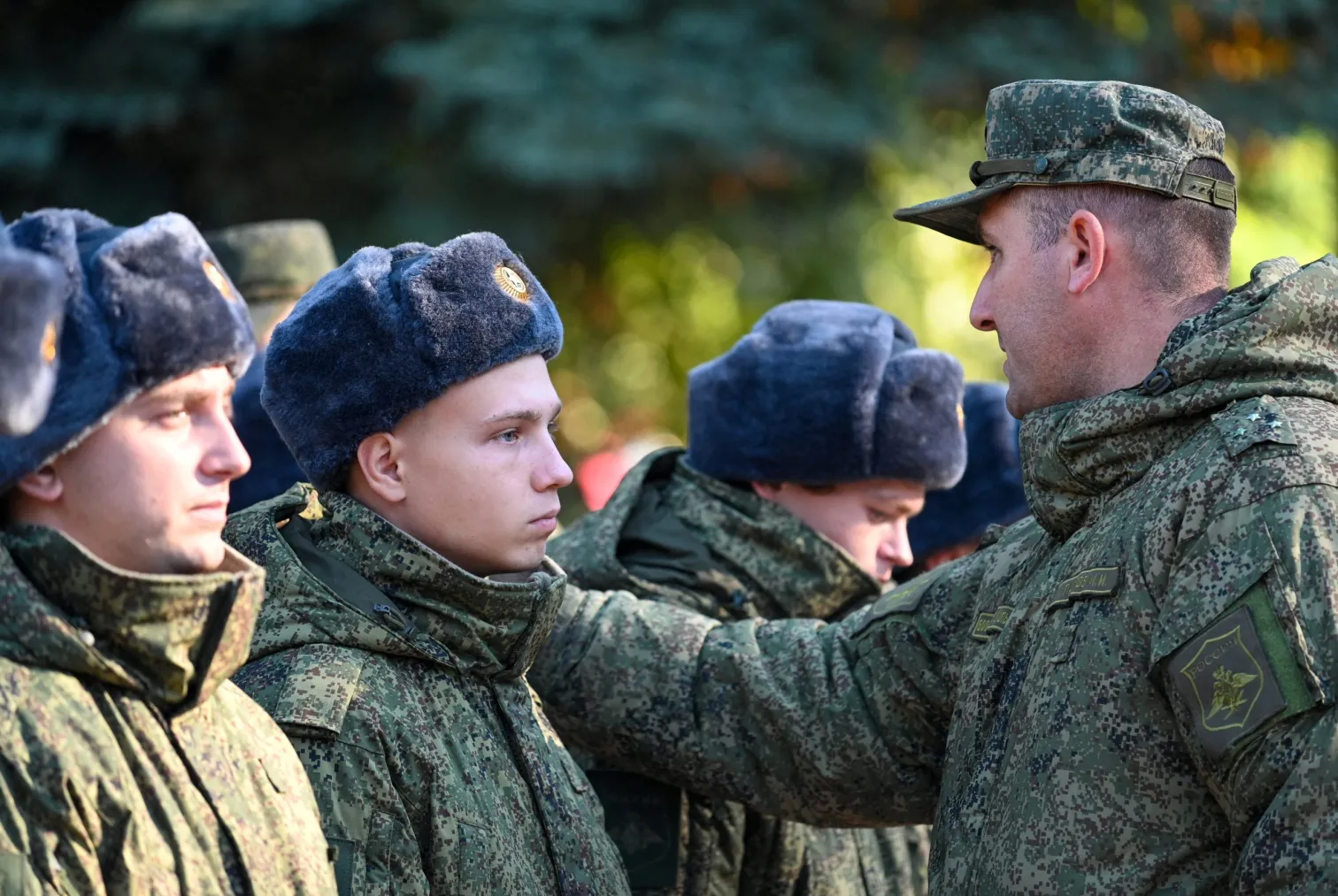
After more than four years of conflict, ordinary Russians are belatedly experiencing a measure of the suffering their regime has inflicted upon its neighbour, as Ukrainian strikes against oil refineries, arms factories, warehouses and online retailers disrupt everyday existence. While Kyiv's forces scrupulously avoid targeting civilians, the impact of these operations has been sufficient to persuade a majority of Russians, for the first time in two decades, that the economy is deteriorating. This palpable decline in public morale has, according to analysts, induced a notable paranoia within the Kremlin, prompting its media apparatchiks to openly discuss the prospect of civil unrest, replete with portentous references to the revolutionary year of 1917.
Even the most fervent cheerleaders of Moscow's imperial adventure are now compelled to acknowledge the consequences of Ukraine's deep-strike campaign, not least because the skies above Moscow and St Petersburg are regularly blackened by smoke from blazing edifices. Appearing on the July 25 broadcast of the radio programme Morning-Z on the Solovyov Live channel, the military commentator Andrey Klintsevich recounted his recent experiences travelling in military attire and a military vehicle, noting a marked shift in public behaviour. Whereas civilians had previously waved and honked their horns in support of the armed forces, he observed, this time they had deliberately averted their gaze, and he described encountering only a profound weariness in people's eyes, which he interpreted as a sentiment of deep exasperation with the military establishment.
This diminishing enthusiasm translates directly into a declining appetite for enlistment in the ranks of Russia's contemporary conquistadors; the number of volunteers signing military contracts has fallen steadily, notwithstanding the promise of generous benefits and substantial cash inducements. Earlier in July, the state television host Vladimir Solovyov and Senator Alexei Kondratiev went so far as to encourage women and those who are "wounded, sick, or crippled" to participate in the war effort, a suggestion that underscores the regime's growing desperation. There exists a discernible logic to the Kremlin's public output, with media mouthpieces receiving their editorial lines from senior officials during regular briefings; the established approach is to acknowledge the population's anxieties, then to downplay or divert attention from them, though this mechanism can also be deployed to signal impending policy shifts, sometimes as a means of gauging public sentiment.
Signals are being transmitted, and a palpable public fear persists that the Kremlin may replicate its controversial decision of autumn 2022 to mobilise young Russian men. The underlying rationale is clear: with an estimated 450,000 dead and 1.4 million wounded, volunteer recruitment in steep decline, and Russian forces still achieving only incremental territorial gains, the military apparatus faces a pressing requirement for fresh personnel. On July 22, the State Duma approved legislation expanding eligibility to individuals with active criminal records, including defendants currently facing charges, permitting them to sign contracts with the Defence Ministry during formal mobilisation periods. Mr Putin's propagandists are acutely aware that the mere mention of a potential call-up sends shockwaves through Russian society, and these fears are acknowledged across the spectrum of state media, indicating they are perceived as a considerable problem that the Kremlin would prefer to override with its characteristic bluster.
During the late July broadcast of the radio programme Full Contact, the decorated state television host Vladimir Solovyov complained bitterly about the proliferation of rumours concerning an impending mobilisation, which he said were spreading to every corner of the country. "Everyone is saying, 'mobilisation, mobilisation'," he declared, before calling for the criminal prosecution of so-called Z-bloggers "for spreading panic" and asserting that he personally saw no need for such a measure "at this point in time." Yet Mr Solovyov did concede that even his close associates no longer accepted his propaganda at face value, believing instead that circumstances were deteriorating, which in turn rendered mobilisation all but inevitable. In recent days, other presenters have frequently raised the subject, mimicking Mr Solovyov's noncommittal and effusive responses, always stopping short of denying the possibility outright while claiming in unison that no such requirement currently exists, a caveat invariably followed by the disclaimer that this represents merely their "personal opinion."
Andrey Kartapolov, the chairman of the State Duma's Defence Committee, was asked about the widespread rumours during a recent appearance on Radio Mayak, to which he replied that he did not entertain any view on such speculation and asserted that there was currently "no need for mobilisation." Listeners with longer memories, however, will recall that in 2022 none other than Mr Kartapolov offered similar assurances, only for mobilisation to commence precisely one day later. The diligent efforts of the Kremlin's propagandists are somewhat undermined by military recruiters, who have been exploiting the gossip to encourage reluctant citizens to sign up immediately and receive payment for their service, with advertisements posing the rhetorical question: "Why wait for mobilisation? Serve for pay."
During the unscheduled July 27 broadcast of Mr Solovyov's radio programme Full Contact, the host appealed to the patriotic sentiments of his audience, asking the 72-year-old retired Reserve Colonel Mikhail Khodaryonok whether he considered himself retired or in reserve, given that the country was at war. Colonel Khodaryonok played along, responding that during active military operations, age was irrelevant and that any citizen could be called upon to carry out operational tasks regardless of age, should the nation's security so demand; Mr Solovyov reacted with a visibly satisfied grin. Appearing on the state television programme 60 Minutes on July 24, Dmitry Abzalov, the Director of the Centre for Strategic Communications, implored Russia to bring the war to a conclusion as swiftly as possible and to contemplate negotiations, stressing that the alternative was a likely mobilisation. His host, Olga Skabeeva, responded angrily, emphasising that Russia had no choice but to continue fighting, since President Donald Trump had failed to deliver an acceptable peace settlement and had thereby dashed Russian hopes and aspirations.
One day prior to the State Duma's rapid passage of its legislation, Russia's National Guard, known as Rosgvardia, proposed amending the wording of existing civil-defence regulations to include protection "from dangers arising during the period of mobilisation, during the period of martial law, in wartime." Russia's previous mobilisation of 300,000 reservists in September 2022 prompted public protests and a mass exodus of military-age males from the country, and Mr Putin has avoided any repetition during the intervening four years. Nevertheless, speculation persists that he may resume the process after the heavily rigged elections to the State Duma this autumn. On July 25, the military expert Andrey Klintsevich, appearing on Solovyov Live, discussed Ukraine's deep-strike campaign against Russian targets and noted that it was likely to continue, which would multiply public discontent and might reach a boiling point in the event of an autumn mobilisation. The sole genuine resolution—the withdrawal of Russian forces from Ukraine to terminate Mr Putin's ill-conceived imperial adventure—remains an unmentionable subject for the Kremlin's media puppets.